
By Antonio
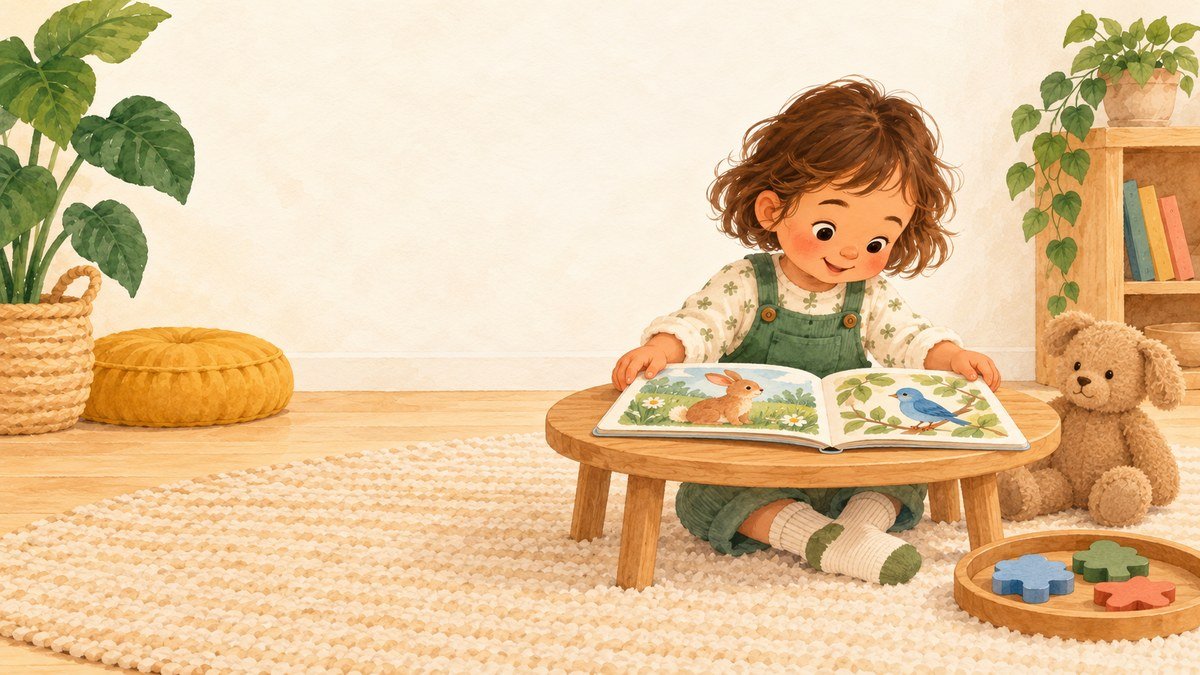
Quiet time with a toddler is relative and I’m not going to claim that you’ll have complete quiet every time.
From my experience, I also don’t expect complete silence, and I don’t expect a two-year-old to sit peacefully with one activity for an hour. Sometimes I just need the volume and energy to come down a notch while I work, make dinner, or recover from whatever we were doing five minutes earlier.
The activities that work best for us tend to give a toddler something simple to focus on: matching, sorting, sticking, building, looking, or repeating the same small action.
The other half of it is getting them interested in the first place. Handing over some socks and saying “match these” may get you nowhere. Starting the game yourself, creating a tiny problem to solve, or making something look worth investigating gives you a much better chance. Once they start doing something without waiting for you, that is usually my cue to stop helping.
Not sure what will work right now?
Tell Little Moment Play what you need, your child’s age, and how much time, setup, or mess you’re willing to deal with.
Table of Contents
Easy Quiet Activities for Toddlers
These are the ones I’d start with when I want something uncomplicated. None needs an elaborate setup, and the first action is easy for a toddler to understand.
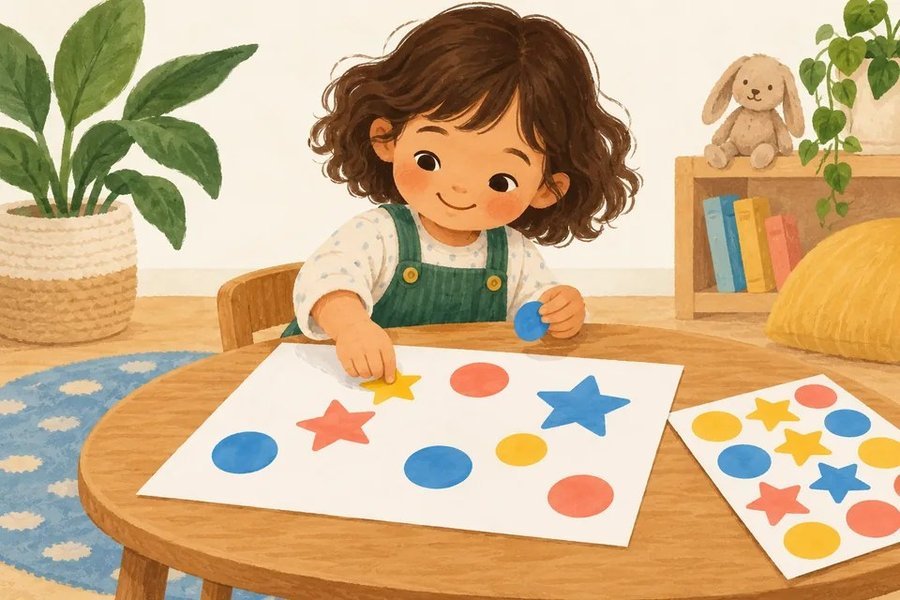
1. Sticker Picture
Good for: Peeling, sticking, sitting-down play
Time: 10–20 minutes
Setup: Almost none
Mess: None
How to do it
Give your toddler a sheet of large, age-appropriate stickers and a piece of paper. They can make a picture, group similar stickers together, cover the page, or put them in places that make absolutely no sense to you.
There doesn’t need to be an end result. Peeling and sticking can be the whole activity.
How to get them interested
Start the picture yourself, but leave something obvious unfinished. Maybe one animal is standing by itself, or you’ve made a row with a suspiciously large gap in the middle.
Put the stickers down beside the paper instead of explaining what they should make. Curiosity often works better than instructions here.
Then let them take over
The moment they start choosing stickers without asking where they should go, stop directing the picture. You have your handoff.
If they abandon your original idea completely, even better. They’re playing instead of following your craft instructions.
Toddler not interested?
Stick two or three stickers lightly onto the back of your hand and let them peel those off first.
Some toddlers care much more about peeling than making a picture.
Important safety note
Use large, age-appropriate stickers and supervise children who still regularly put small objects in their mouth.
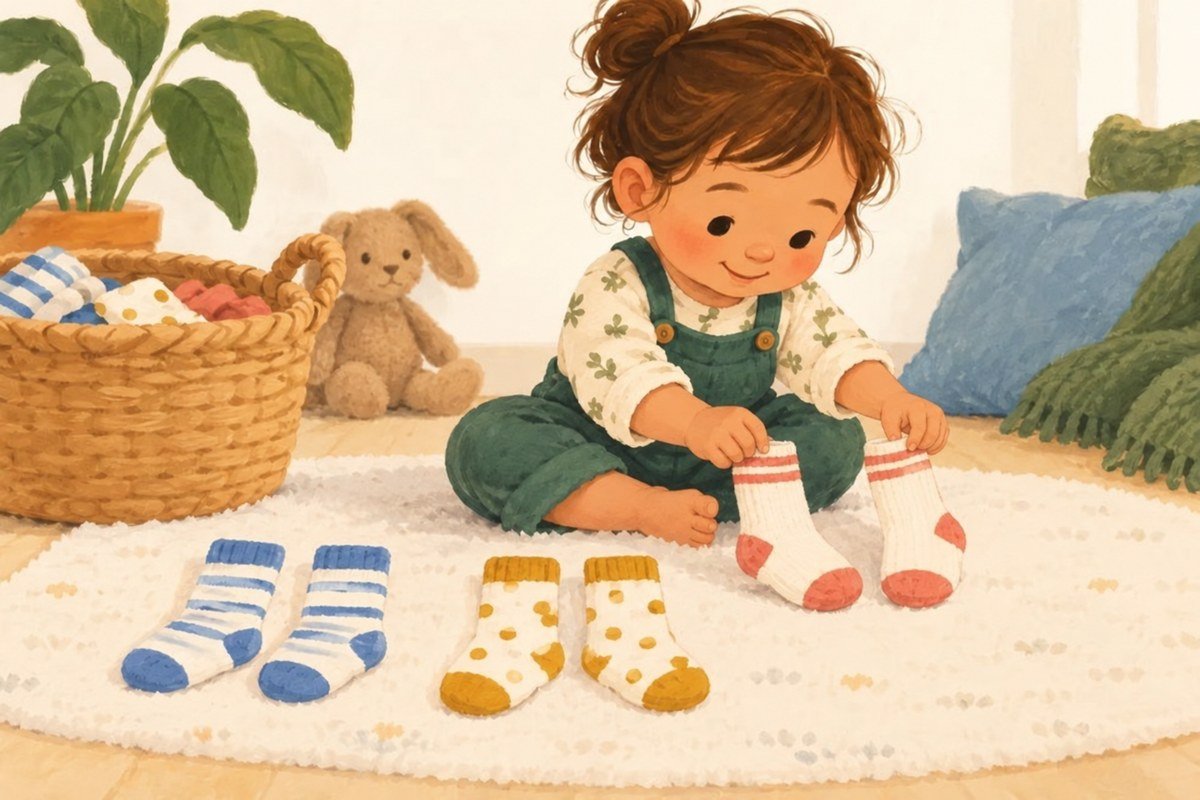
2. Sock Match
Good for: Matching, laundry-time play
Time: 5–15 minutes
Setup: Almost none
Mess: None
How to do it
Take several pairs of clean socks and mix them into a small pile.
With younger toddlers, choose pairs that are easy to tell apart. Older toddlers can deal with annoyingly similar black socks if you feel like increasing the difficulty.
How to get them interested
Pick up two obviously different socks and confidently announce that you found a pair.
Don’t immediately explain the game. Give them a chance to tell you that you are wrong.
Being allowed to correct a parent is a pretty good opening offer.
Then let them take over
When they grab the next sock themselves and start looking through the pile for its partner, stop handing them choices.
That scanning-the-pile moment is your cue that the activity belongs to them now.
Toddler not interested?
Put one sock over your hand and turn it into a sock puppet looking for its missing friend.
If the matching game disappears and you end up playing with a sock puppet instead, that still bought you a quiet activity.
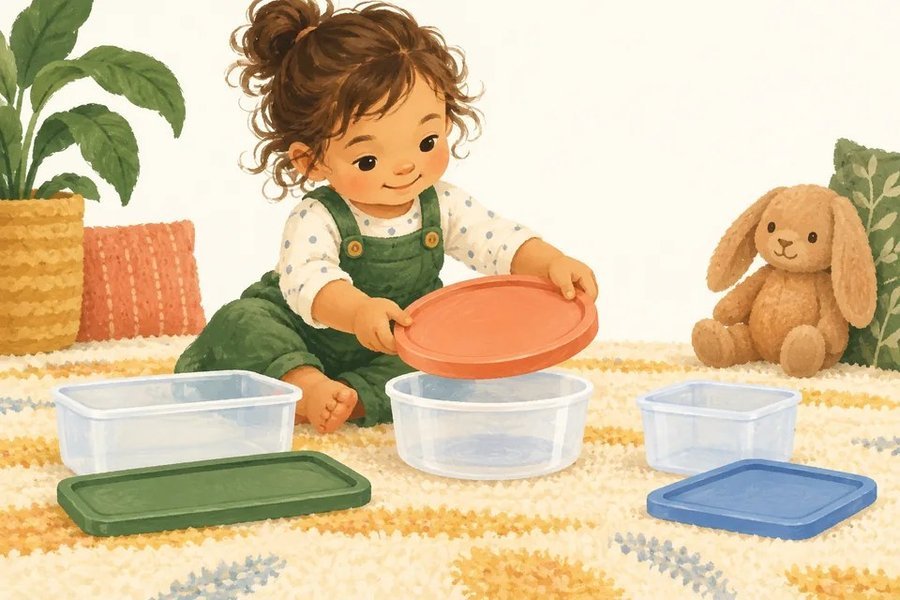
3. Lid Match Helper
Good for: Matching, opening and closing
Time: 5–15 minutes
Setup: Almost none
Mess: None
How to do it
Choose a few clean, safe containers with clearly different lids.
Remove the lids, mix them up, and leave the containers open. Two or three pairs are enough the first time.
How to get them interested
Put one lid onto its container, press it closed, then open it again.
Do the next one halfway and leave it there.
Toddlers are often more interested in completing something they’ve just watched you start than being told there is a matching activity on the table.
Then let them take over
When they start grabbing lids and testing them without looking back at you, stop demonstrating.
They may decide that opening and closing one container twelve times is better than matching the others. I wouldn’t interfere.
Toddler not interested?
Put a favorite larger toy inside one container and close it.
Once they care about opening the container, you can leave the other lids nearby and see whether the matching happens naturally.
Important safety note
Use clean, unbreakable containers without sharp edges, and avoid small lids that could be choking hazards.
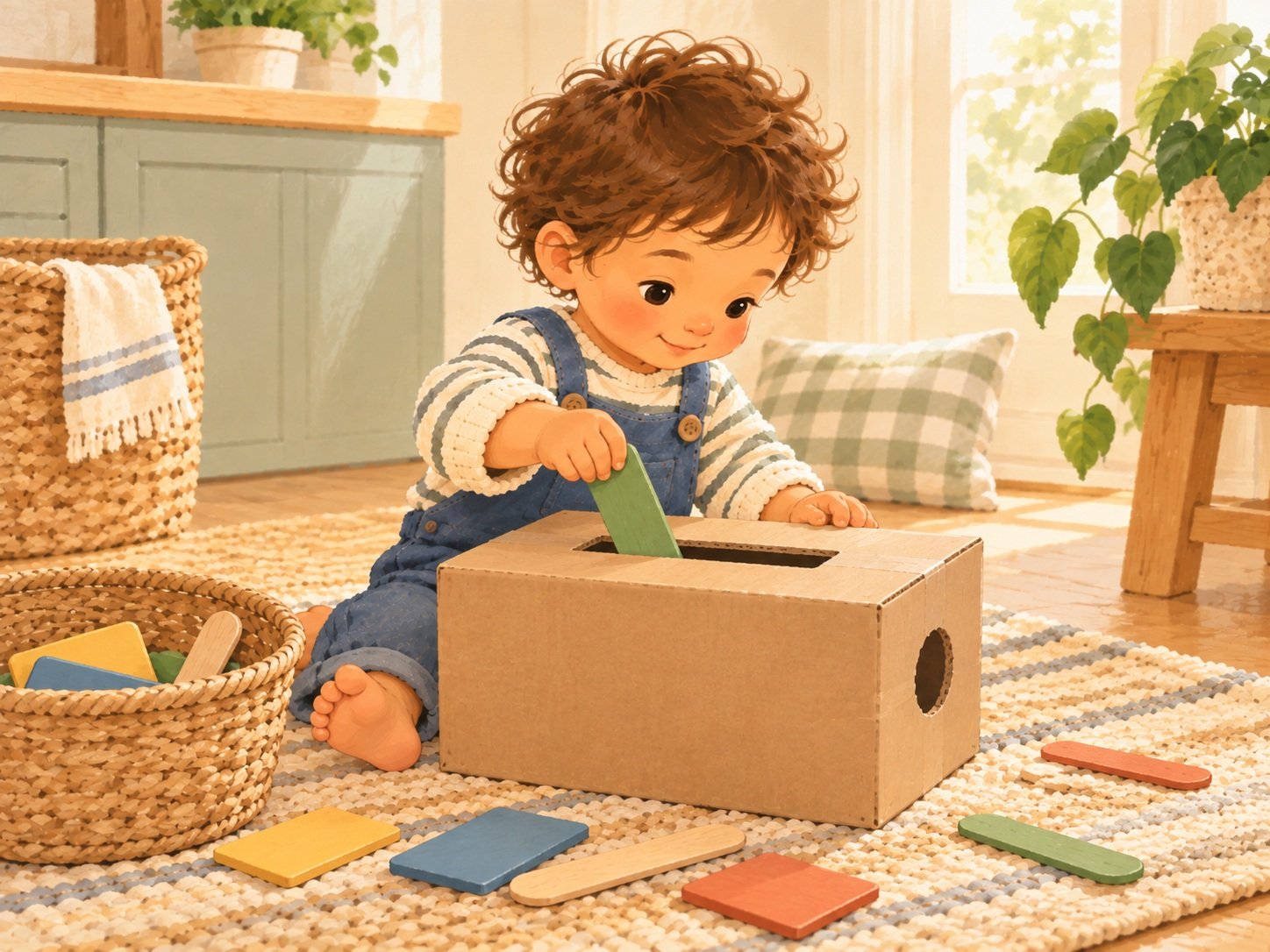
4. Posting Box
Good for: Repetitive play, younger toddlers
Time: 5–15 minutes
Setup: A few minutes
Mess: None
How to do it
Use a cardboard box with an opening large enough for safe, chunky objects such as large blocks, soft balls, or rolled socks.
Your toddler drops something in, finds it again, and repeats the process.
That sounds almost too simple, which is probably why adults underestimate how entertaining it can be.
How to get them interested
Drop one object through the hole without explaining anything.
Pause when it disappears, look into the box, then pull it back out.
Do it once more and leave the next object beside the opening.
Then let them take over
When they pick up that next object and aim for the hole themselves, stop feeding objects to them.
Leave a few safe choices beside the box and let repetition do the work.
Toddler not interested?
Change what happens when the object lands. Try a soft sock, a lightweight ball, and a chunky wooden block so the box makes different sounds.
Sometimes the sound is the interesting part.
Important safety note
Only use objects that are much too large to swallow.
Quiet Time Activities for Toddlers
These work well when the goal is not necessarily independent play, but helping the pace of the room come down for a while.
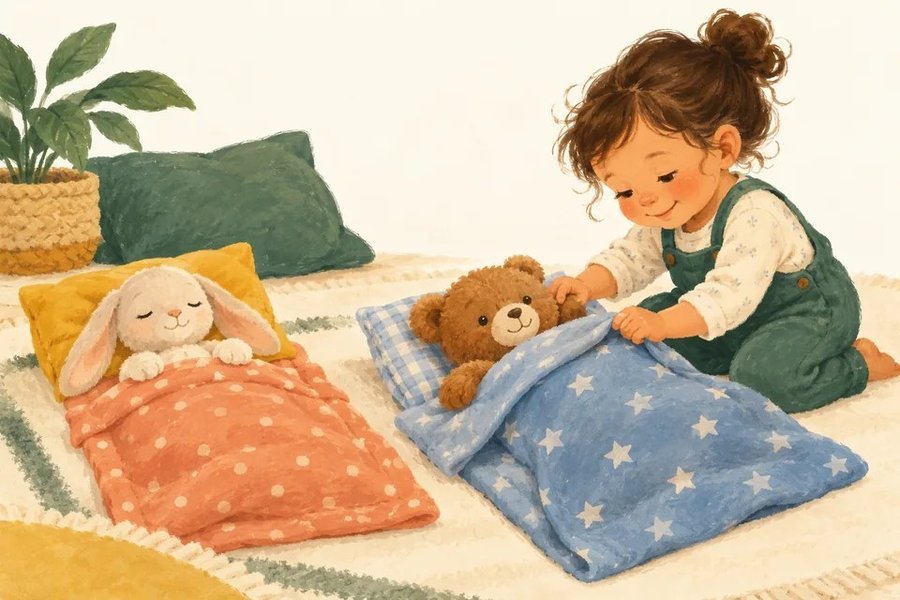
1. Put the Toys to Bed
Good for: Wind-down time, pretend play
Time: 10–20 minutes
Setup: Almost none
Mess: None
How to do it
Choose a few stuffed animals, dolls, or favorite toys.
Make simple beds from cushions, towels, boxes, or folded blankets. Your toddler can decide where everyone sleeps, cover them up, move them around, or invent a bedtime routine.
How to get them interested
Pick up one stuffed animal and quietly tell your toddler that it is exhausted.
Make it yawn, let its head flop onto your shoulder, and ask one question: “Where should Teddy sleep?”
Now there is a small problem for them to solve rather than an activity for them to obey.
Then let them take over
Once your toddler starts choosing beds or carrying another toy over without prompting, stop assigning jobs.
That second toy joining the bedtime routine is a good sign you can become an observer instead of the director.
Toddler not interested?
Make Teddy terrible at bedtime.
Have it climb straight back out of bed once. Your toddler now has someone to put back to sleep.
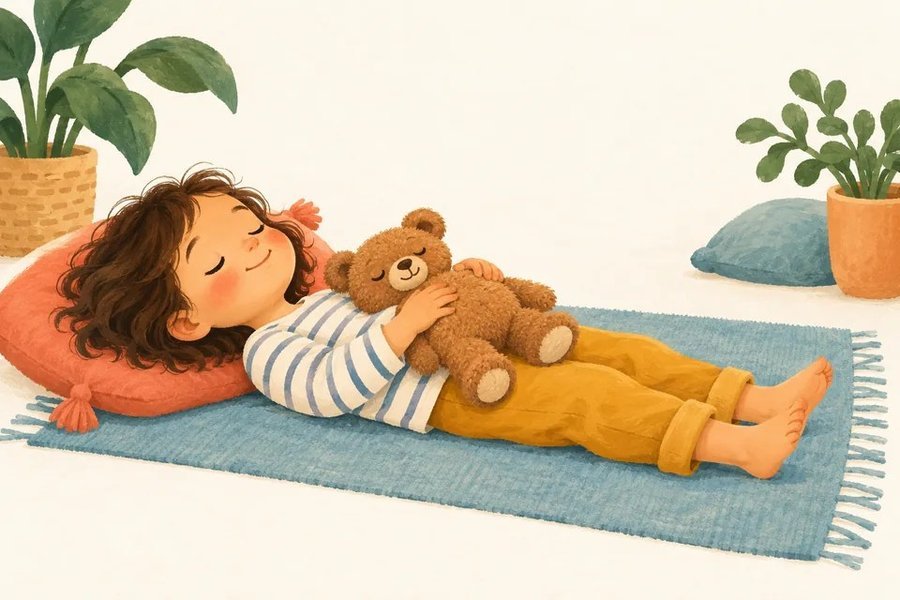
2. Teddy Breathing
Good for: Calm-down moments, older toddlers
Time: 5–10 minutes
Setup: None
Mess: None
How to do it
Have your child lie comfortably and place a lightweight stuffed animal on their tummy.
Ask them to watch what happens to Teddy while they breathe. The toy gently rises and falls without them needing to “do” much beyond lying there.
A few breaths is enough. This is especially suited to older toddlers.
How to get them interested
Do it yourself first.
Put Teddy on your stomach, take one exaggerated slow breath, and act surprised that Teddy just went for a ride.
Then ask whether Teddy can try theirs.
Then let them take over
If they lie still and start watching the toy instead of watching you, stop coaching the breathing.
There is no need to turn it into a lesson about doing slow breaths correctly. Watching is enough.
Toddler not interested?
Let them put Teddy on your tummy and control the game from there.
Some toddlers would much rather supervise your breathing than demonstrate theirs.
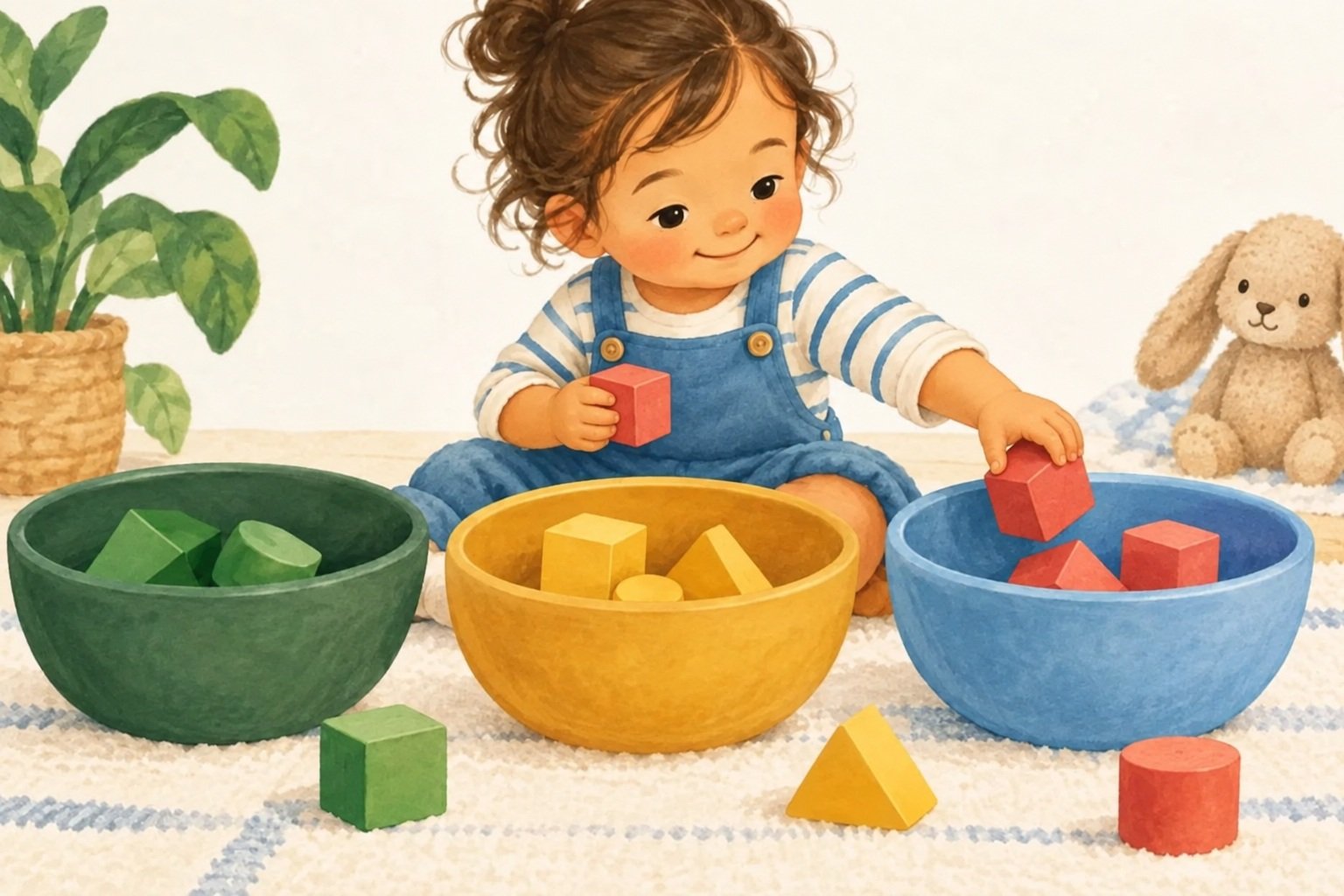
3. Quiet Sorting
Good for: Focused play, sorting
Time: 10–20 minutes
Setup: Almost none
Mess: Little
How to do it
Choose a small group of safe toys or household objects and two baskets, bowls, or areas on the floor.
They can sort by color, type, size, soft versus hard, cars versus animals, or any rule you invent together.
How to get them interested
Instead of announcing a sorting exercise, give the two containers a purpose.
“This is the animal house. This is the car garage.”
Put one item into each and leave the remaining objects between them.
Then let them take over
When your toddler starts picking up objects and deciding where they belong without checking with you, stop naming categories.
They may also invent a rule you cannot understand. That is fine. Their system does not need your approval.
Toddler not interested?
Drop the sorting rule.
Ask them to move everything from one basket into the other instead. For some toddlers, transferring is much more satisfying than categorizing.
4. Finish My Drawing
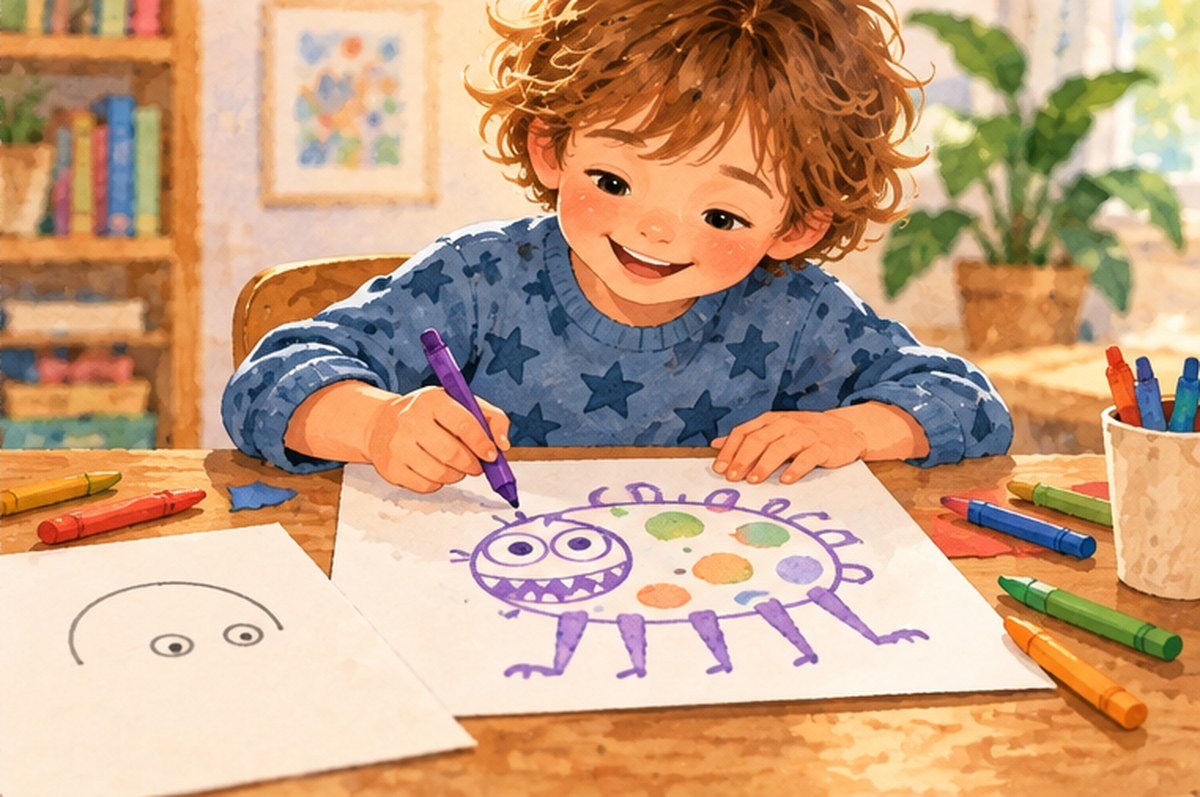
Good for: Drawing, shared quiet play
Time: 5–15 minutes
Setup: Almost none
Mess: Little
How to do it
Draw the beginning of something simple and leave it noticeably unfinished.
A face with no mouth. A car with no wheels. A monster with one arm. A house with no door.
Then leave the pen or crayon beside the page.
How to get them interested
Make the missing part funny rather than instructional.
Look at your wheel-less car for a second and say, “I think I made a terrible car.”
Older toddlers may tell you exactly what is wrong. Younger ones may simply start drawing on it. Either route works.
Then let them take over
When they make the first mark without you telling them where it should go, stop asking what they are drawing.
Their contribution does not have to solve your original problem.
Toddler not interested?
Swap roles.
Ask them to make a mark or scribble first, then turn it into something yourself. After one round, offer the page back.
Quiet Activities Toddlers Can Do Independently
“Independent” is doing a lot of work here.
Sometimes you’ll get twenty minutes. Sometimes you’ll get ninety seconds. I’ve had the best chance when I help the activity over that awkward first minute, then step away as soon as my son starts doing something without waiting for me.
1. Sticker Rescue
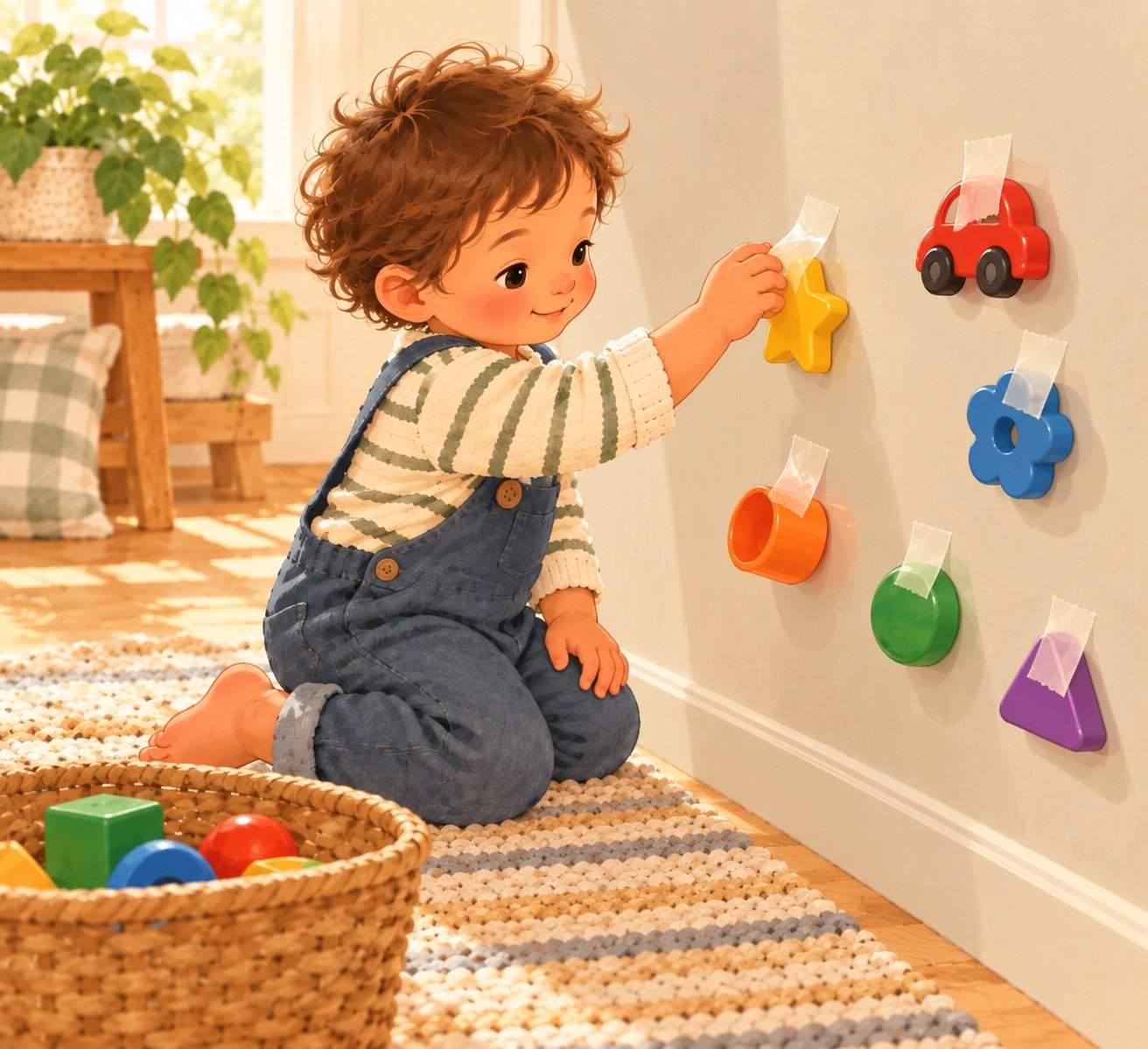
Good for: Independent play, peeling
Time: 10–20 minutes
Setup: A few minutes
Mess: None
How to do it
Stick several large stickers or short pieces of painter’s tape onto a tray or other safe surface, leaving an edge easy to grab.
Your toddler’s job is simply to peel them off.
They can stick them onto paper afterward if they want, but the rescue itself is enough.
How to get them interested
Use one piece of painter’s tape to lightly trap a favorite toy animal or car.
Try pulling the toy once and announce that it is stuck.
Let your toddler make the first rescue before you point out the other pieces.
Then let them take over
Once they begin searching the tray for the next thing to peel without asking you what comes next, stop creating rescues.
That search for the next edge is the handoff.
Toddler not interested?
Use fewer pieces.
One trapped toy is sometimes more interesting than a carefully prepared tray full of stickers.
2. Toy Car Parking
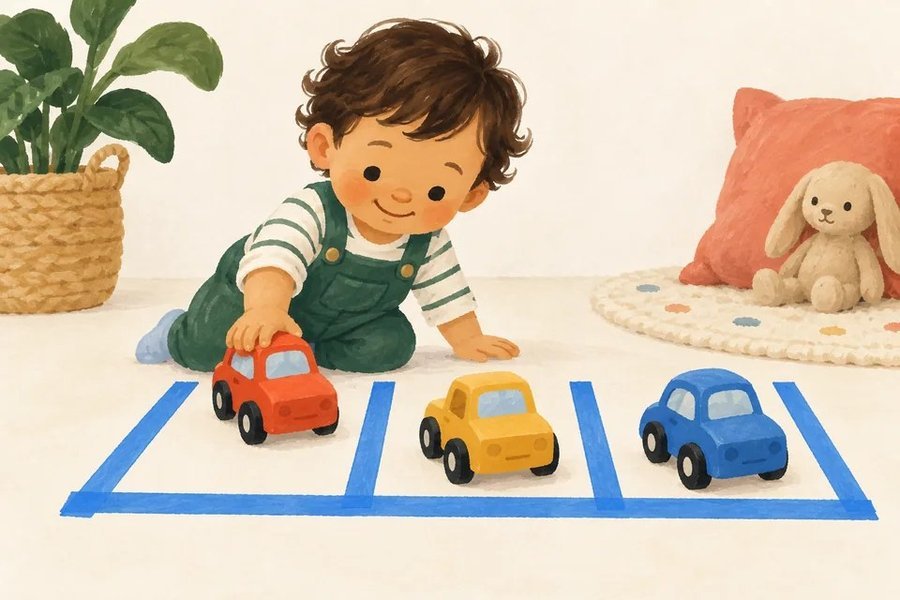
Good for: Quiet pretend play, toy cars
Time: 10–20 minutes
Setup: A few minutes
Mess: None
How to do it
Make several simple parking spaces using painter’s tape, paper, or cardboard.
Put a few toy vehicles nearby. That is enough of a setup.
How to get them interested
Drive one car toward the spaces and discover that you have apparently forgotten how parking works.
Park sideways across two spaces, back out, and try somewhere else.
You do not need to explain the game. The ridiculous parking job usually does that for you.
Then let them take over
When your toddler grabs another vehicle or starts moving your badly parked car without being invited, stop narrating.
Stay nearby, but let the parking lot become a garage, traffic jam, race track, or whatever happens next.
Toddler not interested?
Give one vehicle a destination.
“Teddy’s car needs somewhere to park” gives the car a reason to move without adding much structure.
3. Tape Road
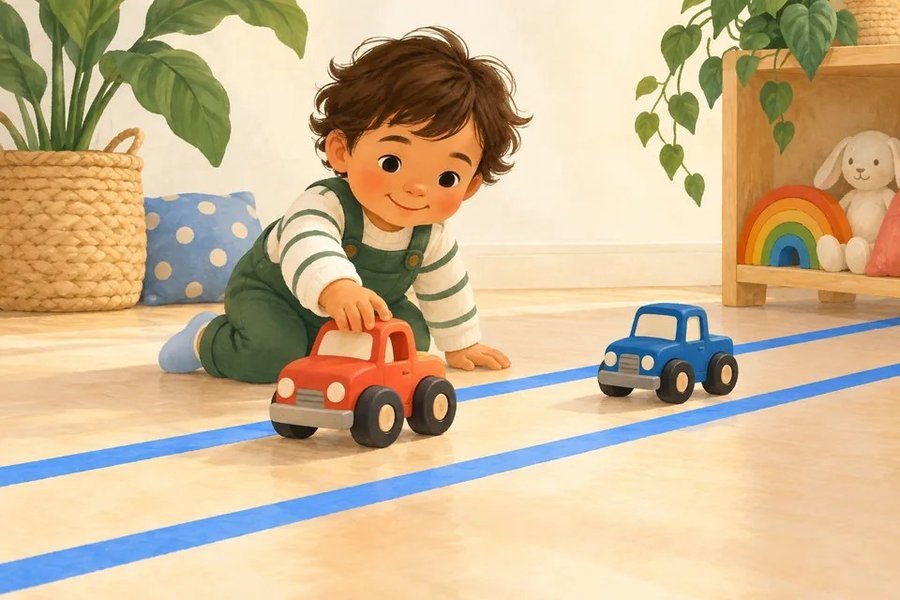
Good for: Quiet vehicle play, independent play
Time: 15–30 minutes
Setup: A few minutes
Mess: None
How to do it
Make a basic road on the floor using painter’s tape.
A few straight sections and turns are enough. You do not need to construct a tiny urban-planning masterpiece.
Add some toy cars nearby.
How to get them interested
Build only part of the road.
Drive a car along it until you reach the abrupt end and stop.
“Hmm. My road goes nowhere.”
Leave the tape nearby or simply let your toddler decide what the car should do next.
Then let them take over
When the cars begin moving without you driving one of them, step out.
There is no reason they have to respect your road design. The tape is just the invitation.
Toddler not interested?
Add one destination they already care about: a cardboard garage, a block house, or a stuffed animal waiting for a ride.
Important safety note
Use painter’s tape that is suitable for your floor, and remove loose pieces if the tape begins peeling up.
4. Book Basket Pick
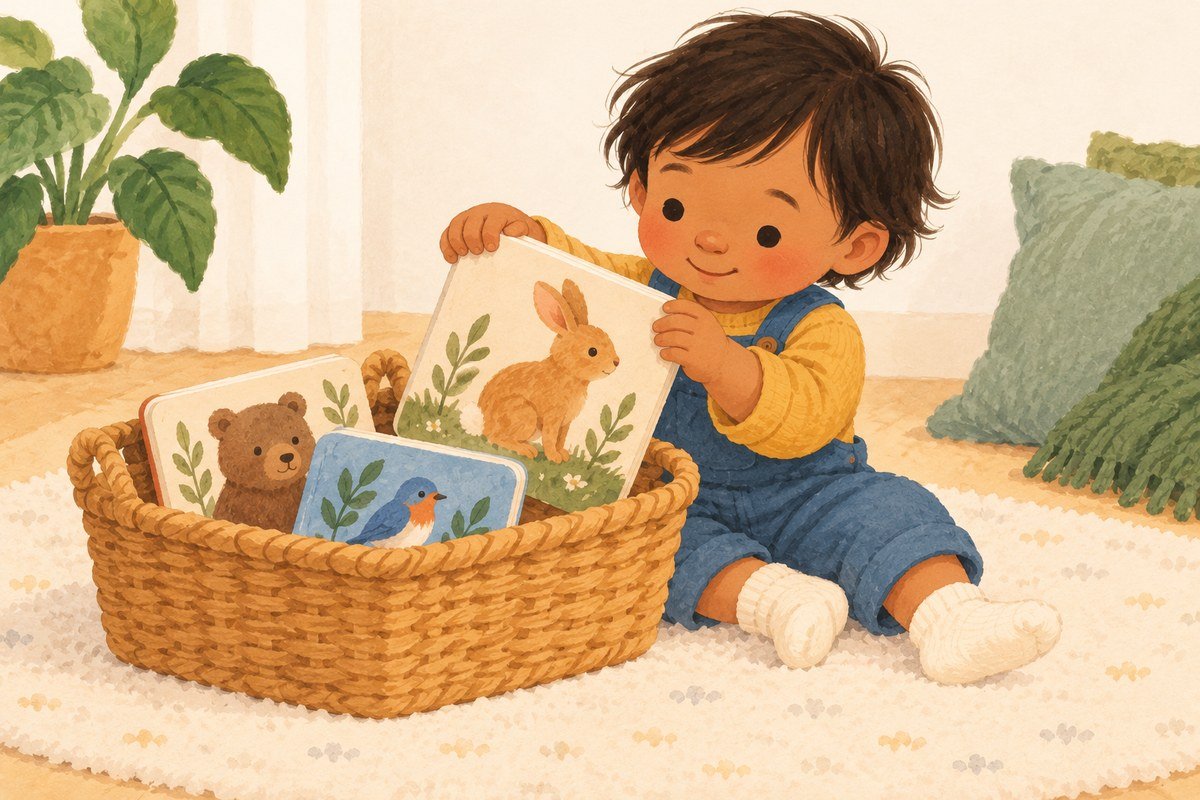
Good for: Very low-energy quiet time, books
Time: 5–20 minutes
Setup: Almost none
Mess: None
How to do it
Put three or four familiar books into a small basket instead of offering the whole bookshelf.
Your toddler can choose one, look through it, stack the books, swap them around, or “read” one to a stuffed animal.
The smaller choice is what makes this feel like an activity rather than just pointing toward the books.
How to get them interested
Put a favorite toy beside the basket and choose a book for it.
Open to one page the toddler knows, show it to the toy, then close the book and put it back.
You have started a little situation without committing yourself to reading four books.
Then let them take over
If your toddler reaches into the basket and starts choosing or flipping pages without waiting for you, resist the urge to start reading aloud immediately.
Let independent book time be independent for however long it lasts.
Toddler not interested?
Let them choose which book the stuffed animal should “read.”
Sometimes picking for somebody else is more interesting than picking for themselves.
Calm Indoor Activities for Toddlers
These still involve play and movement, but the energy tends to stay contained rather than turning into laps around the house.
1. Scarf Float
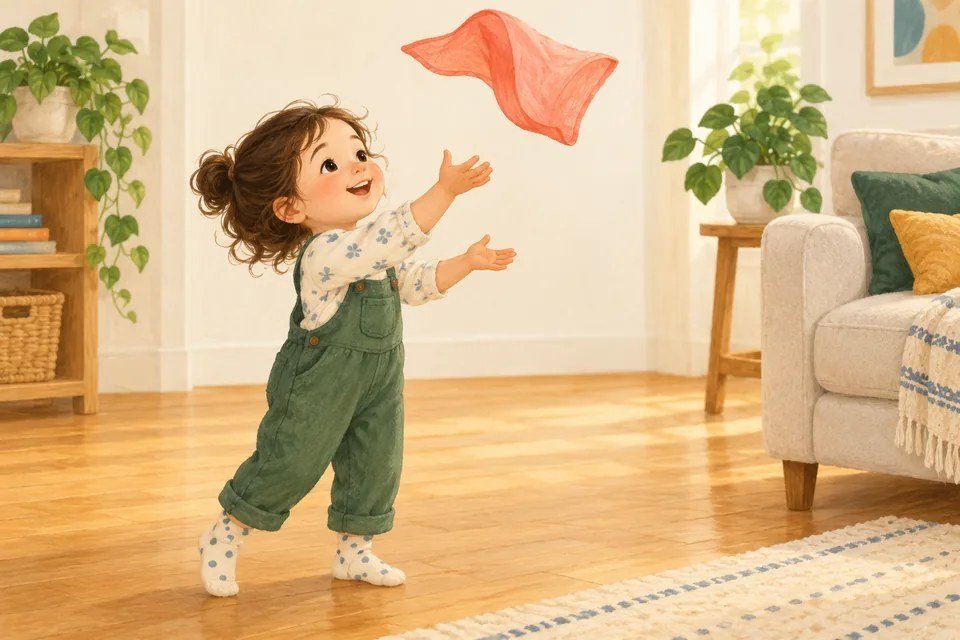
Good for: Gentle movement, visual play
Time: 5–10 minutes
Setup: None
Mess: None
How to do it
Use a lightweight play scarf and toss it gently into the air.
Watch it float down. Your toddler can throw it, catch it, hide something underneath it, or experiment with how slowly it falls.
How to get them interested
Throw it once and do nothing except watch it land.
Then throw it a little higher.
The slow fall is usually more interesting than a long explanation of what you are supposed to do with a scarf.
Then let them take over
When your toddler starts throwing it again immediately after catching or picking it up, stop taking turns unless they ask you to.
That repeated throw is the activity now.
Toddler not interested?
Drop the scarf over a stuffed animal so only part of it is visible.
Ask where the toy went.
Important safety note
Use an age-appropriate play scarf and supervise. Do not encourage wrapping scarves around the neck.
2. Soft Toy Sorting
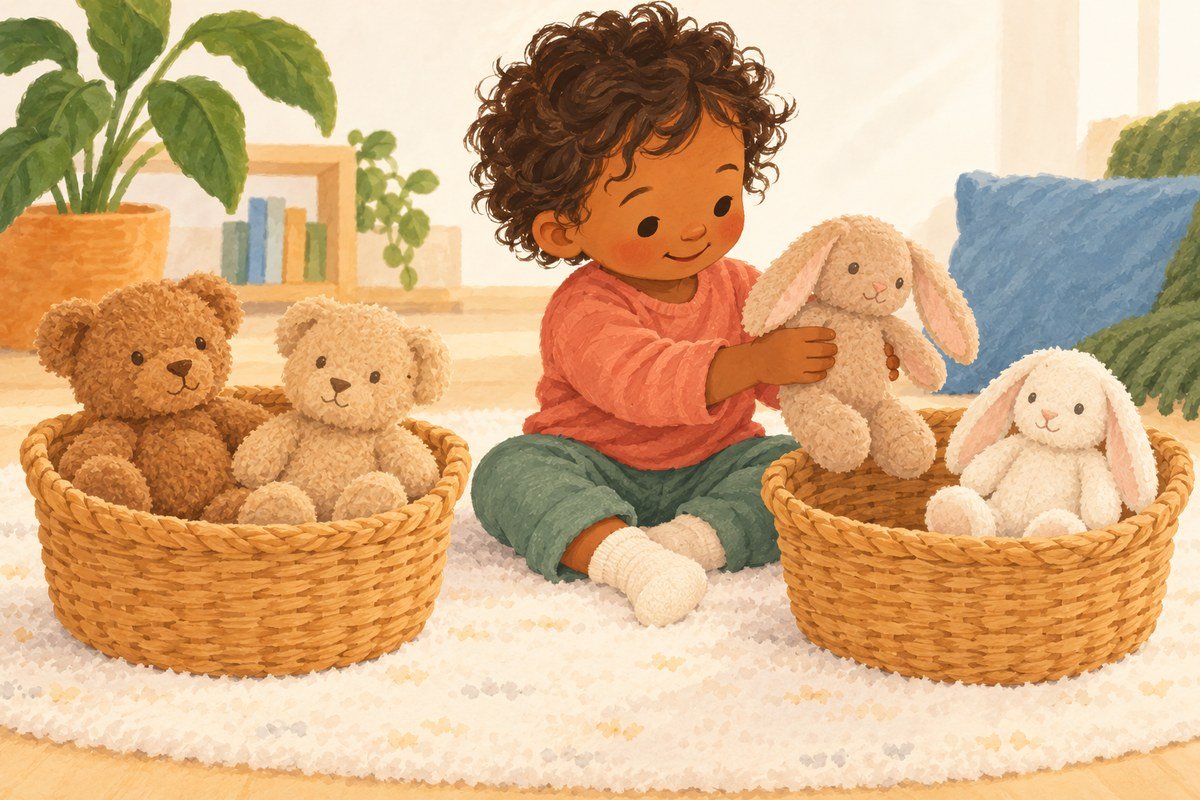
Good for: Pretend play, sorting, calmer play
Time: 10–20 minutes
Setup: Almost none
Mess: Little
How to do it
Gather several stuffed animals and make two simple areas using baskets, cushions, boxes, or opposite sides of the rug.
You can sort them by size, animal type, color, or any rule that makes sense in the moment.
How to get them interested
Give the two areas personalities instead of calling them sorting groups.
“This is the sleepy side. This is the awake side.”
Put one stuffed animal somewhere, then hand your toddler another and ask where it belongs.
Then let them take over
Once they start carrying animals to places without asking you which group is correct, stop supplying rules.
If they invent a completely new system, follow their version rather than pulling the activity back to yours.
Toddler not interested?
Turn the two areas into houses, beds, or buses.
You already have the stuffed animals out, so changing the story costs you nothing.
3. Build a Small Block House
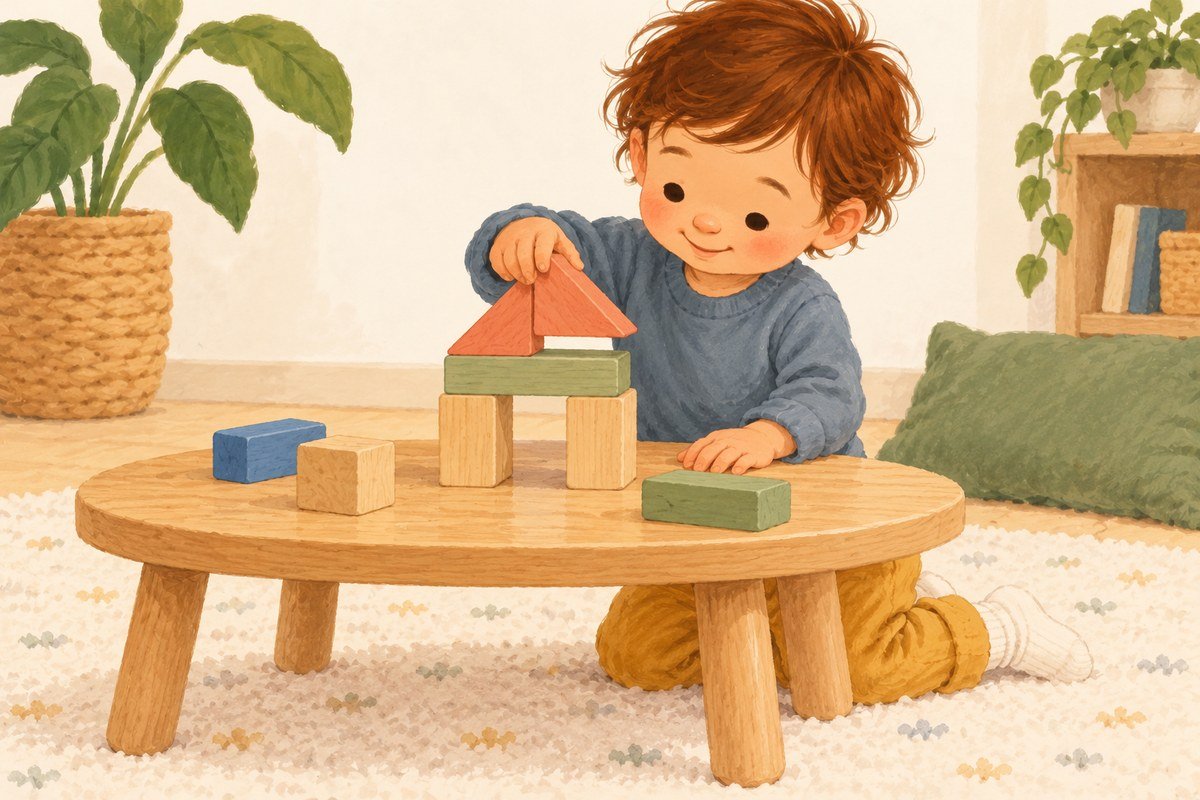
Good for: Building, focused indoor play
Time: 10–20 minutes
Setup: Almost none
Mess: Little
How to do it
Use a small amount of blocks instead of emptying the entire box.
Choose one small toy and build it something: a house, bed, garage, wall, or tiny hiding place.
Giving the build a purpose often works better than saying “go build something.”
How to get them interested
Place the toy beside the blocks and announce the problem rather than the activity.
“Teddy has nowhere to sleep.”
Put down the first two blocks and pause.
Then let them take over
When they place a block without asking where it should go, stop designing the building.
If the house immediately turns into a tower, that is now the plan.
Toddler not interested?
Build the smallest possible structure yourself and put the toy inside.
Sometimes seeing the idea finished once is enough to make them want to rebuild or destroy it.
Important safety note
Use age-appropriate blocks that are too large to be choking hazards.
4. Simple Puzzle Tray
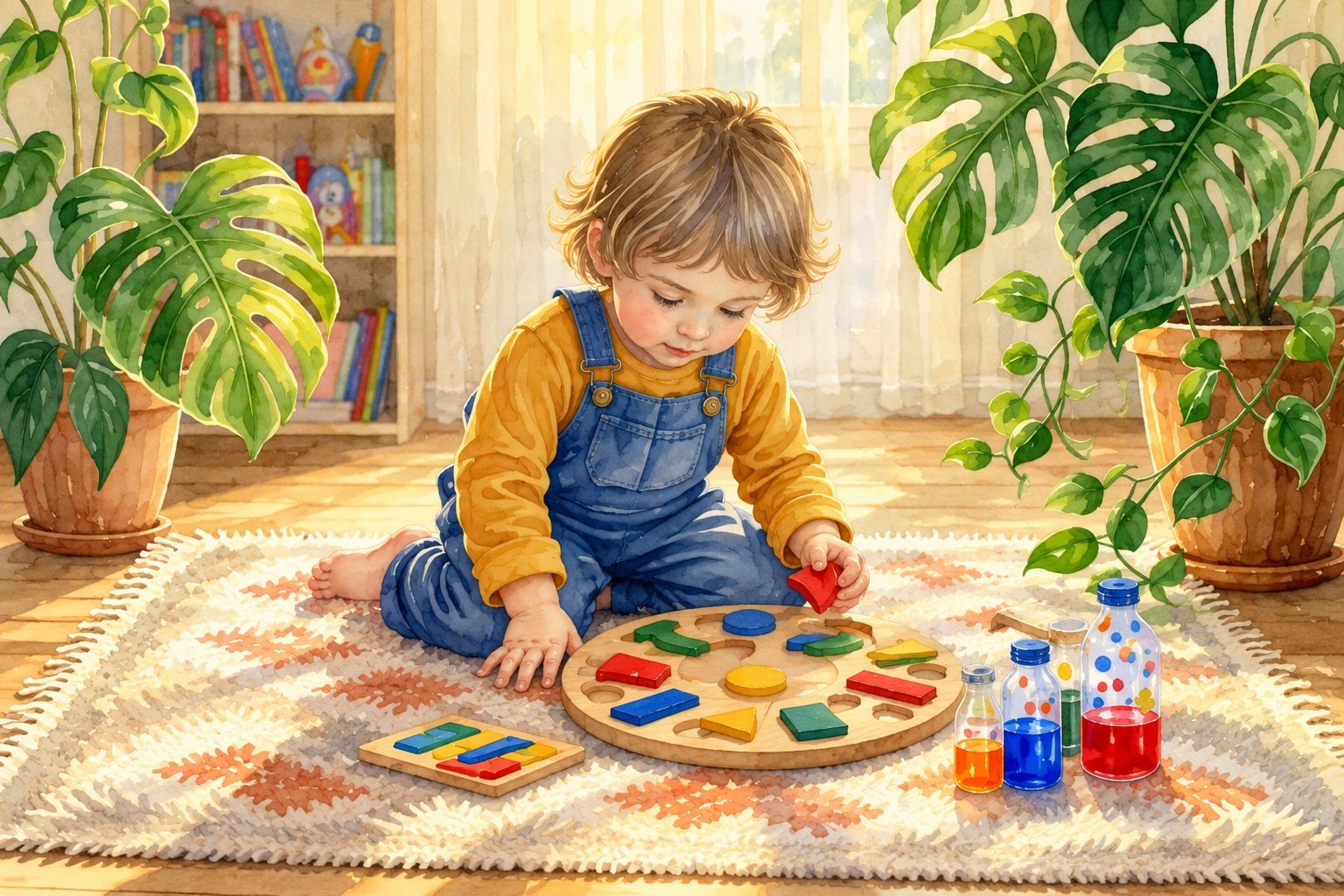
Good for: Focused tabletop play, puzzles
Time: 5–15 minutes
Setup: Almost none
Mess: None
How to do it
Choose one or two familiar chunky puzzles and put the pieces on a tray or small table.
Keep the selection limited. A shelf full of options can turn choosing into the whole activity.
How to get them interested
Complete most of a familiar puzzle yourself and leave one or two obvious spaces empty.
Put the remaining pieces beside it and walk away from the puzzle for a moment.
An almost-finished problem can be harder to ignore than an untouched puzzle.
Then let them take over
When they replace a piece and immediately reach for another one, stop pointing out where pieces belong.
If they complete it and dump it straight back out, you may have just bought yourself another round.
Toddler not interested?
Remove most of the pieces and leave only two obvious matches.
If they still walk away, leave it. This may simply not be the activity for that moment.
Important safety note
Use age-appropriate puzzles without small removable pieces for younger toddlers.
What Makes a Good Quiet Activity for a Toddler?
For me, a good quiet activity does not mean an activity where the toddler has to be quiet. That expectation would eliminate most toddlers I know.
What helps is giving them something with a clear first action. Peel this sticker. Find this sock’s partner. Put this lid somewhere. Build Teddy somewhere to sleep. A toddler can react to an action much more easily than an adult saying, “Here is an activity you can do now.”
The introduction matters more than I used to think. If I simply put something on the table and explain the rules, there is a decent chance my son will wander off before I finish talking. If I start doing it, create a small problem, make a mistake, or give one of his toys a reason to get involved, I usually have a better shot.
The next part is knowing when to stop helping.
I look for the moment when he does the next thing without waiting for me. He reaches for another sock. He parks another car. He picks up the next puzzle piece. That is when I try to shut up and get out of the activity before I accidentally turn his play back into my instructions.
Repetition helps too. Adults tend to think an activity needs more steps to stay interesting. Toddlers often disagree. Posting the same objects, opening the same container, matching the same puzzle, or parking the same cars can work precisely because they already know what happens next.
And sometimes none of it works.
There are days when something I expected to buy me twenty minutes lasts two. I’d rather accept that and try something else than spend ten more minutes persuading a toddler that they should be enjoying my excellent idea.
Want One Activity That Fits Right Now?
Not every quiet activity fits every moment.
If you need something that also works for your child’s age, the time you have, the amount of setup you’re willing to do, and how much mess you can tolerate, use the Activity Finder.
Tell Little Moment Play what you need right now and it will give you one activity to try.
Browse Toddler Activities by Age
- Activities for 1-Year-Olds
- Activities for 2-Year-Olds
- Activities for 3-Year-Olds
- Activities for 4-Year-Olds
- Activities for 5-Year-Olds