
By Antonio
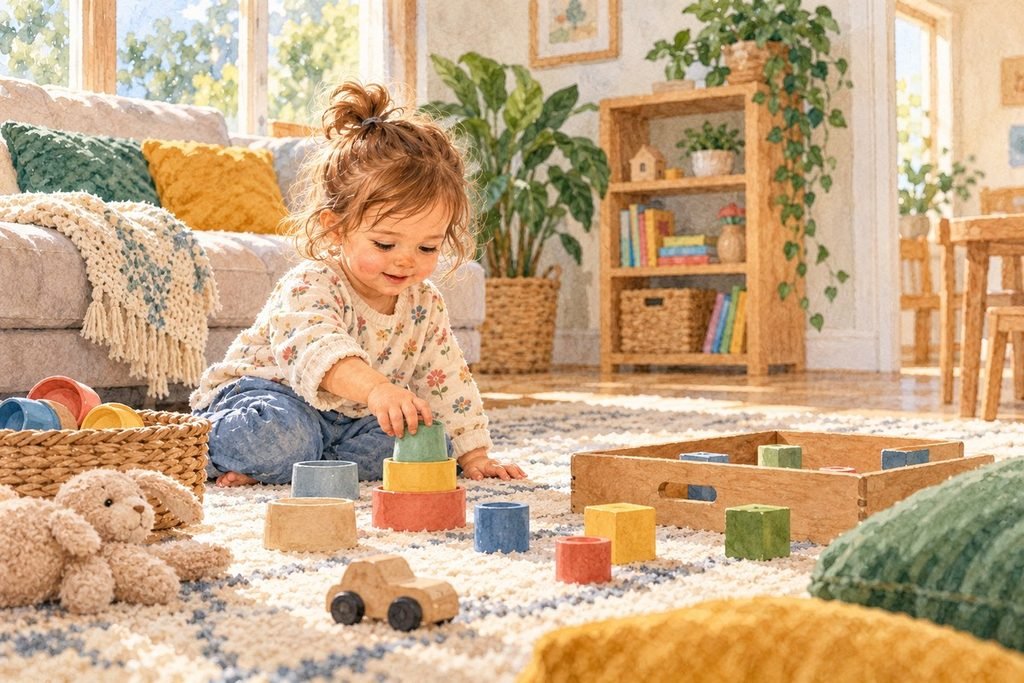
How you handle being stuck inside with a toddler depends on your available time and mood. Some times flew by, but other times I was busy with work. Even though my wife was home to take care of our kid, I still needed complete peace. Naturally, a 2-year-old running around is still a substantial distraction.
As such, working from home with a toddler has made me value activities that don’t require a long setup or a cupboard full of craft supplies. Some of the best indoor activities use things you already have: cushions, baskets, toy cars, kitchen containers, tape, socks, and whatever toys are already scattered around.
The main question is not “What is the best activity?” It is “What does my toddler need right now?” Sometimes they need to move. Sometimes you need ten quiet minutes. Sometimes they want you involved for five minutes before they are ready to take over.
To help you out, I’m listing some good indoor activities I’ve used myself or gathered from other parents (or simply by scavenging Reddit).
Not sure what will work right now?
Tell Little Moment Play what you need, your child’s age, and how much time, setup, or mess you’re willing to deal with.
Table of Contents
- Easy Indoor Activities for Toddlers at Home
- Fun Indoor Activities for Toddlers
- Indoor Gross Motor and Physical Activities for Toddlers
- Indoor Water and Sensory Activities for Toddlers
- Quiet Indoor Activities for Toddlers
- What Makes a Good Indoor Activity for a Toddler?
- Want One Activity That Fits Right Now?
- Browse Toddler Activities by Age
- More Toddler Activities
Easy Indoor Activities for Toddlers at Home
These are good places to start when you want something that takes little effort to set up. None require a trip to the store, and most use things already within reach.
For younger toddlers, keep the materials large and the goal loose. A one-year-old may use the same setup as a three-year-old, and that is fine. The activity does not have to go exactly as planned to be useful.
1. Lid Match Helper
Good for: Matching and problem-solving
Time: 5-10 minutes
Setup: Almost none
Mess: None
How to do it
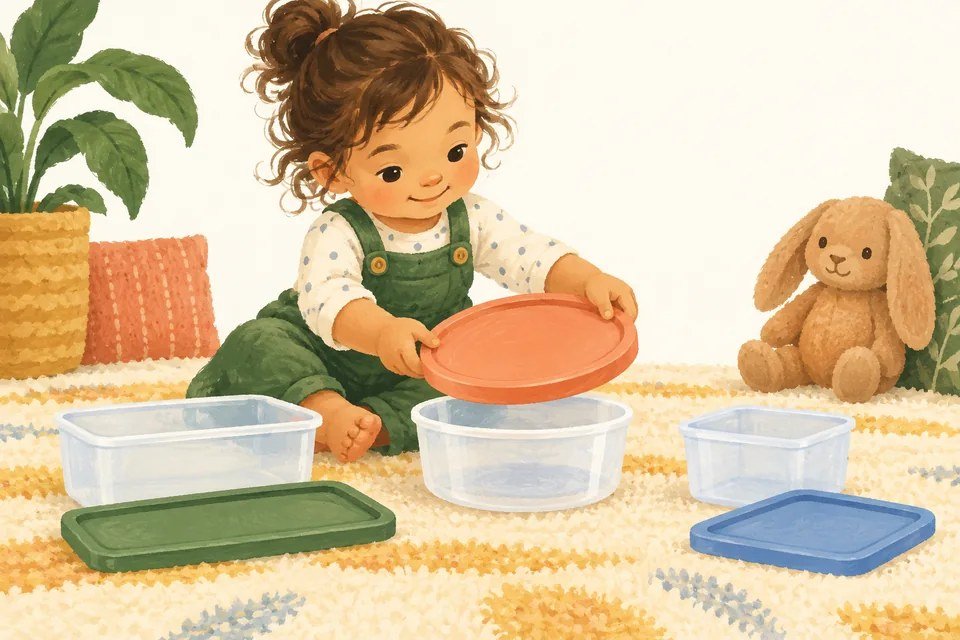
Choose three or four plastic containers with lids that look different enough to tell apart. Take the lids off, mix them up, and let your toddler work out which one belongs to which container.
There is no need to correct every mistake. Trying a lid, turning it around, and finding out that it does not fit is part of the activity.
How to get them interested
Put the wrong lid on one container and act confused.
“Does this go here?”
Giving them something to fix can work better than asking them to demonstrate a skill.
Then let them take over
Once they understand the idea, stop making matches for them. Let them open, close, stack, fill, or move the containers if the activity changes direction.
The point is to create interest, not make them complete the original task.
Toddler not interested?
Put a favorite toy inside one container and make finding the lid part of putting the toy to bed or sending it home. A small story can give the same objects a new purpose.
Important safety note
Use lightweight containers with no sharp edges or breakable parts. Avoid small lids or pieces that could fit in a toddler’s mouth.
2. Posting Box
Good for: Fine motor play and repetition
Time: 10-20 minutes
Setup: A few minutes
Mess: None
How to do it
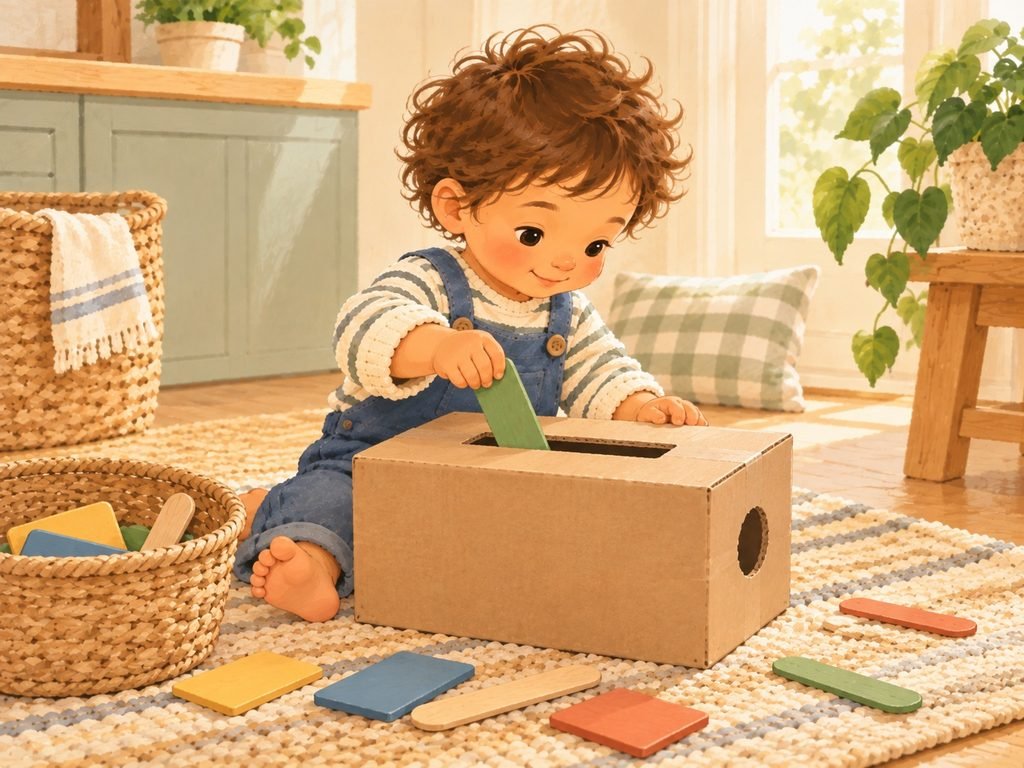
Cut a wide slot in the top of a cardboard box and gather several large objects that can fit through it. Thick wooden sticks, large cards, or wide blocks work better than small pieces.
Show your toddler how one object disappears through the slot, then let them put the rest in. Opening the box at the end and finding everything again can become part of the game.
How to get them interested
Drop one piece through the slot and notice that it has vanished. Shake the box so they can hear that something is inside.
Now there are two small mysteries to solve: where did it go, and can they make it happen again?
Then let them take over
Leave the box within reach with a small pile of objects beside it. Toddlers often enjoy repeating the same action once they understand what happens.
If they start carrying the box around or filling it another way, let the game change.
Toddler not interested?
Try posting one of their favorite objects instead of starting with unfamiliar pieces. You can also turn it into a delivery box where every item has to be “mailed.”
Important safety note
Make the slot wide enough that fingers cannot become trapped. Use objects too large to swallow, and cover rough cardboard edges.
3. Tape Road
Good for: Toy car play and imagination
Time: 15-30 minutes
Setup: A few minutes
Mess: None
How to do it
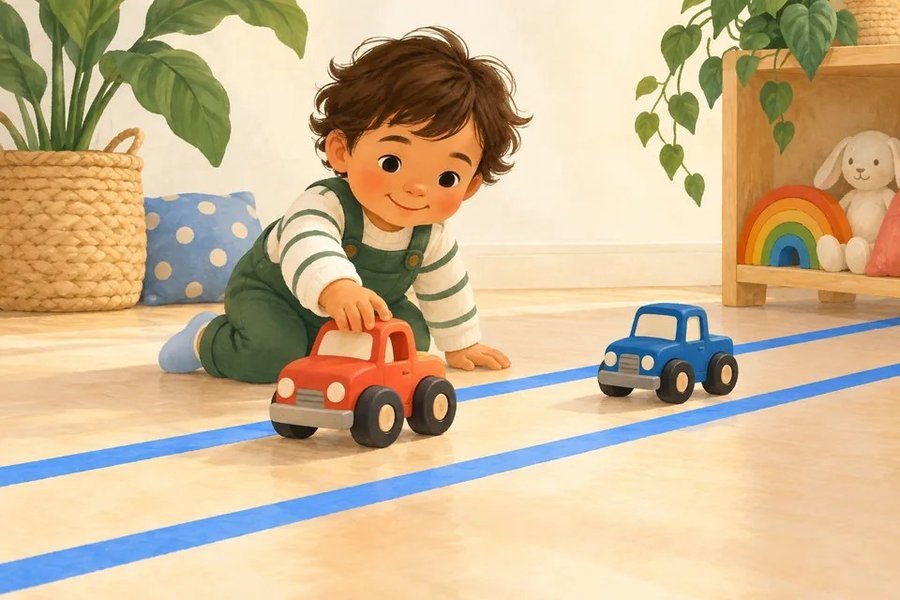
Use painter’s tape to make a road across the floor. A few straight lines and turns are enough, but you can add parking spaces, a bridge between rugs, or destinations such as the sofa and toy box.
Give your toddler a few cars or other toys that can travel along the road. The tape gives familiar toys a new setting without much preparation.
How to get them interested
Drive one car along the road and stop somewhere odd.
“This car can’t find the kitchen.”
Once your toddler starts correcting your driving or sending another car after it, the road has done its job.
Then let them take over
Let them decide where the cars go and whether they stay on the road. They may turn it into a train line, an animal path, or something you would never have planned.
That is often when the activity becomes more interesting.
Toddler not interested?
Add one destination instead of making more road. A cardboard box can become a garage, or a cushion can become a mountain the cars need to reach.
Important safety note
Use low-tack painter’s tape that will not damage the floor. Remove loose tape pieces if your child still puts objects in their mouth.
Fun Indoor Activities for Toddlers
These ideas work well when normal toys have lost their appeal and you need to change the context. The materials are familiar, but the activity gives them a job, a story, or a problem to solve.
You do not need to build a perfect pretend setup. A small change in how you introduce the toys can be enough to make them interesting again.
1. Pretend Café
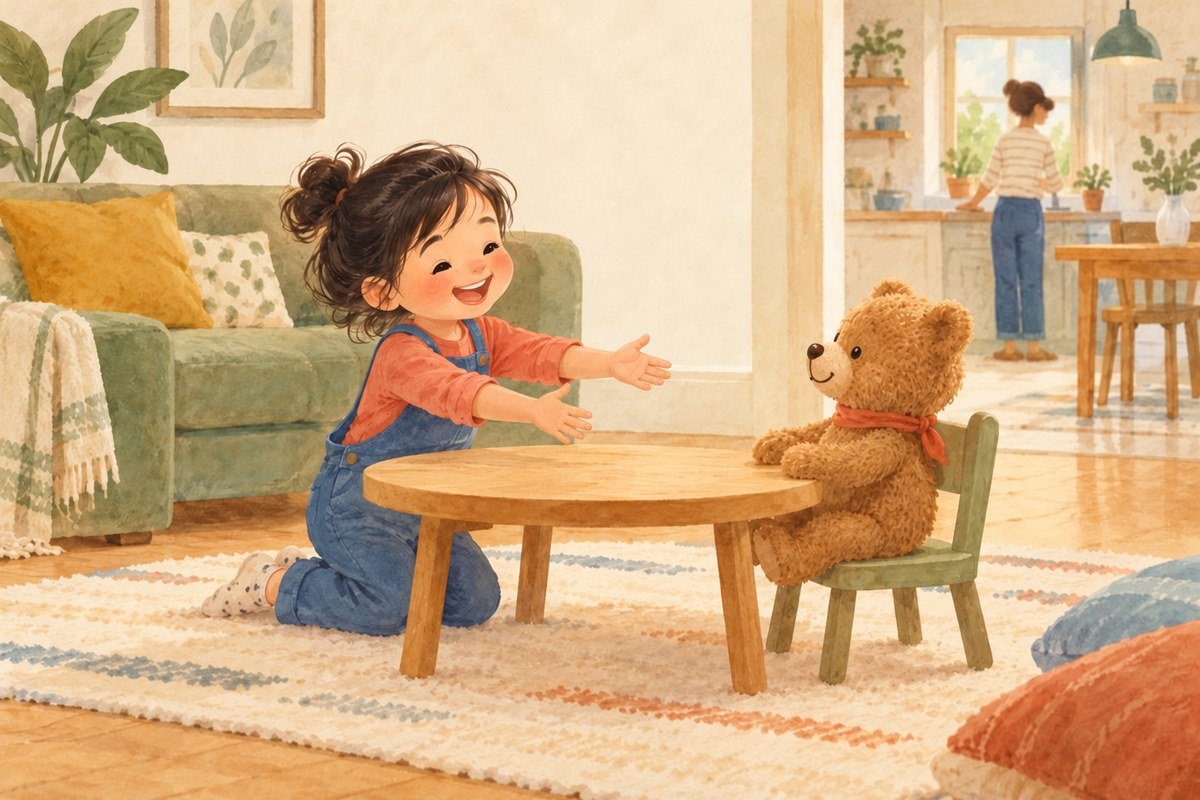
Good for: Pretend play and language
Time: 15-30+ minutes
Setup: A few minutes
Mess: None
How to do it
Use toy food, cups, plates, blocks, or safe kitchen items to make a small café. You can sit down as the first customer while your toddler decides what is being served.
You do not need to build a full pretend kitchen. A tray on the floor and two cups can be enough to establish the idea.
How to get them interested
Place an order that gives them something clear to do.
“Can I have tea and one banana?”
If your tea turns out to be a block, the café serves block tea now.
Then let them take over
After the first couple of orders, ask what you should eat or who should be the customer next. Stuffed animals can take your place if your toddler wants to continue without you.
Pretend play becomes more independent once the child starts deciding what happens next.
Toddler not interested?
Turn the café into a delivery service. Ask them to bring one item to the sofa, one to a stuffed animal, and one to another room.
Important safety note
Use play food or household items that suit your child’s age. Avoid small pretend-food pieces with children who still mouth toys.
2. Toy Car Parking
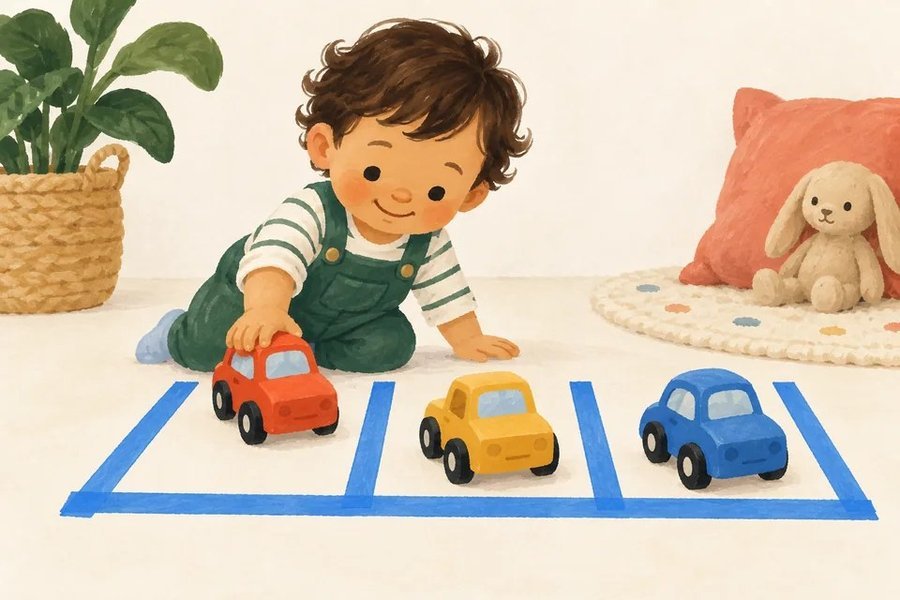
Good for: Matching, pretend play and fine motor control
Time: 10-20 minutes
Setup: A few minutes
Mess: None
How to do it
Make several parking spaces with tape, paper, or small boxes and gather a few toy cars. Your toddler can park them, move them between spaces, or line them up.
Older toddlers may enjoy matching cars to colored spaces. Younger toddlers may be happy driving in and out.
How to get them interested
Park one car badly, with half of it outside the space.
“Is that how you park a car?”
Giving them a mistake to fix creates an easy opening into the game.
Then let them take over
Once the cars start moving, stop assigning parking spaces. The parking lot may turn into a race track, repair shop, or traffic jam.
Let the game go where they take it.
Toddler not interested?
Add a problem. One car is stuck, another cannot find a space, or a stuffed animal needs a ride home.
Important safety note
Use age-appropriate cars without loose wheels or small removable parts. Keep the play area away from stairs.
3. Indoor Treasure Hunt
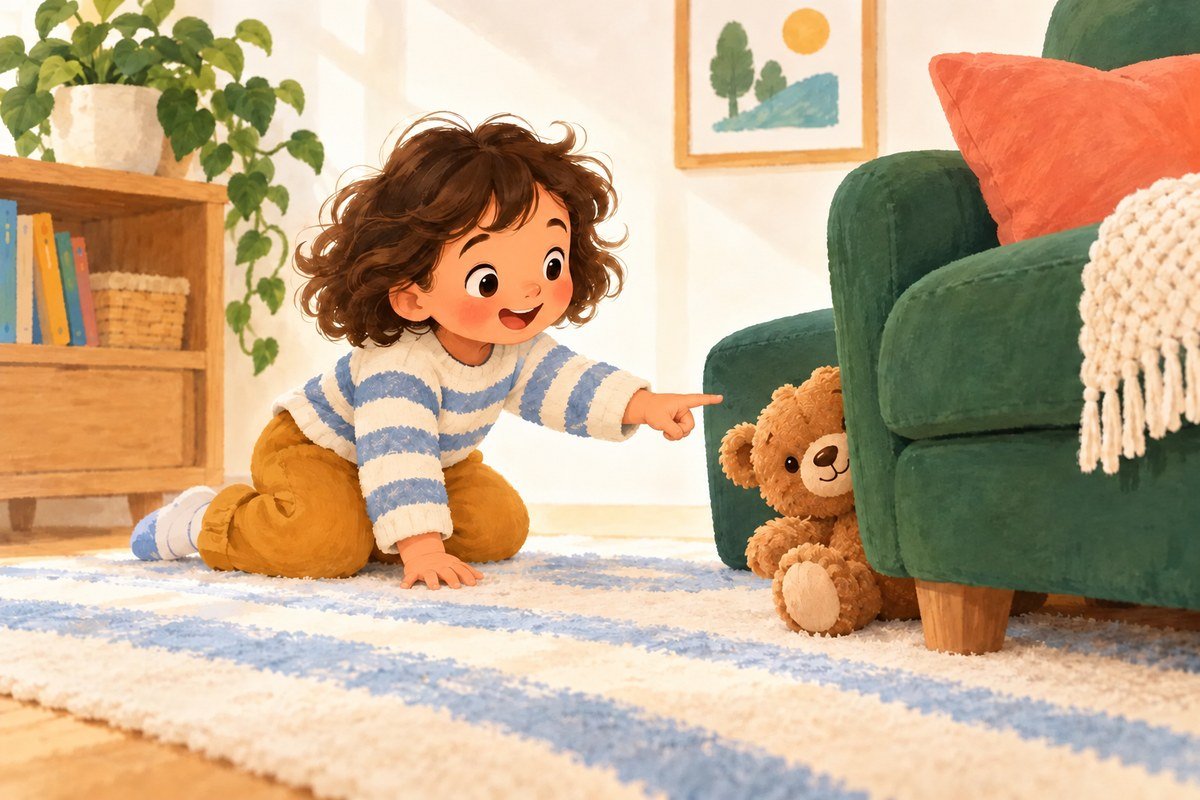
Good for: Exploration and problem-solving
Time: 15-30 minutes
Setup: A few minutes
Mess: None
How to do it
Hide a few familiar objects around one room or a small part of the home. Start with places that are easy to spot, such as beside a cushion or under the edge of a blanket.
Give clues that match your child’s age. For younger toddlers, “Can you find the red car?” is enough. Older toddlers may enjoy clues such as “Look where we keep the shoes.”
How to get them interested
Hide one object while they watch you. Let them find that first, then make the next hiding place less obvious.
That shows them the game before asking them to search without knowing what they are supposed to do.
Then let them take over
After a few rounds, ask your toddler to hide something for you. They may put it in plain sight and stand beside it smiling.
That still counts.
Toddler not interested?
Skip hiding objects and turn it into a finding challenge. Ask for something blue, something soft, or something that belongs in the kitchen.
Important safety note
Keep the hunt in areas where your child can move without climbing furniture or opening unsafe cupboards. Do not hide items near stairs or electrical equipment.
Indoor Gross Motor and Physical Activities for Toddlers
Some indoor days go wrong because the child does not need another quiet toy. They need to move.
A hallway, clear patch of floor, or a few cushions can give that energy somewhere to go without turning the living room into a gym. The goal is to make movement possible with the space you already have.
1. Cushion Islands
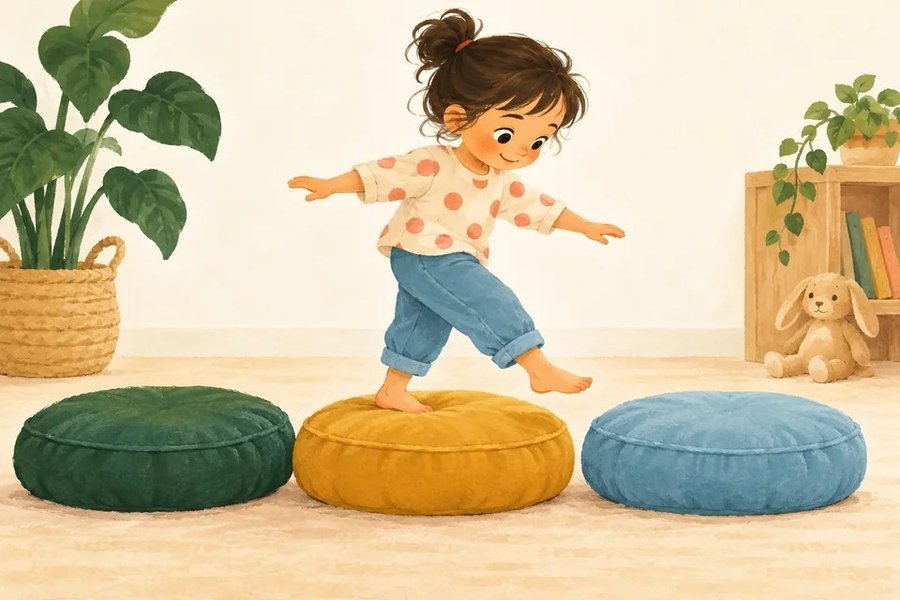
Good for: Balance and whole-body movement
Time: 15-30 minutes
Setup: A few minutes
Mess: None
How to do it
Place cushions or firm pillows across a clear section of floor with small gaps between them. Your toddler moves from one island to another without stepping onto the floor.
Start with the cushions close together. If the game becomes easy and your child is steady on their feet, change the spacing or route.
How to get them interested
Cross the first few islands yourself and give the floor a role.
“The floor is lava.”
The game becomes clear as soon as you step from cushion to cushion.
Then let them take over
Let your toddler move the cushions and create a route for you. Designing the challenge can be as fun as completing it.
Toddler not interested?
Put a favorite stuffed animal on the last cushion and turn the game into a rescue.
Important safety note
Use cushions on a flat floor with enough grip to stay in place. Keep the route away from furniture corners and stairs.
2. Animal Walk Trail

Good for: Movement, coordination and pretend play
Time: 10-20 minutes
Setup: None
Mess: None
How to do it
Choose a few animals and copy the way they move. Stomp like an elephant, crawl like a bear, hop like a frog, or waddle like a duck.
Move across the room or from one point to another instead of staying in one place. That turns the imitation into a small physical challenge.
How to get them interested
Start moving before you explain anything. Seeing a parent crawl across the room like a bear gives a toddler more information than a description of the game.
Ask them what animal you should become next once they start watching.
Then let them take over
Let your toddler invent animals and decide how those animals move. If they create a flying cow that crawls backward, copy it.
Their version does not need to resemble the real animal.
Toddler not interested?
Use a toy animal to demonstrate first. The toy can move across the sofa or floor and ask your toddler to follow.
Important safety note
Clear hard toys and furniture from the movement area. Keep crawling and jumping away from stairs or slippery floors.
3. Laundry Basket Push
Good for: Pushing, carrying and burning energy
Time: 10-20 minutes
Setup: None
Mess: None
How to do it
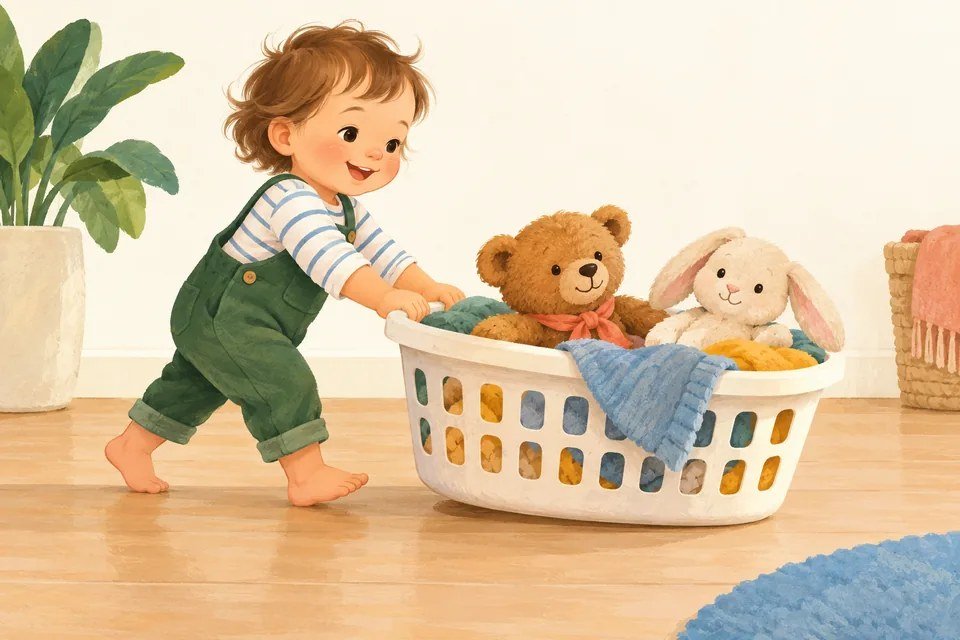
Put a few stuffed animals or soft items inside an empty laundry basket and let your toddler push it across the floor. A hallway or open room gives them enough space to make deliveries.
The basket adds resistance, which makes a short trip feel like a bigger physical job.
How to get them interested
Put one favorite toy inside.
“Teddy needs a ride to the sofa.”
After the first delivery, add another passenger or choose a new destination.
Then let them take over
Let your toddler choose what goes in the basket and where it travels. They may spend more time loading and unloading than pushing, which is fine.
Toddler not interested?
Try transporting something they care about, such as stuffed animals, blankets, or toy cars. You can also take the first turn and ask them to help when the basket gets “stuck.”
Important safety note
Use the basket on a flat floor away from stairs. Do not push a child inside the basket, and stop the game if the basket starts tipping.
4. Soft Ball Delivery
Good for: Throwing, carrying and aiming
Time: 10-20 minutes
Setup: Almost none
Mess: None
How to do it
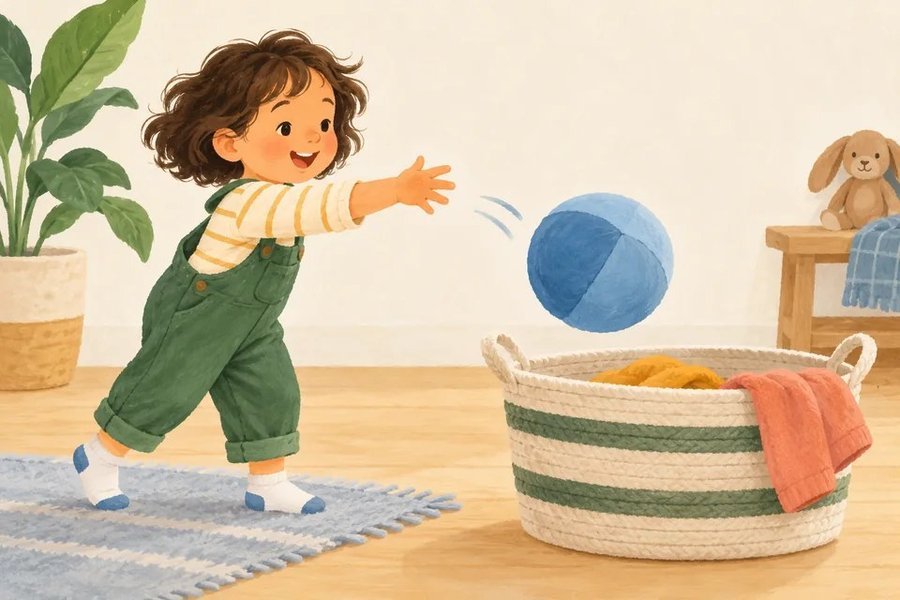
Place a basket or box a short distance away and give your toddler a soft ball. They can throw it into the target, carry it there, or roll it across the floor.
Once the first distance becomes easy, move the target or change the starting point.
How to get them interested
Stand close to the basket and score once yourself. Then hand them the ball and give them a turn.
A visible target makes the idea easy to understand.
Then let them take over
Let your toddler move the basket or decide where you have to throw from. Changing the challenge keeps the same game useful for longer.
Toddler not interested?
Forget throwing and turn it into delivery. The ball can travel to the kitchen, sofa, teddy, or another room and come back.
Important safety note
Use a soft ball that will not damage furniture or hurt someone if the throw goes the wrong way. Move fragile objects out of the area first.
Indoor Water and Sensory Activities for Toddlers
Water and sensory play can work indoors without turning the whole room into a project. A towel underneath and a small amount of water are often enough.
These activities work best when you can stay close and let the child explore without trying to control every part of the play.
1. Vegetable Wash Station

Good for: Water play and helping with a real task
Time: 10-20 minutes
Setup: A few minutes
Mess: A little
How to do it
Put a small amount of water in a wide bowl and add a few vegetables that need washing. Give your toddler a sponge, cloth, or brush and a second bowl for the finished vegetables.
This works well when you are already preparing food because the activity becomes part of something that needs doing.
How to get them interested
Wash one vegetable in front of them and point out what changed.
“Can you get the next one ready?”
Being included in a real household job can be more appealing than being given a separate toddler activity.
Then let them take over
Keep preparing food while they wash the remaining vegetables beside you. You are still supervising, but they have their own part of the job.
Toddler not interested?
Add a transfer step. Clean vegetables go in one bowl; dirty ones stay in the other.
That gives the activity a visible beginning and end.
Important safety note
Stay beside your toddler during water play. Use foods that are safe for them to handle, and keep knives and cooking tools out of reach.
2. Scarf Float
Good for: Visual tracking and calm movement
Time: 5-10 minutes
Setup: None
Mess: None
How to do it
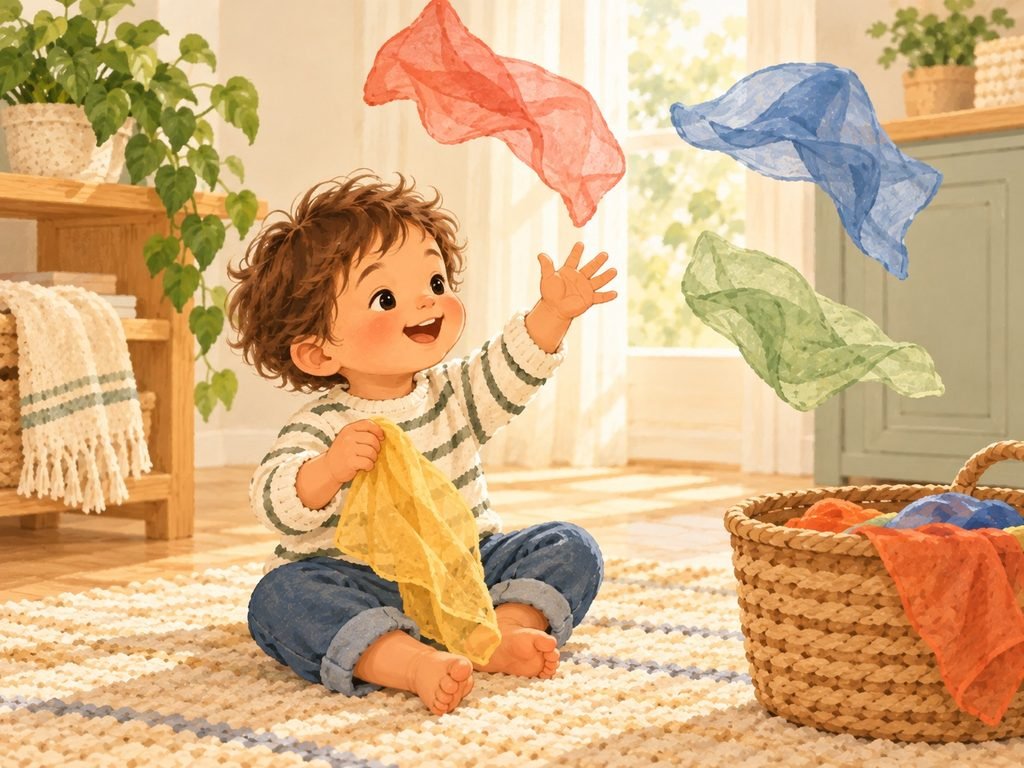
Take a short, lightweight scarf or piece of fabric and toss it into the air. Watch it float down, catch it, or try to make it land on a cushion or toy.
You can change the height of the throw or use two colors if your child wants more to watch.
How to get them interested
Throw the scarf over your own head or let it land on a stuffed animal. A bit of silliness gives the fabric a purpose before you hand it over.
Then let them take over
Give them the fabric and let them throw, carry, hide, or wave it. They do not need to keep playing the original game once they find another use for it.
Toddler not interested?
Use the scarf for peekaboo or hide a toy underneath it. The same object can become a new activity without any extra setup.
Important safety note
Use a short piece of lightweight fabric and supervise the activity. Avoid long scarves, cords, or anything that could wrap around the child’s neck.
3. Toy Wash Station
Good for: Water play and pretend cleaning
Time: 10-20 minutes
Setup: A few minutes
Mess: A little
How to do it
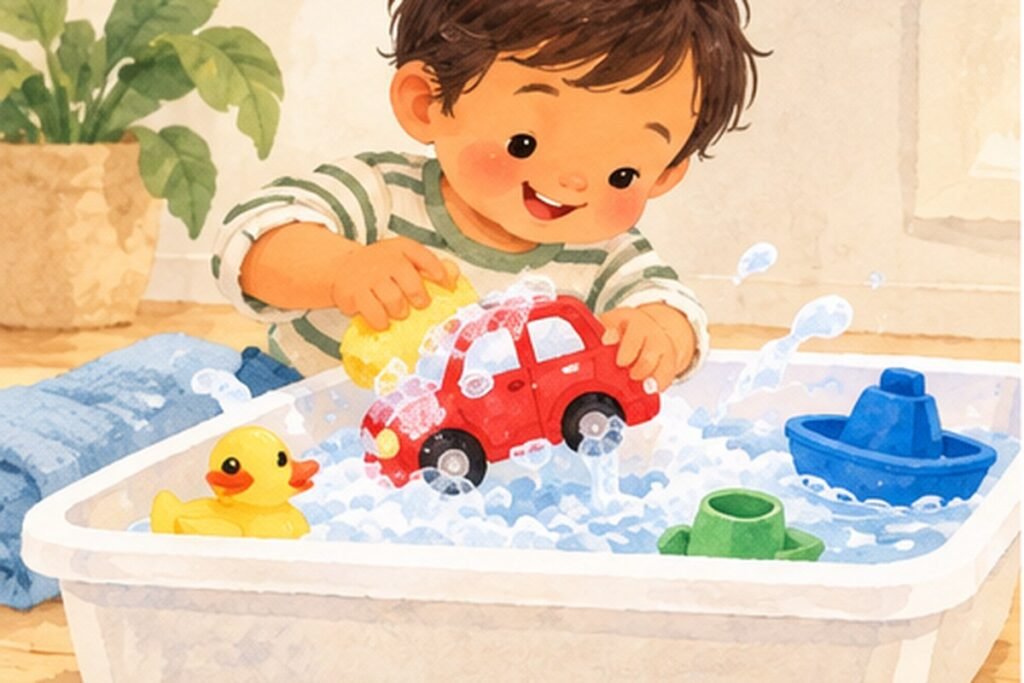
Put a small amount of water in a shallow container and add a sponge or cloth. Choose several washable plastic toys, then let your toddler wash them and place them on a towel to dry.
Toy cars, plastic animals, and bath toys work well as long as they do not contain batteries or electronics.
How to get them interested
Choose one toy and announce that it needs a wash. Give it a few sponge wipes, place it on the towel, and ask which toy should be next.
That creates a job with a clear before-and-after result.
Then let them take over
Let your toddler choose the order, decide what counts as clean, and move toys between the water and drying area.
The washing process matters more than the result.
Toddler not interested?
Turn the water into a bath for one favorite toy instead of washing several. A toy that needs help can be more interesting than a tray of objects.
Important safety note
Stay within reach during water play. Use washable toys with no electrical parts or openings that could trap water.
Quiet Indoor Activities for Toddlers
Not every indoor activity needs to burn energy. Sometimes the goal is the opposite.
These ideas fit moments when your toddler is getting tired, the house needs to calm down, or you need something that does not involve running from one end of the room to the other.
1. Put the Toys to Bed
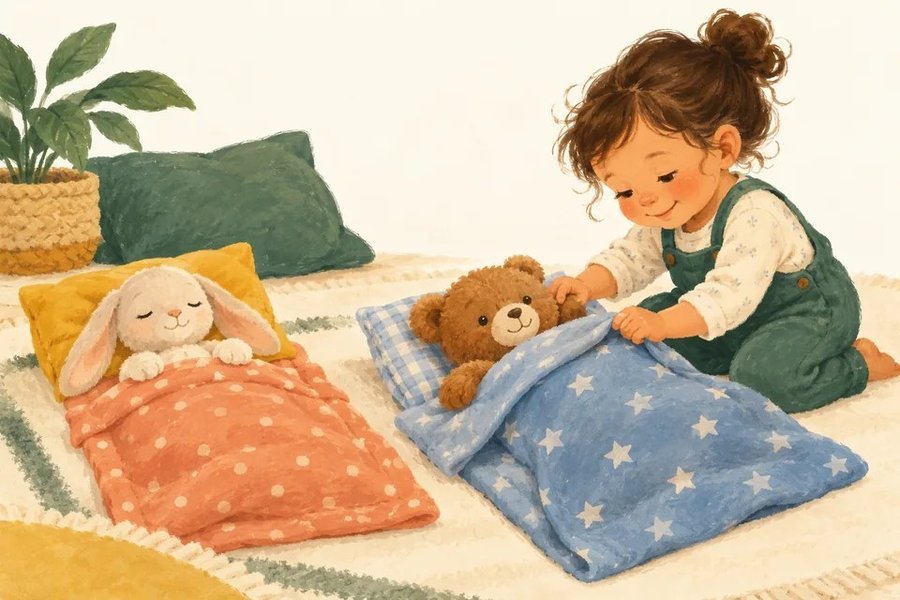
Good for: Calm pretend play and winding down
Time: 10-20 minutes
Setup: None
Mess: None
How to do it
Choose a few stuffed animals or dolls and make small beds using cushions, cloths, boxes, or blankets. Your toddler can tuck them in, arrange them, and decide what each toy needs before sleep.
There is no fixed sequence. Some toys may need a story, a drink, three blankets, and another trip across the room before they agree to go to bed.
How to get them interested
Start with one toy that refuses to sleep.
“What do you think Teddy needs?”
A small problem gives your toddler a role in the story instead of asking them to copy a bedtime routine.
Then let them take over
Once the first toy is settled, step back and see whether the others get their own routines. Pretend play can grow once the child becomes the person making the decisions.
Toddler not interested?
Put one toy to bed in the wrong place, such as inside a basket or under a chair. Ask your toddler whether you have made a mistake.
Important safety note
Use blankets and fabric pieces for play with toys, not as part of unsupervised sleep. Remove boxes or objects if they become climbing hazards.
2. Sock Match
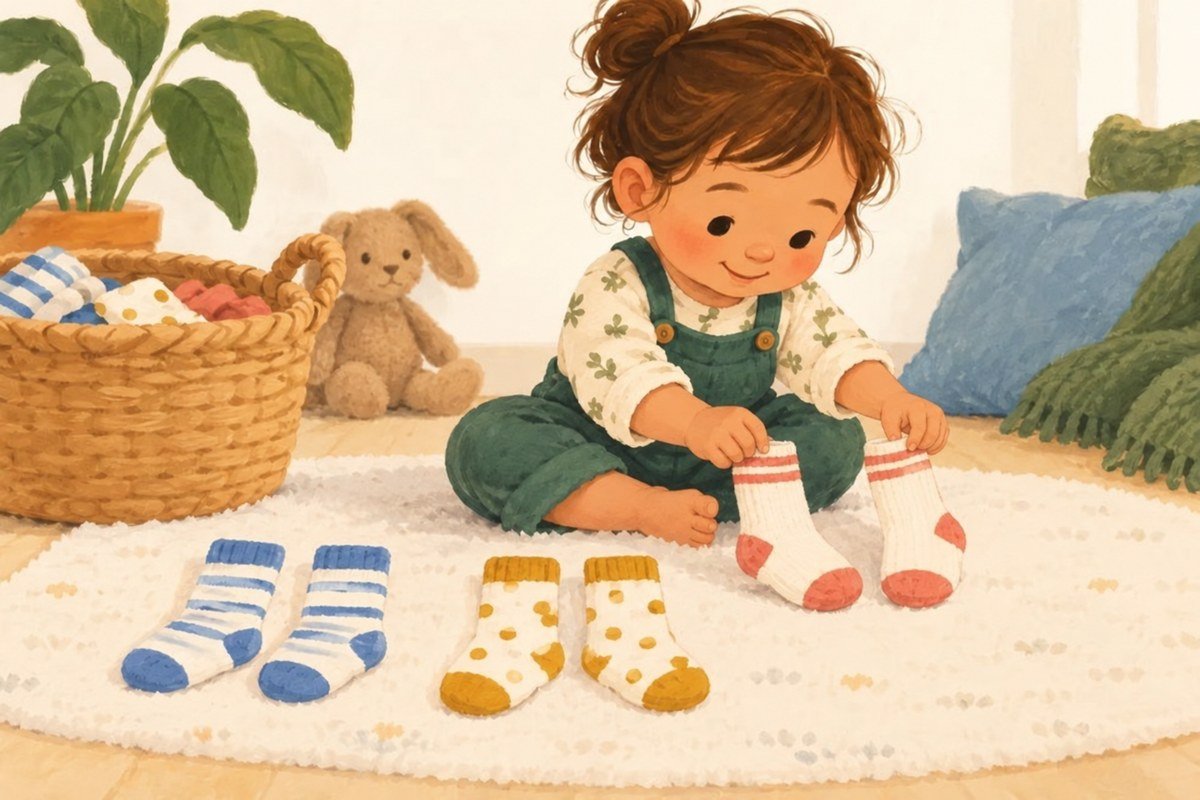
Good for: Matching, sorting and calm play
Time: 5-15 minutes
Setup: Almost none
Mess: None
How to do it
Take several pairs of socks with clear differences in color or pattern and mix them into a small pile. Let your toddler find pairs, put matching socks together, or sort them into groups.
Younger toddlers may not understand matching yet, but they can still move socks, choose colors, or put them into a basket.
How to get them interested
Put two socks together that do not match.
“Did I find a pair?”
If your toddler spots the mistake, let them fix it.
Then let them take over
Let them decide which socks belong together even if their rule differs from yours. Two socks may match because they are both soft or because your toddler says they do.
Toddler not interested?
Turn the socks into puppets or hide a small toy under one. You can return to matching if the socks become interesting again.
Important safety note
Use clean socks and keep the activity away from loose buttons, clips, or other small laundry items.
3. Sticker Picture
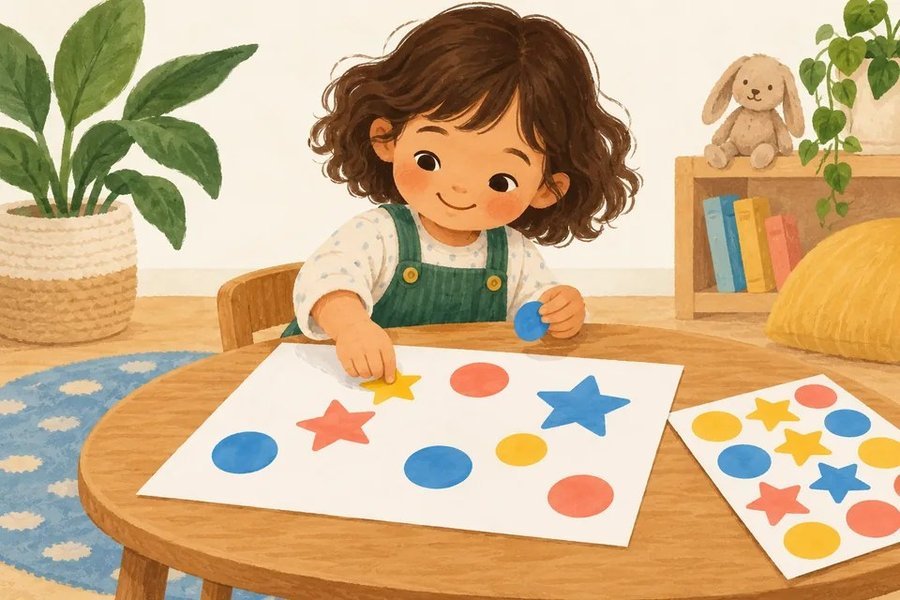
Good for: Fine motor play and quiet creativity
Time: 10-20 minutes
Setup: Almost none
Mess: None
How to do it
Give your toddler a sheet of large stickers and a piece of paper. Let them place stickers wherever they want instead of asking them to create a specific picture.
Older toddlers may start turning the stickers into a scene. Younger toddlers may focus on peeling, pressing, and moving them.
How to get them interested
Place one sticker on your own paper and give it a role.
“Mine is a window. Where should yours go?”
That gives them a starting point without deciding the picture for them.
Then let them take over
Leave the paper and stickers in front of them and stop directing placement. The activity can last longer when there is no correct finished product.
Toddler not interested?
Put one sticker somewhere unexpected on the paper and ask them to find it. You can also draw a few large circles and invite them to put stickers inside or outside them.
Important safety note
Use large stickers designed for children and supervise toddlers who still put objects in their mouth. Remove sticker backing as it comes off so scraps do not end up on the floor.
What Makes a Good Indoor Activity for a Toddler?
An indoor activity does not need to recreate a playground inside your living room. It needs to fit the space you have, the amount of attention you can give, and what your child needs at that moment.
That last part matters more than the activity list. If your toddler has spent an hour climbing the furniture, a matching game may not solve the problem. Cushion islands, animal walks, or pushing a laundry basket have a better chance because they give that energy somewhere to go.
On another day, movement may be the last thing you need. A tired child who is jumping between activities may respond better to putting toys to bed, matching socks, or playing with stickers. Indoor play becomes easier when you stop looking for the “best toddler activity” and start looking for the activity that fits the situation.
Setup matters too. I like activities that can survive a toddler losing interest after five minutes. If you spent half an hour preparing something, those five minutes feel like a failure. If you put three containers and their lids on the floor, five minutes of play is still five useful minutes.
For toddlers under two, I would put less emphasis on rules and more on safe exploration. Use large objects, keep instructions short, and expect the child to change the activity. A posting box might become a container to carry around, and a tape road might become something they peel from the floor. That does not mean the activity failed.
Indoor activities should make the day easier rather than add another job to it. Some will hold your child’s attention for twenty minutes. Some will last three. The useful part is having enough options that you can try something else without turning playtime into a project.
Want One Activity That Fits Right Now?
You do not always need a list of sixteen ideas. Sometimes you need something your toddler can do now, with the time and energy you have.
The Little Moment Play Finder uses age, available time, setup, mess, and what you need from the activity to give you one suggestion.
Browse Toddler Activities by Age
- Activities for 1 Year Olds
- Activities for 2 Year Olds
- Activities for 3 Year Olds
- Activities for 4 Year Olds
- Activities for 5 Year Olds