
By Antonio
I have my board game friends with who I play board games every week. I no longer go to bars, I just play games every Friday.
So I had a fairly optimistic picture of what my first board game experience with my son would look like: I’d explain it, my 2-year-old would listen, and we’d have a proper little session.
I got Rhino Hero Junior from one of my board games friends naturally. So the next day I sat my son and opened the box. Almost as soon as I started explaining the matching, my son was playing with the figurines and throwing them around the room. The box said 2+, but my expectations had skipped a few steps.
What worked was much simpler: stacking floors and roofs, then knocking them down. Different parts became interesting at different times. That experience shapes my shortlist of board games for 2-year-olds: Rhino Hero Junior, which I play with my kid to this day, and five researched choices I’d consider based on what a kid already enjoys.
My Quick Shortlist of Board Games for 2-Year-Olds
| Game | Best fit if your child likes… | Where I’d start | Approx. US price | Where to buy |
|---|---|---|---|---|
| Rhino Hero Junior | Building and knocking things down | Build a tower without worrying about the rules | $29.99 | Meeple Madness |
| First Orchard | Colors, chunky objects and filling containers | Pick up the fruit and put it in the basket | $29.99 | HABA USA |
| Monkey Around | Moving, copying and being silly | Start with one funny movement | $19.99 | Target |
| Where’s Bear? | Hiding, finding and stacking | Hide the bear under a box | $19.99 | MindWare |
| Acorn Soup | Pretend cooking | Make soup before introducing the recipes | $21.99 | Target |
| Here, Fishy, Fishy! | Catching things and physical challenges | Let them experiment with the fishing rod | $29.99 | HABA USA |
Prices checked October 26, 2026. Prices and availability can change, so check the retailer before buying.

A little help with the first game
What does your toddler already enjoy?
Build a small tower together. Let your toddler knock it down—and build it again.
If your toddler wants more, try matching one color. Leave the full rules for later.
Already have blocks? Try the build-and-tumble idea with those first.
A starting point from the article, not a readiness test. Follow the game’s age guidance and supervise play; there’s no need to finish a game.
No Board Game at Home Yet?
You don’t need a new box to try this kind of low-pressure play. My collection of activities for 2-year-olds offers other starting points using things you may already have.
For a calmer moment, browse quiet activities for toddlers. If picking up, placing and moving objects is the attraction, try these fine motor activities for toddlers.
If you’re unsure what fits right now, use the Activity Finder for one suggestion based on age, time, setup and mess.
What Rhino Hero Junior Taught Me About Board Games for 2-Year-Olds
Now, I strongly believe there’s a lesson to be learned from my first father-son board game experience. I’ll use Rhino Hero Junior, but this would probably apply to you too. So here’s some tips to help you have a nice experience.
My first mistake was starting with the explanation
I approached it as if I’m in the board game club with my 30-year-old friends. First we’d understand what the pieces were for; then we’d play. In between, we’d made jokes.
But, my son had already found something he wanted to do with the figurines, and it had very little to do with my explanation. I was trying to get him interested in the rules before finding out what interested him in the box.
And since I had my expectations (that were slowly but steadily crumbling), I started to feel a bit frustrated. Luckily, I went to my mind palace to remember the obvious: this is a 2-year-old kid.
We stopped playing the game properly
I also remembered that like any 2-year-old, my son liked watching things fall, so I quickly stacked the floors and roofs and knocked them down. We didn’t worry about the proper order or the rules. That gave us a way into the game: something he wanted to do, with me joining in.
The rules came later, one piece at a time
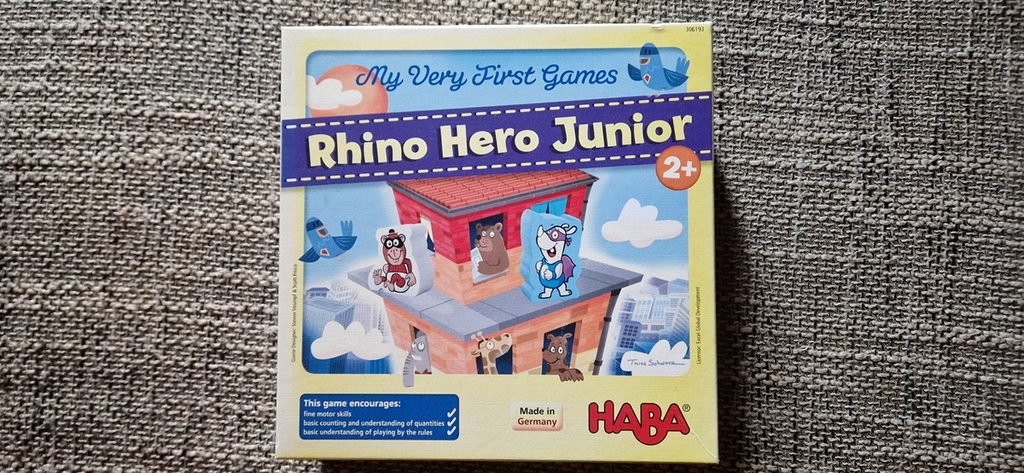
Two days later, new progress: matching the colors became interesting. We could use the colors to see which floors followed each other. Other parts of the included games became interesting later, rather than arriving together in one explanation.
The memory game was still difficult for him. Physically joining the two wall pieces was still challenging too. I don’t treat those as things we need to fix before we can enjoy the box. They’re simply parts we can leave for another time. This wasn’t a planned lesson; I followed what he was interested in.
I also stopped formally asking him to play
Sometimes I leave the box somewhere obvious for him to discover. He sees it and brings it to me. That feels different from me announcing that we’re going to play a board game: it starts with something he has chosen. Although I’m the game master in the background. #Evil laugh follows.#
My main tip: go in without expectations
I’d strongly recommend Rhino Hero Junior as a first game, with that tip attached. A toddler may ignore the rules, play with the figures, stack things “incorrectly”, knock everything down or leave after a few minutes. In our case, that didn’t mean the game had failed. It was how we started.
This works for any board game that you might start. Go with zero-expectations, get on their level and have fun.
What I Now Look for in a Board Game for a 2-Year-Old
Is there something fun to do before understanding all the rules?
I look for an obvious action: build, hide, stir, catch or copy a movement. With my son, the tower falling was enough to make the pieces worth exploring. A winning condition wasn’t needed at that point.
Can I introduce one part at a time?
I want a game where I can leave something out. First the pieces, then one shared action, then perhaps a color or a turn. That gives me somewhere to go when he starts asking for more.
Can the game survive being played “wrong”?
I mean whether it can still be enjoyable when we ignore the printed sequence, rather than a promise that the components are indestructible. If all the fun depends on finishing the full game correctly, I’d be less keen to start there.
Is waiting kept to a minimum?
For a first attempt, I’d rather do something together than spend most of the time reminding him that it’s my turn. I can make turns more distinct later.
Can I demonstrate instead of explain?
Building one floor showed my son more than another explanation would have. For other toddler board games, I’d look for the same opportunity to show one action and see whether he wants to join in.
6 Board Games for 2-Year-Olds I’d Consider
The table above is the quick version. If one of those games already sounds like a good match for your child, you may have everything you need.
But at two, I think the details matter more than the box description.
Below, I’ve looked more closely at what might make each game interesting in the first place, how I’d introduce it without starting with all the rules, and when I’d probably choose something else instead.
Rhino Hero Junior is the one we actually play at home. The other five are games I shortlisted because their pieces and published ways to play give me the same thing I now look for: an easy way for a two-year-old to start interacting before the full game needs to make sense.
1. Rhino Hero Junior — My Pick for Building and Knocking Things Down
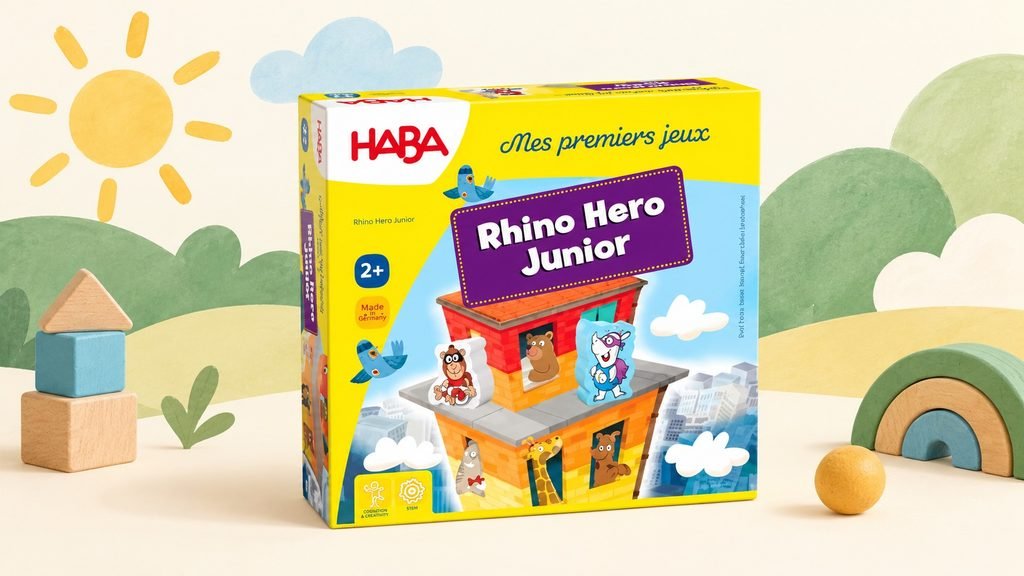
Best for: Building, stacking and adding rules gradually.
Age: 2+.
Approx. US price: $29.99.
Where to buy: Rhino Hero Junior at Meeple Madness.
This is the one I’d start with for my son. The floors, roofs and figures gave us several ways to play before he was interested in the included matching, stacking and memory games. We could keep returning to the same box without needing to use every part of it.
How I’d get them interested
I’d build something small and let it fall. That was our hook. If your child is more interested in moving the figures around, I’d follow that instead.
How I’d make the first attempt easier
I’d help with the wall pieces and leave the order alone. Once building is familiar, I’d show a color match rather than explaining all the modes at once.
Skip it if…
Your child has little interest in stacking or watching things tumble. I’d also choose a different moment if I knew I’d find repeated tower demolition frustrating.
2. First Orchard — The Traditional First Board Game I’d Look at Next
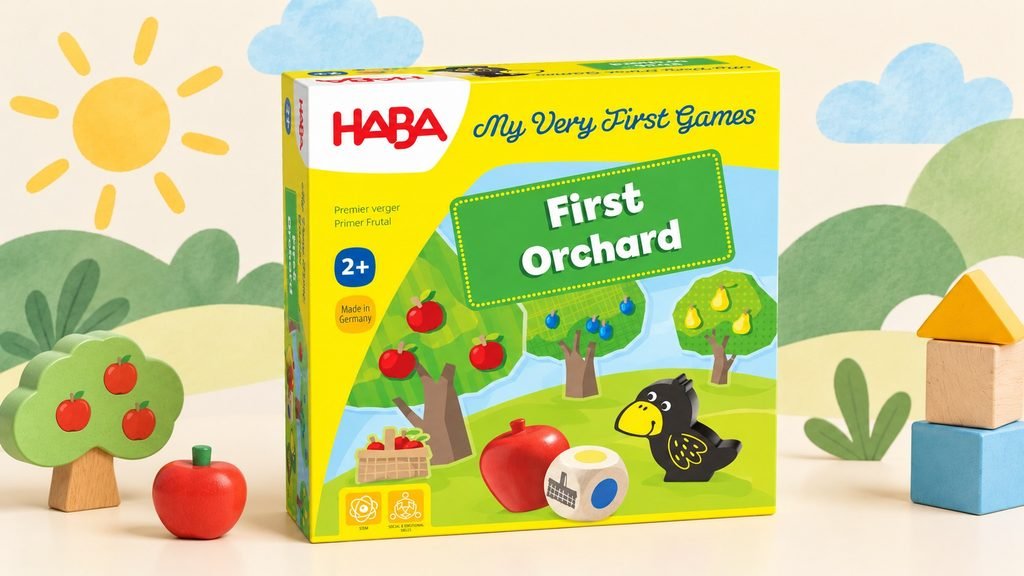
Best for: A simple cooperative game.
Age: 2+.
Published playing time: About 10 minutes.
Approx. US price: $29.99.
Where to buy: First Orchard at HABA USA.
First Orchard made my shortlist because the pieces suggest something to do straight away: pick up chunky fruit and put it in a basket. The full game adds a color die and a shared aim of collecting the fruit before the raven reaches the orchard. That looks like a manageable next step when a child wants a little more structure.
What I think might interest a 2-year-old first
The fruit and basket. I’d see whether filling and emptying the basket is enjoyable before trying to make the raven’s progress matter.
How I’d introduce it
I’d start with collecting fruit, then ask for one color. When that feels familiar, I’d bring in the die and eventually the cooperative game. The published ten minutes wouldn’t be a target for our first go.
Skip it if…
Your child wants constant movement or has no interest in sorting and collecting objects. I’d choose something with a more physical hook first.
3. Monkey Around — The One I’d Try With a Child Who Won’t Sit Still
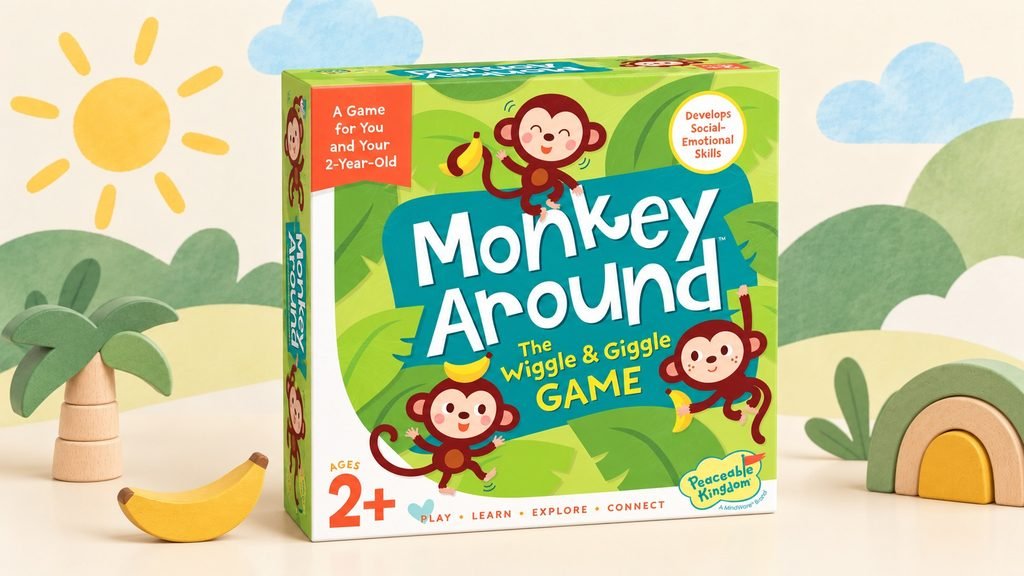
Best for: Moving, copying and being silly.
Age: 2+.
Approx. US price: $19.99.
Where to buy: Monkey Around at Target.
Monkey Around caught my attention because the activity is movement itself. Its cards include actions such as hopping, marching, balancing and giving high fives, and it includes a beanbag banana. I’d shortlist it for a child who enjoys copying a funny action more than sitting over a board.
What might interest them first
One silly movement from me. I’d be more interested in whether they want to copy it than whether we get through a set of cards.
How I’d introduce it
I’d pick one easy action, demonstrate it, and repeat it if it gets a response. I’d bring in another card only when we wanted a new idea.
Skip it if…
You’re specifically looking for a quiet game before bed, or your available space makes moving around awkward.
4. Where’s Bear? — The One I’d Pick for Hiding and Finding

Best for: Hide-and-find play and stacking.
Age: 2+.
Approx. US price: $19.99.
Where to buy: Where’s Bear? at MindWare.
This set combines six nesting boxes with a wooden bear and includes five short games. The simple hiding-and-finding idea is why I shortlisted it. I can picture a first attempt that needs almost no explanation: hide the bear under a box and invite a search.
What might interest them first
Finding the bear, then having a turn at hiding it. The boxes also offer something to stack if the search stops being interesting.
How I’d introduce more
I’d begin with an obvious hiding place, let the child take over hiding, and look at the included games when we wanted more structure. I wouldn’t need all five on the first day.
Skip it if…
You already have boxes and a toy that provide all the hide-and-find play you want. I’d only buy this if the whole set appealed, rather than treating a box as essential to the idea.
5. Acorn Soup — The One I’d Try for Pretend Play
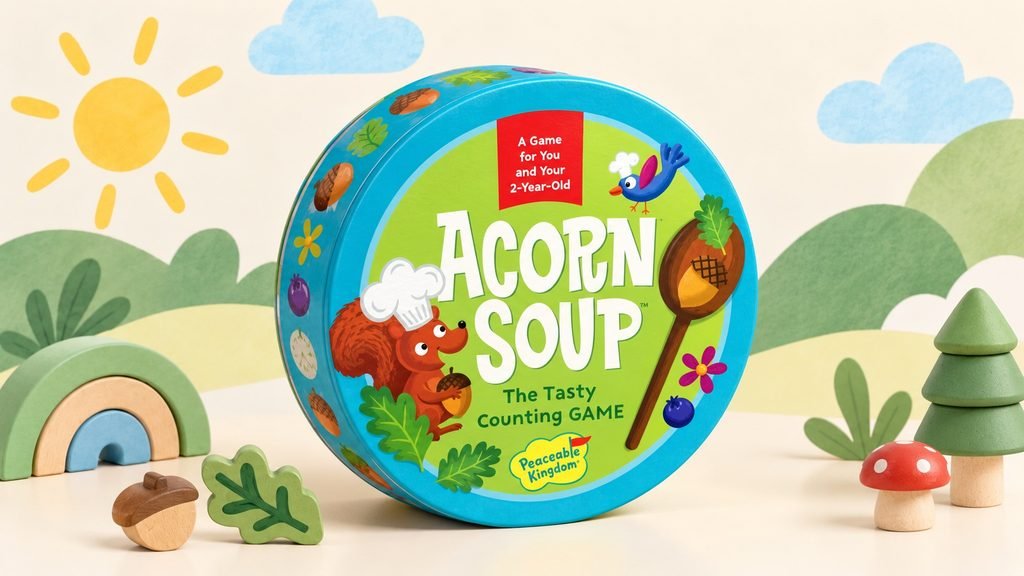
Best for: Pretend cooking.
Age: 2+.
Approx. US price: $21.99.
Where to buy: Acorn Soup at Target.
Acorn Soup’s round box doubles as a soup pot, with a wooden spoon, wooden ingredients and recipe cards. That is the reason I’d consider it: making soup already sounds like an activity, before following a recipe becomes part of the game.
What might interest them first
Putting ingredients in the pot and stirring. I’d start there, with pretend soup rather than a task to complete.
How I’d add the rules
I’d choose one recipe card and point out one ingredient to find. If that is interesting, we could gradually use more of the recipe. I’d leave the rest until another day if stirring is still the main attraction.
Skip it if…
Pretend cooking doesn’t interest your child, or their existing play kitchen already gives you the same experience and you don’t want recipe cards.
6. Here, Fishy, Fishy! — The One I’d Choose for the Fishing Rod
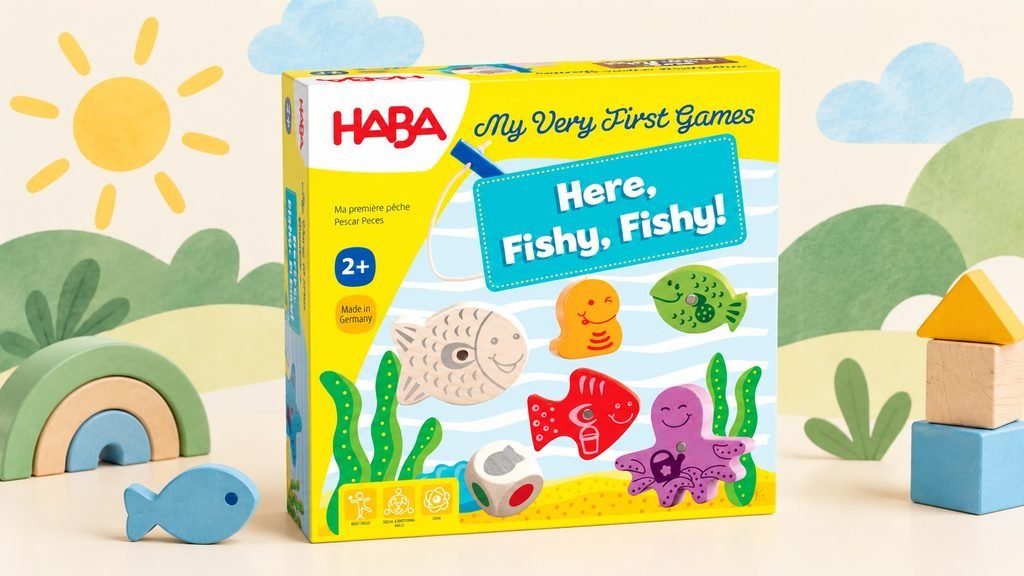
Best for: Catching things and a physical challenge.
Age: 2+.
Published playing time: 5–10 minutes.
Approx. US price: $29.99.
Where to buy: Here, Fishy, Fishy! at HABA USA.
The magnetic fishing rod is my reason for shortlisting this one. It comes with colorful wooden sea creatures, a die and collecting boards. The full game uses the die to guide what players catch; I’d start with the physical challenge of catching anything at all.
How I’d introduce it
I’d let the child experiment with the rod, show one catch if needed, and leave space to try. Later I might ask for a particular color, then add the die when that extra step feels welcome.
Skip it if…
Your child is likely to find the rod more frustrating than interesting right now. I’d also skip buying it if an existing fishing toy already gives you the part you want.
How I’d Introduce Any New Board Game to a 2-Year-Old Now
- I’d find the interesting thing first. I’d look for the action my son might choose without an explanation: a tower falling, a hidden figure or something to stir.
- I’d demonstrate instead of explaining. One action gives him something to respond to. I can talk more when there is something we’re already doing together.
- I’d let him play with it “wrong”. Within sensible limits for the pieces and the room, I’d leave space for his version rather than correcting every move.
- I’d add one new idea when the previous one becomes familiar. A color match can be enough. I don’t need to turn that moment into the whole rulebook.
- I wouldn’t worry about finishing. A few interested minutes would be a useful first attempt. We can return to the box.
- Sometimes I’d let him discover the game himself. Leaving the box somewhere obvious has worked better for us than always asking him to play.
I Also Make Putting the Game Away Part of Playing
I include putting the figurines, cards, building pieces and other components back in the box as part of our time with the game. I want that to belong to the activity too, rather than appearing as a separate instruction after the fun has ended.
For me, the activity starts when the box comes out and ends when everything goes back inside. I personally can’t stand having a mess around the room, so it’s sort of my personal goal to teach my kid to clean up after he’s done with something.
So, Which Board Game Would I Start With?
For my son, I’d start with Rhino Hero Junior again. For another child, I’d choose the box with the most appealing first action:
- Rhino Hero Junior: building and knocking things down.
- First Orchard: collecting chunky fruit and filling a basket.
- Monkey Around: moving, copying and being silly.
- Where’s Bear?: hiding, finding and stacking.
- Acorn Soup: pretend cooking.
- Here, Fishy, Fishy!: experimenting with a fishing rod.
My main advice for first board games for toddlers is to go in without expectations. A 2+ label doesn’t guarantee a child will listen to an explanation or finish a game. Our first attempt involved figurines flying around the room and towers being knocked down. Gradually, different parts became interesting. Good luck!