

By Antonio
Since playing board games is one of my favorite hobbies, I often find myself checking out games for my kid or my friends’ kids. It’s a great birthday present, but you need to ensure the specific child likes it.
I think it’s at around 4 that kids can start to get picky, so pinpointing the game they will like requires some basic research.
Also, with adults, I’m happy to start with the rules. Someone explains what we’re trying to do, what happens on a turn and how the weird special cases work, and then we play. I tried something vaguely similar the first time I introduced a board game to my son, and he made it obvious that he had no interest in following my prepared explanation. Fortunately, while I wasn’t all that interesting, the pieces were.
That experience has shaped how I look at children’s board games ever since. In my board games for 3-year-olds guide, I focused on finding games where a child can become interested before rules make sense. At four, I’d still want that easy way in, but I’d start looking for something more as well: a point where I can stop directing the experience and let the child start making some of the game’s decisions themselves.
That might mean choosing where a tile goes, remembering where a hidden piece is, spotting a match or deciding which monster the team should stop. The decision does not need to be particularly strategic. I just want the child to have something meaningful to do once the novelty of the pieces wears off.
So this is not a list of six boxes with 4+ printed on them. I wanted games where I could see a sensible path from this looks fun to I understand what I’m doing, without putting a ten-minute explanation between those two moments.
So let’s begin with the usual quick shortlist.
My Quick Shortlist of Board Games for 4-Year-Olds
| Game | Best if your child likes… | What they mainly do | Publisher age | Typical game time | Approx. US price* |
|---|---|---|---|---|---|
| Animal Upon Animal | Building and watching things wobble | Stack wooden animals | 4+ on pictured box; 3+ on HABA USA. | 10–15 min | $19.99 |
| My First Castle Panic | Monsters, teamwork and simple choices | Match cards to stop monsters | 4+ | 20 min | $24.95 |
| My First Carcassonne | Maps, roads and arranging pieces | Add tiles and place pawns | 4+ | 30 min | $37.99 |
| Concept Kids: Animals | Animals and guessing | Give picture clues together | 4+ | 20 min | $26.99 |
| Pengoloo | Memory games and hidden objects | Find colored eggs under penguins | 4+ | 10–15 min | $32.99 |
| Zingo! | Quick matching and spotting pictures | Match picture tiles to a card | 4+ | About 20 min | $22.99 |
*Prices are approximate US prices checked in November 2026 and can change.

A little help choosing a game
What does your child enjoy?
Start by balancing a couple of wooden animals. Let your child add one or build a separate tower. Introduce the die one result at a time, then let them choose where their animals go.
An easy way into stacking and taking turns. Choose another game if your child wants more story or planning.
A starting point from Antonio’s researched shortlist, not a readiness test. Follow your child’s interest and the game’s age guidance.
Table of Contents
- 1. Animal Upon Animal
- 2. My First Castle Panic
- 3. My First Carcassonne
- 4. Concept Kids: Animals
- 5. Pengoloo
- 6. Zingo!
- Cooperative or Competitive: Which Would I Start With?
- What About Outfoxed!, Dragomino and Other 5+ Games?
- So, Which Board Game for a 4-Year-Old Would I Start With?
- How I Chose These Board Games for 4-Year-Olds
- What I Look for Beyond the 4+ on the Box
- How I Researched This Guide
1. Animal Upon Animal
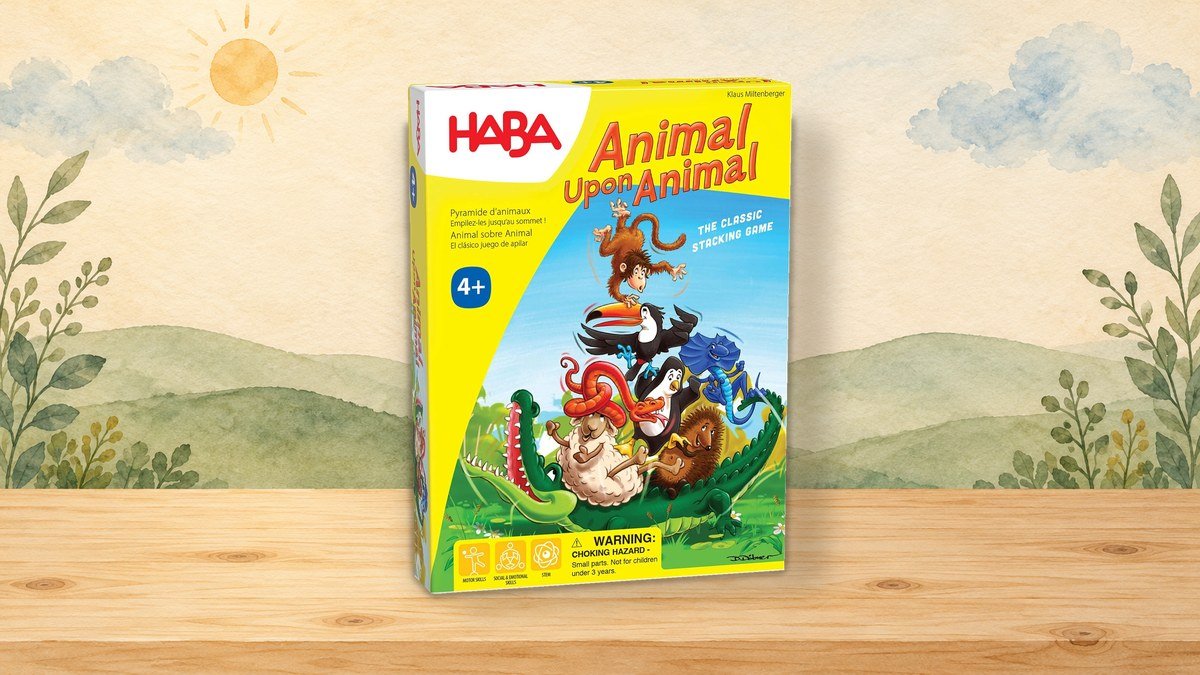
Best for: Kids who like blocks, stacking and things falling down
Publisher age: 4+ on pictured box; 3+ on HABA USA.
Players: 2–4
Typical game time: About 10–15 minutes
Approx. US price: $19.99
Publisher: HABA
So earlier I mentioned the junior version. If you’re unsure which one to pick, I’d suggest going with the safer option, the junior one. You and your kid will get a kick out of it for sure.
As for the original Animal Upon Animal, the central attraction is still easy to understand: you have a pile of wooden animals and you are trying to balance them on top of one another without sending the whole structure crashing onto the table. Although, I’d argue that crashing it down is the most fun part for an average child (maybe even adult).
That means I would not start by explaining the die, the victory condition or every possible thing that can happen on a turn. I’d start stacking. I’d make the first tower silly as well, because a crocodile with several increasingly inappropriate animals balanced on top of it does a better job of explaining why this might be fun than I ever could.
Where I’d start
If the child starts copying me, making their own tower or knocking mine over, I’d let that be the game for a little while. They have already understood the most important thing about the box: these animals are fun to balance. Once that part has their attention, adding the actual game rules has somewhere to land.
I’d introduce the die next and demonstrate one result rather than going through everything it might do. If the next roll creates a different situation, I can explain that one when it happens. By then, the child is not waiting for me to finish talking before they get to touch anything.
How I’d build toward the full game
As taking turns becomes familiar, I’d start following the proper rules more closely and let the child decide how and where they want to place their animal. That is where the game starts giving them ownership. There may be a “better” place for a piece, but I would try not to turn every turn into me pointing at the correct answer.
If the tower falls because they decided the sheep clearly belonged sideways on top of a monkey, that is useful information too. They can try something different next time. More importantly, the failure is usually funny enough that it does not feel like the end of the world.
Why it makes my shortlist
In my opinion, this has the lowest barrier to entry of the six games here. There is no reading, the central action is visible from the get-go, and the whole thing still works as a satisfying stacking toy even if the proper game lasts three minutes before everyone starts building whatever they want.
An awkward placement can still make me nervous, and the tower collapsing on my turn is still funny. That matters if the game ends up being played repeatedly.
Where I’d hesitate
Some children may already want more story, clearer objectives or more strategic choices than Animal Upon Animal provides. In that case, something like My First Castle Panic (check below) may feel more like the kind of “real game” they are looking for.
I would also be careful about making the first attempts too focused on winning if the child finds the tower collapsing frustrating. The nice thing about the components is that there is no reason the official victory condition has to be the first thing that matters.
2. My First Castle Panic
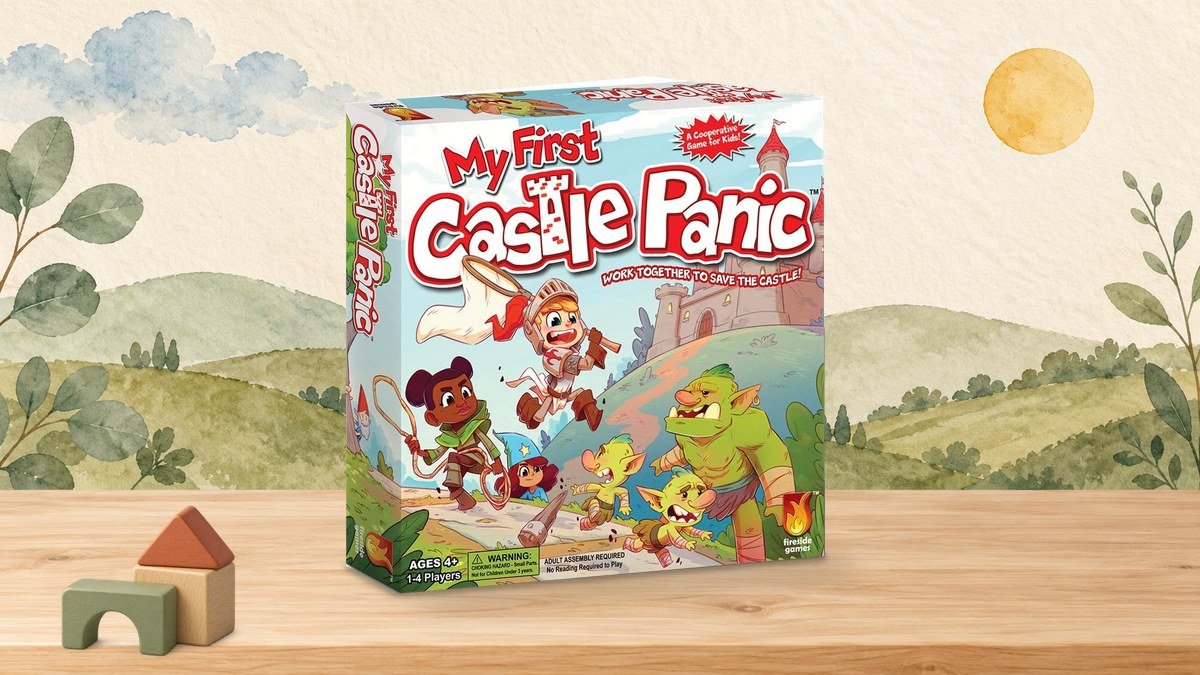
Best for: Kids who like monsters, castles and working together
Publisher age: 4+
Players: 1–4
Typical game time: About 20 minutes
Approx. US price: $24.95
Publisher: Fireside Games
This is the game on the list that interests me most from a board-gamer perspective. The objective is easy to turn into a story: monsters are walking toward the castle, and everyone at the table is trying to stop them before they knock it down. What’s not to like?
The game does that through color and shape matching. You play cards that match where the monsters are standing, which means the basic mechanic has an obvious reason behind it. You are not matching a color because the game has decided color matching is today’s task; you are matching it because there is a huge monster heading toward your castle. RAAWWR!!!
Where I’d start
Set up the castle and place one monster on the path before saying very much at all. Then I’d explain the problem in one sentence: the monster is coming toward the castle and we need to stop it.
From there, I’d show a card that matches the monster’s location and use it. That single demonstration gives the child the basic loop of the game. A monster is somewhere on the board, the card matches that place, and playing the card gets rid of the monster.
Only after that makes sense would I worry about everything else.
How I’d build toward the full game
The next step would be letting the child look through the available cards and find the match. At first I might narrow the choice by saying something like, “This monster is on blue. Do we have anything blue?” After a few turns, I’d deliberately stop asking and see whether they begin checking for themselves.
That progression is what I want from a game at this age. I can start by demonstrating, move into prompting when needed and eventually become another player rather than the person directing every action.
The child does not need to understand the best strategic move for that to feel meaningful. Choosing a legal card and helping the team stop a monster is already a decision that belongs to them.
Why it makes my shortlist
The cooperative structure makes the learning process easier because I am not teaching the game and trying to beat the child. If something is forgotten, I can help without creating the feeling that the opponent is giving advice.
The theme also makes the rules easier to connect to what is happening. Monsters approaching a castle is a clearer reason to care than an abstract instruction to match a symbol. And once the main matching loop is understood, there is enough game left for a child to start thinking about what the group should do next.
This is my personal favorite overall starting point on the list for a child who already seems ready to sit through a short structured game.
Where I’d hesitate
Twenty minutes can still be a long time when you are four. I would treat that as the publisher’s expected game length, not as a target the child needs to achieve. If interest disappears after ten minutes, I’d rather stop while the game is still associated with something enjoyable.
I’d also lean toward Animal Upon Animal or Zingo if the child prefers immediate physical action and quick repetition to following what is happening on a shared board.
3. My First Carcassonne
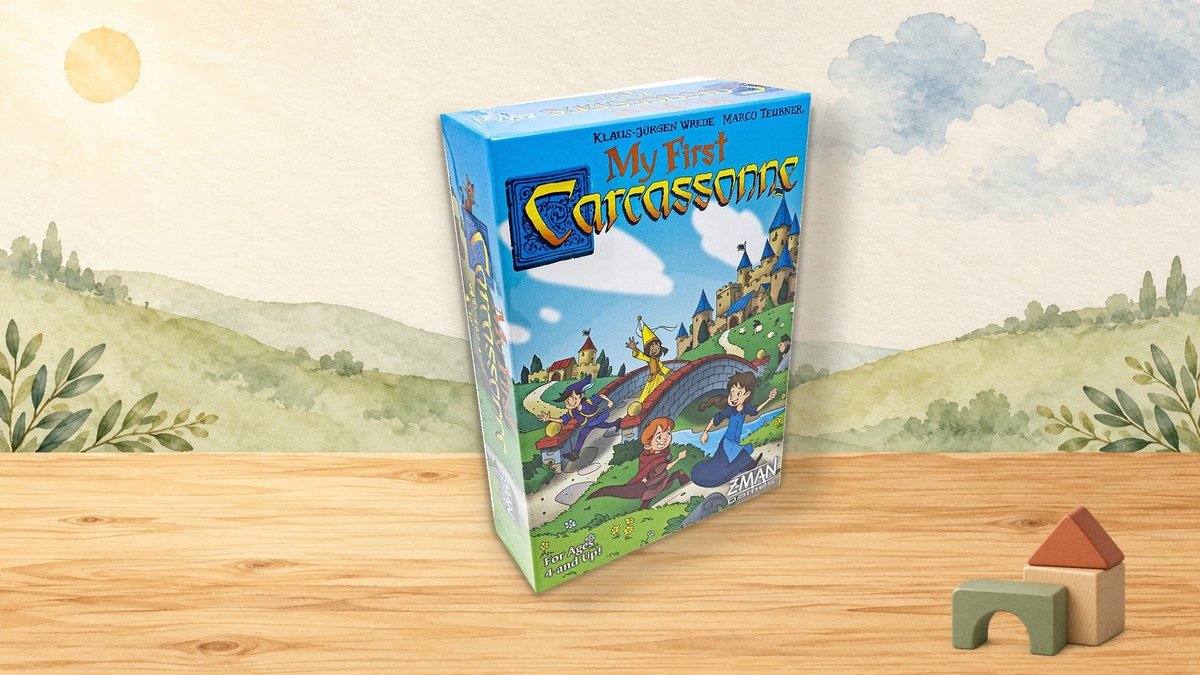
Best for: Kids who like maps, roads, puzzles and arranging pieces
Publisher age: 4+
Players: 2–4
Typical game time: About 30 minutes
Approx. US price: $37.99
Publisher: Z-Man Games
Buy: Asmodee
Just like the original Carcassonne, My First Carcassonne feels more like the sort of board game I picture when someone talks about a family sitting down to play together. Instead of moving along a fixed track, players build the board themselves by adding landscape tiles. Roads grow, the map changes and pawns eventually get placed as parts of that map are completed.
That sounds more complicated than stacking animals or matching a picture, which is why I would not begin by explaining all of it. The tile placement itself gives me a much cleaner starting point.
Where I’d start
I’d place a starting tile, draw another one and show how the roads need to connect. Then I’d hand over the next tile and ask where they think it might fit. If it does not fit immediately, we can rotate it and look together.
For the first few turns, I’d be happy if that was all the child understood. They are helping build the map, and the thing they put down changes the shared space everyone is playing on. That is already more agency than they get in many roll-and-move games.
How I’d build toward the full game
Once connecting tiles feels normal, I’d start drawing attention to the children shown on the roads and introduce the pawns when a road closes. I would much rather explain that rule when there is a completed road physically sitting in front of us than describe the entire system before the first tile has been placed.
As the child gets used to those two ideas, there is room for more intentional play. They can begin noticing where their colored characters are and thinking about whether a tile might help them. I would not expect sophisticated planning from a four-year-old, but the game gives them somewhere to grow if they enjoy that kind of puzzle.
Why it makes my shortlist
I like that the child is helping create the board rather than travelling across something an adult set up for them. Every tile changes what everyone sees, and the placement decision belongs to the person taking the turn.
There is also a useful progression built into the game. A child can begin by caring only about whether the tile connects, then notice the figures on the roads, then start understanding when pieces are placed and eventually begin looking ahead.
They do not need to master all of those layers on day one for the box to be useful.
Where I’d hesitate
The published play time is around thirty minutes, which is the longest in this shortlist. For some four-year-olds that will be fine; for others it will be far beyond the point where the game is still enjoyable.
It is also one of the more expensive recommendations here. If I had no reason to think a child liked puzzles, maps or arranging pieces, I would start with a cheaper, faster game before spending close to forty dollars on this one.
4. Concept Kids: Animals
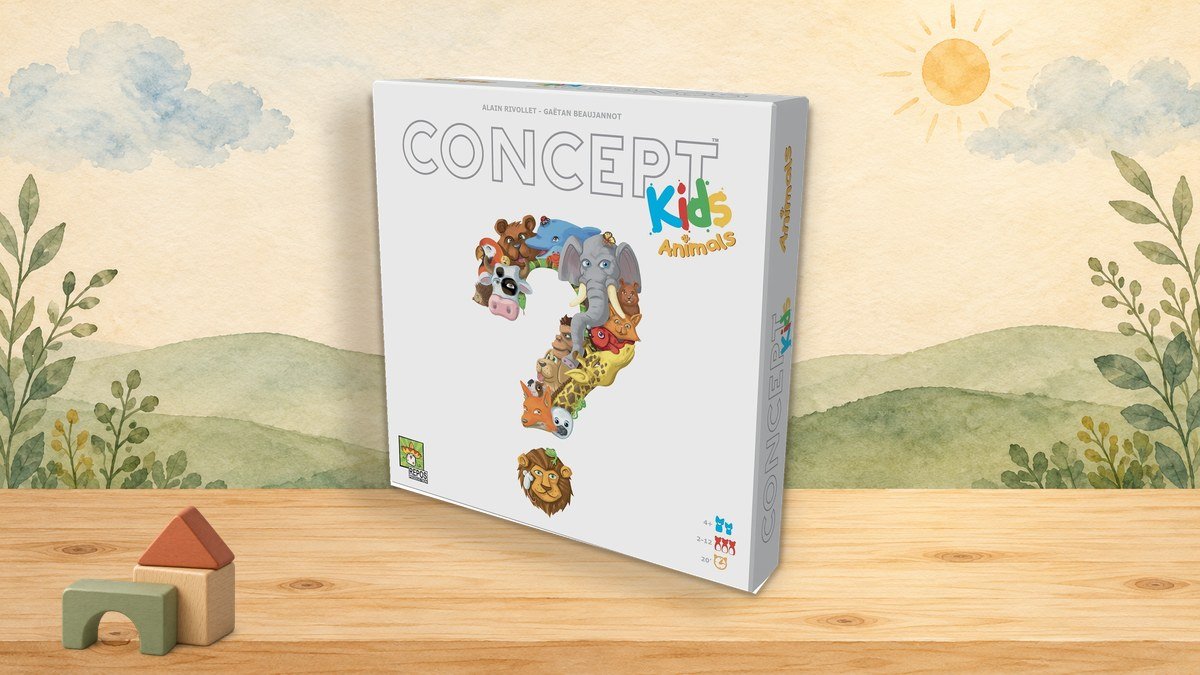
Best for: Kids who love animals, guessing and describing things
Publisher age: 4+
Players: 2–12
Typical game time: About 20 minutes
Approx. US price: $26.99
Publisher: Repos Production
Buy: Miniature Market
Concept Kids: Animals is the odd one out here, and that is exactly why I like it. Instead of moving pieces along a board or racing to collect something, the children work together to make an adult guess an animal. They give clues by placing rings on pictures that represent things such as color, size, body features or habitat.
The important part is that the child does not need to read. They are using pictures to communicate an idea, and the adult is the one doing the guessing. That creates a different relationship between the child and the game.
Where I’d start
I would deliberately put myself in the position of being the person who does not know the answer. Rather than asking the child to immediately understand how all the clue icons work, I’d choose an obvious animal and start exploring the board together.
If the animal was a penguin, for example, I might ask whether it lives in water or whether it is black and white, then show how one of the rings can be placed on the relevant picture. We would only need enough clues for me to make a guess.
That gives the child a reason to care about the icons. They are not learning symbols because I told them to; they are trying to make me understand what animal they have.
How I’d build toward the full game
As the board becomes familiar, I’d gradually stop suggesting clues. Let the child decide which images communicate something useful. If they put a ring somewhere that seems wrong to me, I would resist immediately moving it to the “correct” answer.
I’d ask why.
There may be a reasonable connection in their head that I have not understood. And if there isn’t, discovering that a clue did not help me guess is part of understanding what the game is asking them to do.
Eventually, the child is not just following the rules. They are making choices about how to communicate an idea.
Why it makes my shortlist
This gives the list a kind of play that none of the other five games offer. The interesting decision is not where to move or what to collect, but what information another person needs.
It is cooperative, there is no reading requirement and it can accommodate up to 12 players. I also think the core idea has more room to remain interesting as the child gets older because the conversations around the clues can become more sophisticated even though the physical game has not changed.
Where I’d hesitate
This is much more dependent on communication than Animal Upon Animal or Zingo. If the child currently has little interest in naming animals, describing things or figuring out what someone else is thinking, the box saying 4+ would not convince me to force it.
I would rather pick the game whose central action already looks like something they want to do. The easiest game to introduce is usually the one that starts from an interest you already have rather than one you are trying to manufacture.
5. Pengoloo
Best for: Kids who enjoy memory games, hiding things and small surprises
Publisher age: 4+
Players: 2–4
Typical game time: About 10–15 minutes
Approx. US price: $32.99
Publisher: Blue Orange Games
Buy: TeachersParadise
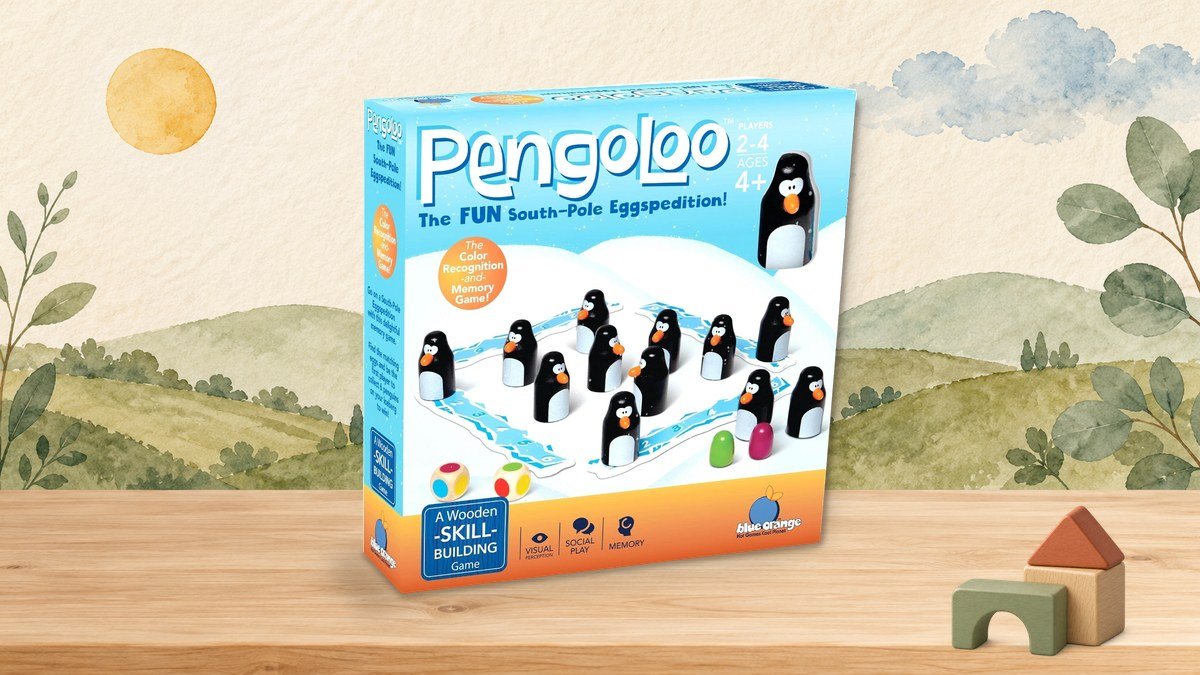
Pengoloo is a memory game built around wooden penguins with colored eggs hidden underneath them. Players roll the dice, try to remember which penguins are hiding the colors they need and collect the right ones.
I like that the memory challenge is wrapped in something physical. Instead of turning over two flat cards from a grid, the child gets to pick up a chunky penguin and discover what is hidden beneath it. That gives me a way to introduce the game before winning or losing needs to matter.
Where I’d start
I would hide a few eggs and let the child explore. We could lift the penguins, look at the colors and put everything back. Then I’d ask if they remembered where one particular color was.
At that point, we are already playing with the main idea of Pengoloo even though I have not explained the dice or how anyone wins. The child knows something is hidden and has a reason to remember where it is.
Only once that is interesting would I add the dice.
How I’d build toward the full game
The dice now become useful rather than arbitrary. They tell us which colors we are looking for. If the child finds one, we can introduce the idea that successful matches allow us to collect penguins.
This is exactly the kind of progression I like for a young child: each new rule changes something they already understand. We are not building a pile of instructions in their head and hoping they remember what to do once I finally say “go.”
As the game becomes familiar, I would also stop reminding them where pieces might be. If they remember better than I do, which feels entirely possible, they can enjoy that advantage.
Why it makes my shortlist
The turns are quick, the wooden components are attractive and the central challenge is easy to demonstrate. It is also short enough that the official game has a reasonable chance of reaching a conclusion before everyone starts wondering what else they could be doing.
I also like games where the adult can genuinely be bad at something. A four-year-old beating me because they remember exactly where the blue egg is hidden feels much more satisfying than me intentionally making a bad move just to keep the score close.
Where I’d hesitate
The memory challenge is not just one part of Pengoloo; it is basically the game. If forgetting where an egg is likely to feel more upsetting than amusing, I would start somewhere else.
It also offers less strategic growth than My First Castle Panic or My First Carcassonne. If the child is already asking for choices and plans rather than recall, one of those games probably gives them more room.
6. Zingo!
Best for: Kids who enjoy quick matching, pictures and spotting things before everyone else
Publisher age: 4+
Players: 2–6
Typical game time: About 20 minutes
Approx. US price: $22.99
Publisher / buy: ThinkFun / Ravensburger
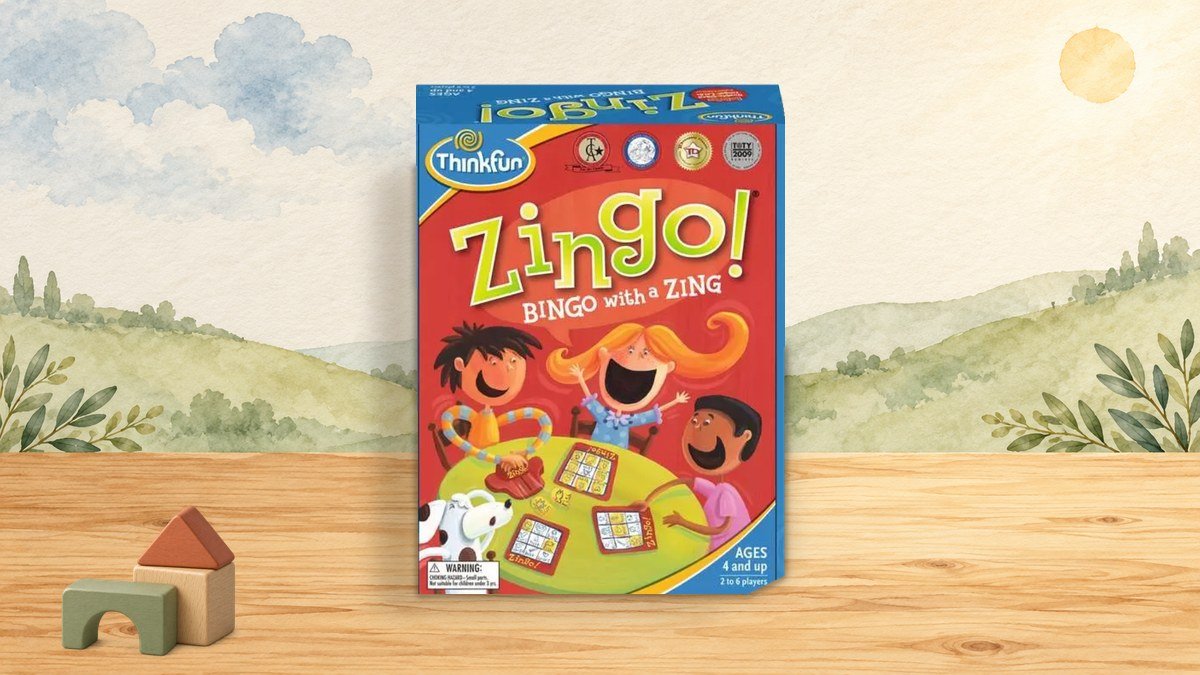
Zingo is essentially bingo with a much more satisfying piece of machinery in the middle. The Zinger reveals picture-and-word tiles, and players try to match the pictures to spaces on their own cards.
The words are there, but a child does not need to be able to read them to understand the core game. If they can recognise the picture and find the same thing on their card, they already understand most of what they need to do.
Where I’d start
I would take the speed element out of the first attempt. Give the child one card, reveal a tile and ask if they can find the matching picture. If they can, place it on the card and reveal another one.
That is enough.
Once the relationship between the revealed tile and the matching space is obvious, the competitive part can come in naturally. I do not think there is any advantage in making the child learn the basic matching loop while simultaneously racing an adult.
How I’d build toward the full game
When the child is confidently finding their matches, I’d introduce the idea that both players can look for the same tile and the person who needs it can claim it. That immediately changes the energy without requiring a completely new rules explanation.
I would also make myself slower at first. There is a difference between letting a child experience competition and demonstrating that a thirty-something adult can identify a picture of a cat faster than a preschooler.
Once the child understands the rhythm, I can play more naturally and see how they respond to the speed.
Why it makes my shortlist
Zingo gets to the interesting part quickly. There is very little downtime, the Zinger itself adds a satisfying physical action and the main rule is easy to demonstrate.
It is also a useful option for a child who enjoys board games more when everyone is doing something frequently. There is much less waiting for another player to finish a long turn than there is in more traditional games.
Where I’d hesitate
Competition based on speed can become frustrating, particularly with older siblings or adults who forget that they are playing against a four-year-old. If that starts happening, I would simply keep the game cooperative or take turns matching for longer.
The nice thing is that the core matching activity still works without insisting that speed matters from the first game.
Cooperative or Competitive: Which Would I Start With?
I don’t think four-year-olds need to play cooperative games exclusively. Learning that somebody else sometimes wins is part of playing games, and competitive games can be exciting once a child enjoys that tension.
But I also don’t think every box needs to become a lesson in losing gracefully. If I’m introducing board games and the child is still using a lot of their attention just to remember what happens on a turn, adding the emotional problem of competing against the adult can make the whole thing harder than it needs to be.
That is one reason My First Castle Panic appeals to me so much as an early choice. If the child forgets something, I can help because we are trying to solve the same problem. Concept Kids works similarly: the entire table is collaborating on the guess rather than waiting to see who wins.
Animal Upon Animal sits somewhere in the middle for me. It is competitive, but the tower collapsing is often the funniest part of the game, which can make failure easier to absorb. Pengoloo and Zingo create more direct competition, so I’d pay closer attention to how the child responds when somebody else gets the thing they wanted.
I wouldn’t decide between cooperative and competitive based on what I think a four-year-old is supposed to be learning. I’d choose the version that makes this particular child most likely to finish the game thinking, Can we play that again?
What About Outfoxed!, Dragomino and Other 5+ Games?
Before I wrap this up, I want to go over some 5+ games. While researching, I noticed that several games that appear again and again in recommendations for four-year-olds are listed by their publishers for ages five and up.
Outfoxed! is the clearest example. Parents mention it constantly, and I can understand why. The cooperative detective theme looks excellent for young kids. But Gamewright lists it as 5+, so I don’t want to quietly turn other parents saying “my four-year-old played it” into a blanket recommendation that it is a four-year-old game.
The same thing comes up with Dragomino, Monza, Dragon’s Breath and Gobblet Gobblers. They work brilliantly for some four-year-olds, particularly children who already play games and are comfortable following a more involved turn. But I prefer being transparent about the difference between some four-year-olds can play this and the publisher recommends this from age four.
If I already knew the child was playing the games in this article and wanted something more challenging, those 5+ games are where I would start looking next.
For a general guide aimed at a parent who has searched specifically for board games for a four-year-old, though, I think starting with age-appropriate publisher recommendations gives us a cleaner baseline.
So, Which Board Game for a 4-Year-Old Would I Start With?
If I knew absolutely nothing about the young gamer and had to choose one game from this list, I would start with My First Castle Panic. It feels like the best bridge between the very simple games aimed at younger children and the sort of family board games I personally enjoy.
The story is understandable, the players work together and there are real decisions for the child to begin making. I can demonstrate the basic idea quickly, help for the first few turns and then start backing away as the child understands what the cards do. That progression is what I am looking for at this age.
I would not call it the universal best choice, though. If the child is happiest when they are building something with their hands, Animal Upon Animal gives me an easier route in. If maps and arranging pieces are already interesting, I’d look hard at My First Carcassonne. For an animal-obsessed child who likes guessing, Concept Kids: Animals makes much more sense than buying Castle Panic because some list ranked it first.
Pengoloo would be my pick for a child who loves remembering where things are hidden, while Zingo! fits the child who wants something quick, visual and constantly moving.
That is the point of the shortlist. I don’t think there is one best board game for every four-year-old. I’d start with the game where the first interesting thing the child gets to do already looks like something they would choose to do without me explaining why it is supposed to be fun.
Then I’d let the rest of the game earn its way in.
How I Chose These Board Games for 4-Year-Olds
There are plenty of games that parents successfully play with four-year-olds. That alone wasn’t enough for me to put something on this list. While researching, I kept coming back to my go-to question: if I opened this box with a kid, in this case a four-year-old, what would I do in the first couple of minutes?
Specific kids will open specific board games and love them (just like adults), but often they will need some guidance.
So if my answer started with a long explanation, I became less interested. I wanted games where I could demonstrate the important part quickly and then add the rules around it. That is the same approach that started working better with my son once I stopped insisting that the official game needed to begin right now. I’m ashamed to admit, but it took me time to realize I’m not playing a competitive game.
Oh, and I also wanted the six games to feel different. A child who spends twenty minutes building precarious towers might have no interest in remembering what is hidden under a plastic penguin. Another might love picture matching but become bored if asked to arrange tiles into a map. Calling all of these children “four-year-olds” does not make their interests interchangeable.
So the above shortlist includes stacking, cooperation, tile placement, communication, memory and fast matching. More importantly, each game gives a believable route into the actual game rather than merely an age recommendation on the box.
What I Look for Beyond the 4+ on the Box
I don’t want this guide to sound like the number on the box doesn’t matter. I check the publisher age. It is useful information, and I’m deliberately keeping the main recommendations in this guide to games whose publishers support the age. I just don’t treat the number as proof that a particular child will enjoy the game. For example, my 7-year-old nephew absolutely loved Animal Upon Animal Junior. The game’s starting age is 2+. I also loved the game and I’m 37.
Animal Upon Animal gives us a useful example. The box pictured here says 4+, while HABA USA currently lists it as 3+. HABA’s European listing says 4+ too. For me, that’s another reason not to treat the number as a precise verdict on whether a child will enjoy a game. I’d check the edition and follow its safety warnings, then look at what the child gets to do. Will they enjoy stacking animals, taking turns, and watching the whole thing tumble down? That tells me more about whether we’ll have fun together than the birthday alone.
The box cannot tell me whether losing is a disaster, whether a child enjoys memory challenges, whether twenty minutes of sitting down is realistic that afternoon or whether all the little wooden animals are about to become characters in an unrelated story. Those things matter just as much as the number printed beside the age symbol.
What I like figuring out is what happens in the first few turns. Can I show the central action rather than explain it? Or does something interesting happen quickly?
That last question is what makes this age feel different to me from the younger guides. I’m still not expecting perfect rule-following. I just want the game to become something the child is playing with me rather than something I’m operating on their behalf. Because where’s the fun in that for anyone?
Let’s start with the games.
How I Researched This Guide
The six recommendations themselves are researched choices.
I approached that research from both a parent’s perspective and a board gamer’s perspective. I wanted to know what a child physically does when the box opens, how quickly something interesting happens, how much adult explanation is required and whether there is a believable way to introduce the full game gradually. I also looked at whether the game gives the child real decisions or responsibilities once they understand the basic loop.
For factual details such as publisher age, player count and published playing time, I checked official information from HABA, Fireside Games, Z-Man Games, Repos Production, Blue Orange Games and ThinkFun/Ravensburger. I also reviewed specialist family-board-game sites, BoardGameGeek and parent discussions to see which games repeatedly work well in real families and where parents commonly run into problems.
I treated those family experiences as useful evidence for what I should investigate, not as proof that every four-year-old will enjoy the same game. The final shortlist is my judgment based on that research and on how I would personally try to introduce each game.
Browse Board Games by Age
Looking for games for a different age? Browse the other Little Moment Play board game guides:
Need Something to Do Right Now?
If you’d rather browse a few ideas first, see my activities for 4-year-olds.
If you’re unsure what fits right now, use the Activity Finder for one suggestion based on age, time, setup and mess.