
By Antonio
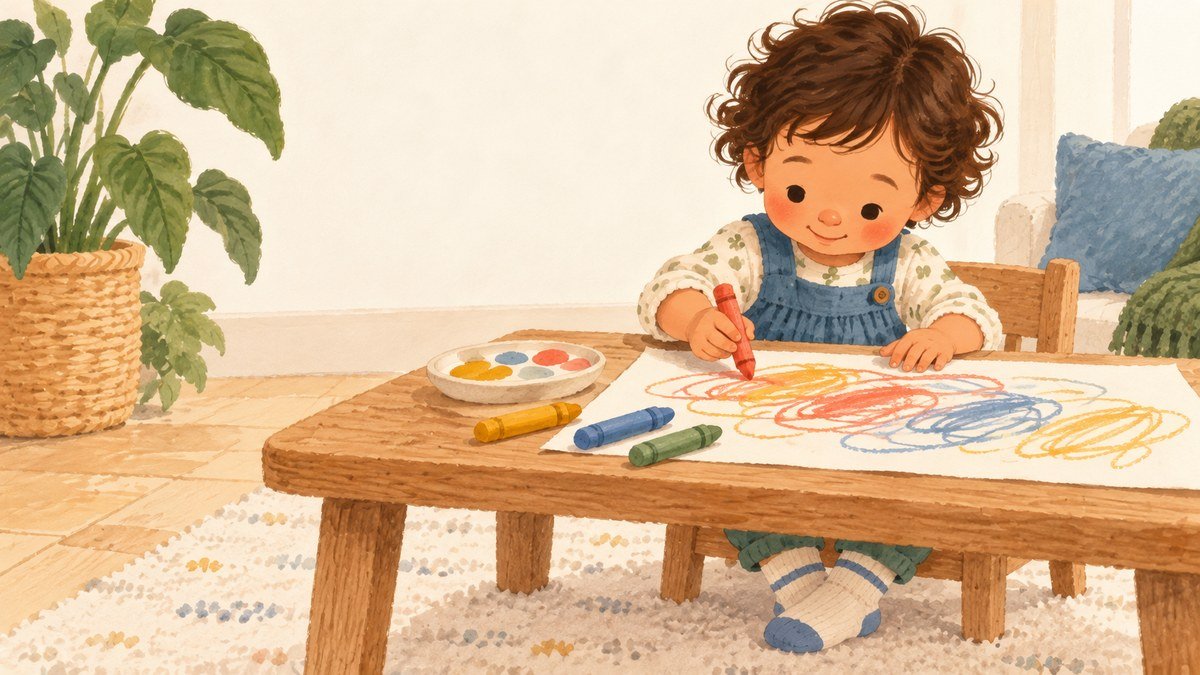
I’m not an artsy parent (or an artsy person). Meaning, I never had a knack for visual art.
I don’t have a drawer full of craft supplies, I’m not particularly good at turning paper plates into animals, and if an activity needs six materials and twenty minutes of preparation, there’s a decent chance we’re not doing it.
What I do like is giving my son something he can actually mess with himself: a big piece of paper, some stickers, a sponge with paint, chalk outside, or whatever else lets him start making marks without me needing to supervise an artistic masterpiece.
That’s what these activities are.
They’re less about making something worth keeping and more about getting a toddler interested enough to start.
And that first bit matters. Putting paper and crayons on a table and saying “draw something” doesn’t always get much of a reaction. Starting one strange line, rolling a paint-covered car across paper, or giving them something unusual to make marks with usually gives me a better chance.
Then, once they start experimenting without waiting for me, I try to get out of the way.
Not sure what will work right now?
Tell Little Moment Play what you need, your child’s age, and how much time, setup, or mess you’re willing to deal with.
Table of Contents
- Easy Art Activities for Toddlers
- Simple Painting Activities for Toddlers
- No-Fuss Art Activities Using Everyday Things
- Outdoor and Mess-Friendly Art Activities for Toddlers
- What Makes a Good Art Activity for a Toddler?
- Want One Activity That Fits Right Now?
- Browse Toddler Activities by Age
- More Toddler Activities
Easy Art Activities for Toddlers
These are where I’d start if, like me, you don’t really want an art project. You just want to put something in front of your toddler that is easy to understand and gives them room to do their own thing.
1. Sticker Picture
Good for: Peeling, sticking, easy art
Time: 10–20 minutes
Setup: Almost none
Mess: None
How to do it
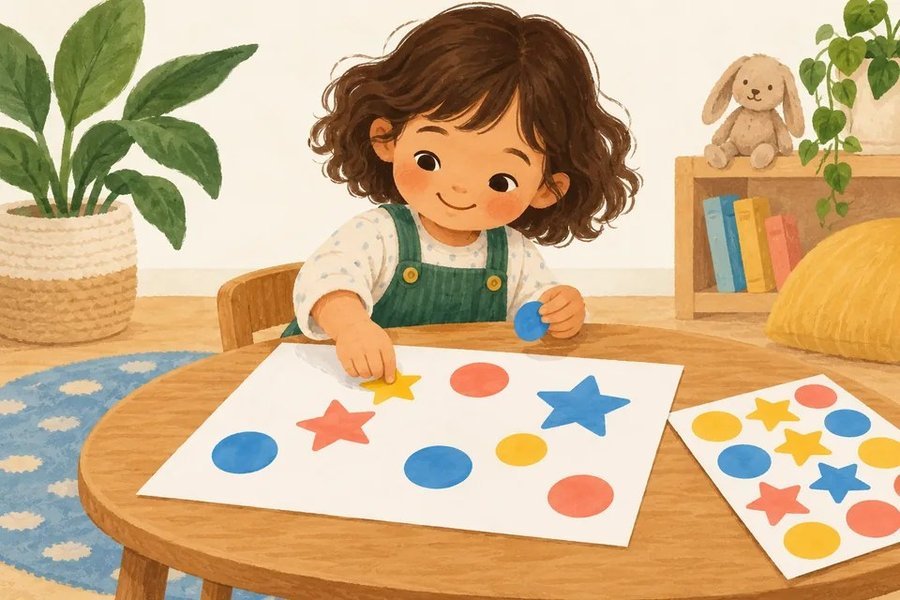
Give your toddler a sheet of large, age-appropriate stickers and a piece of paper.
They can make a picture if they want, but they can also cover the paper randomly, group stickers together, or put everything in one corner.
There is no correct final picture.
How to get them interested
Stick one sticker somewhere strange.
Put an animal upside down, leave one sticker completely alone in the middle of the page, or make a row with an obvious gap.
Then leave the stickers beside the paper.
You have given them something to react to without explaining what their artwork is supposed to look like.
Then let them take over
When they begin peeling and placing stickers without asking where they should go, stop directing the picture.
That is the handoff.
If the picture turns into one enormous pile of stickers, apparently that was the plan.
Toddler not interested?
Put two or three stickers lightly on the back of your hand.
Let them start by peeling those off.
Sometimes peeling is much more interesting than making a picture.
Important safety note
Use large, age-appropriate stickers and supervise toddlers who still regularly put small objects in their mouth.
2. Finish My Drawing
Good for: Drawing, shared play
Time: 5–15 minutes
Setup: Almost none
Mess: Little
How to do it
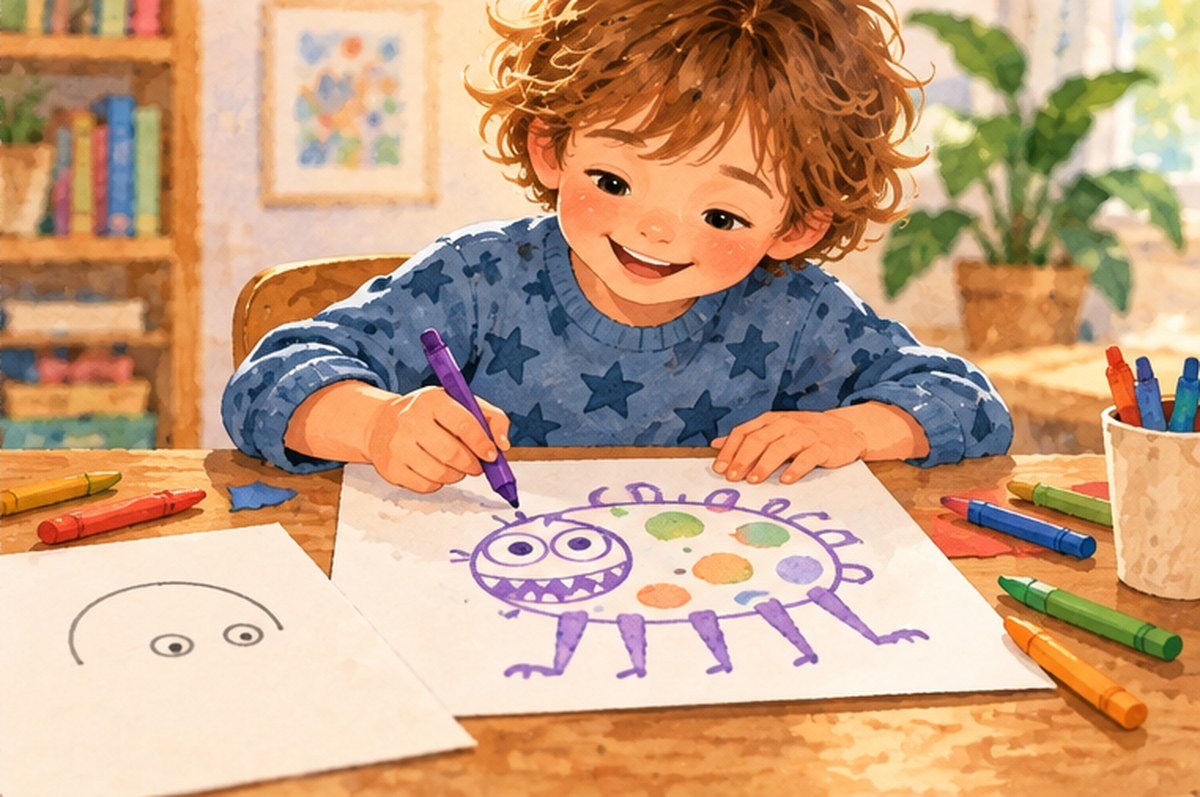
Draw the beginning of something simple and leave it obviously unfinished.
A car can have no wheels. A face can have no mouth. A monster can have one arm. A house can have no door.
Leave the crayon or washable marker beside it.
How to get them interested
Look at your drawing and admit that you have made something terrible.
“I think my car is broken.”
You don’t need to ask them to draw. Give them a chance to notice what is missing or add something completely unrelated.
Then let them take over
Once they make a mark without you telling them where it should go, stop trying to finish your original picture.
They may fix the car.
They may also draw a giant line straight through it.
Both count.
Toddler not interested?
Swap roles.
Let them make a scribble first and try turning it into something yourself.
Then hand the page back.
3. Big Paper Scribble
Good for: Big drawing movements, simple setup
Time: 10–20 minutes
Setup: Almost none
Mess: Little
How to do it
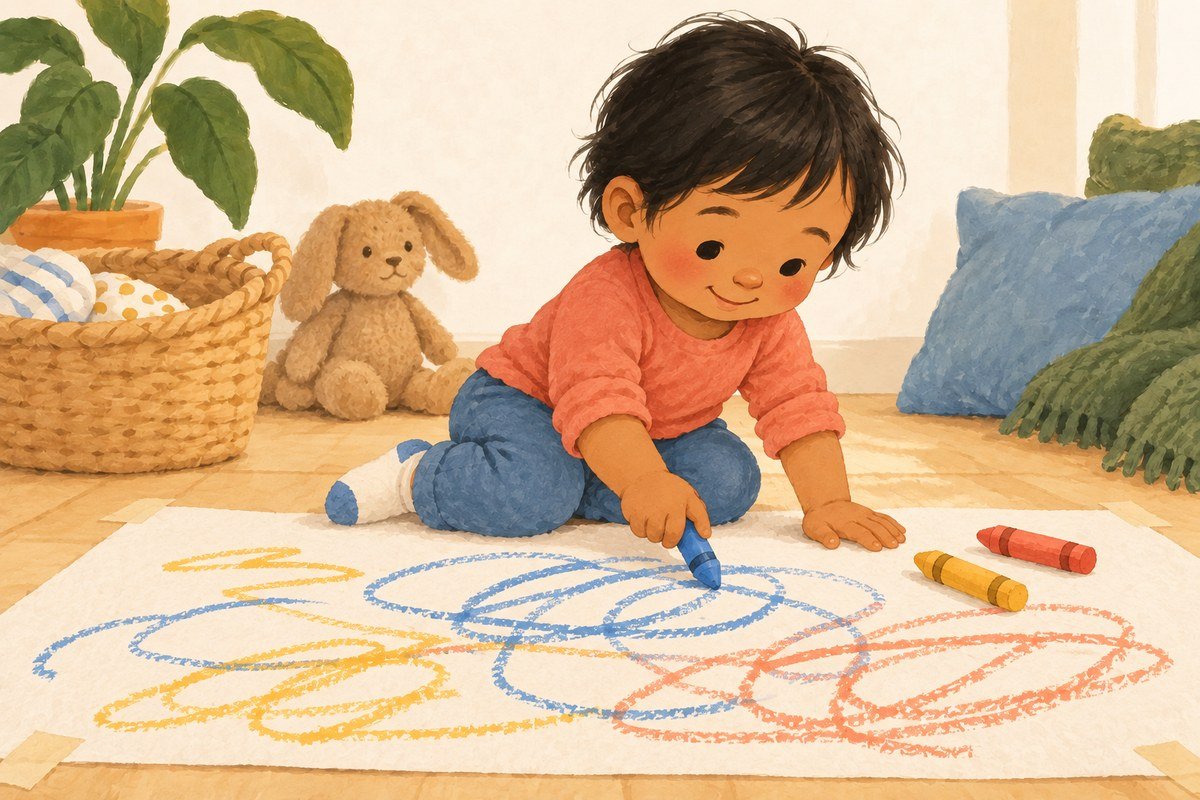
Put a large sheet of paper on the floor or another safe drawing surface and give your toddler a few chunky crayons or washable markers.
The bigger paper gives them room to make marks without needing to keep everything inside a normal page.
How to get them interested
Make one enormous line from one side of the paper to the other.
Then make a tiny one beside it.
Leave the crayon on the paper.
That contrast usually gives them more to react to than asking, “Do you want to draw?”
Then let them take over
Once they start moving around the paper and choosing where the next mark goes, stop adding your own.
You don’t need to turn the scribbles into pictures.
The marks are enough.
Toddler not interested?
Change where the paper is.
Taping a large sheet to a safe vertical surface can make the same crayons suddenly feel like a different activity.
Important safety note
Use age-appropriate chunky drawing materials and supervise according to the product instructions.
4. Cardboard Box Drawing
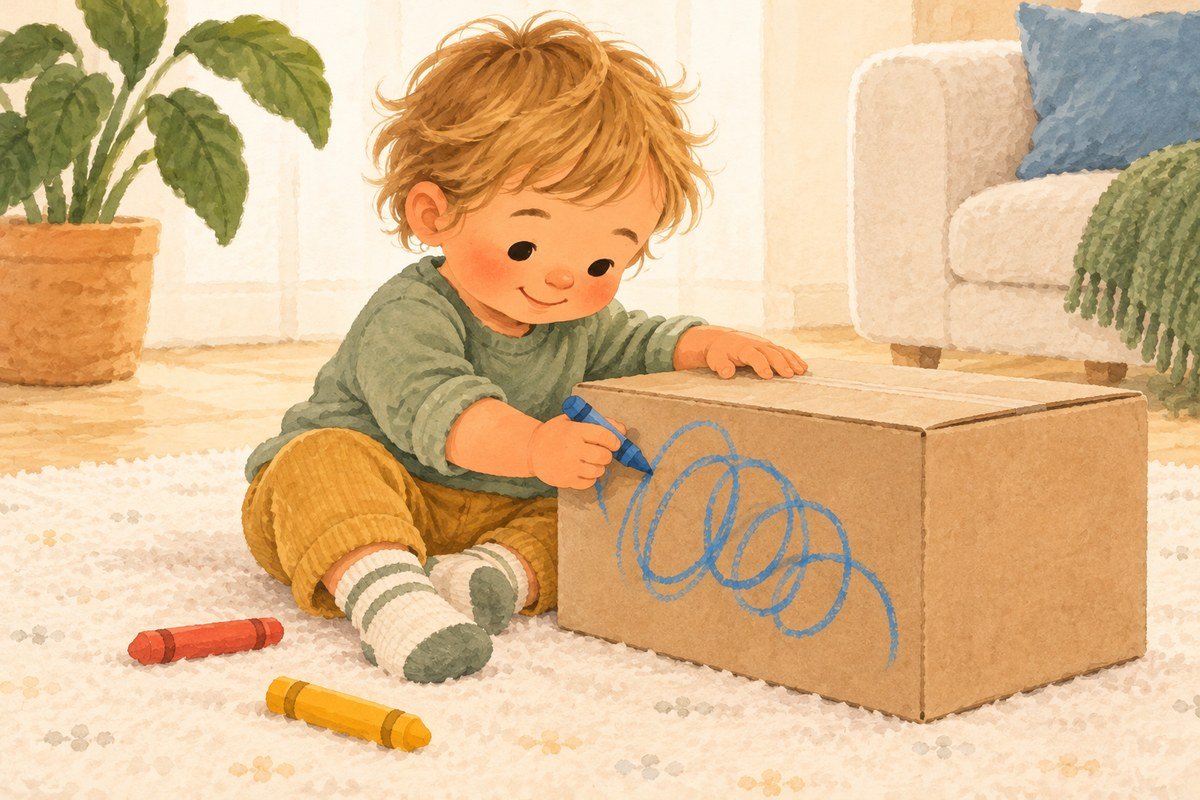
Good for: Drawing, low-cost setup, novelty
Time: 10–20 minutes
Setup: Almost none
Mess: Little
How to do it
Give your toddler a clean cardboard box and chunky crayons or washable markers.
They can draw on the sides, top, inside flaps, or wherever they can reach.
For some reason, drawing on something that isn’t paper can immediately make drawing more interesting.
How to get them interested
Draw one small thing on the box yourself.
A window, face, wheel, or completely meaningless line is enough.
Then turn the box around and leave another side blank.
Then let them take over
When they start moving around the box to find new places to draw, stop adding ideas.
The box may become a car or house.
It may also remain a box covered in scribbles.
Toddler not interested?
Put one favorite toy inside the box and draw something around where it is sitting.
That gives the box a tiny story without requiring a full craft project.
Important safety note
Use a clean box with staples, sharp edges, loose tape, and other hazards removed.
Simple Painting Activities for Toddlers
Paint is where I usually start wondering whether this was a good idea.
These versions keep the setup simple enough that I’m still willing to do them.
1. Water Painting
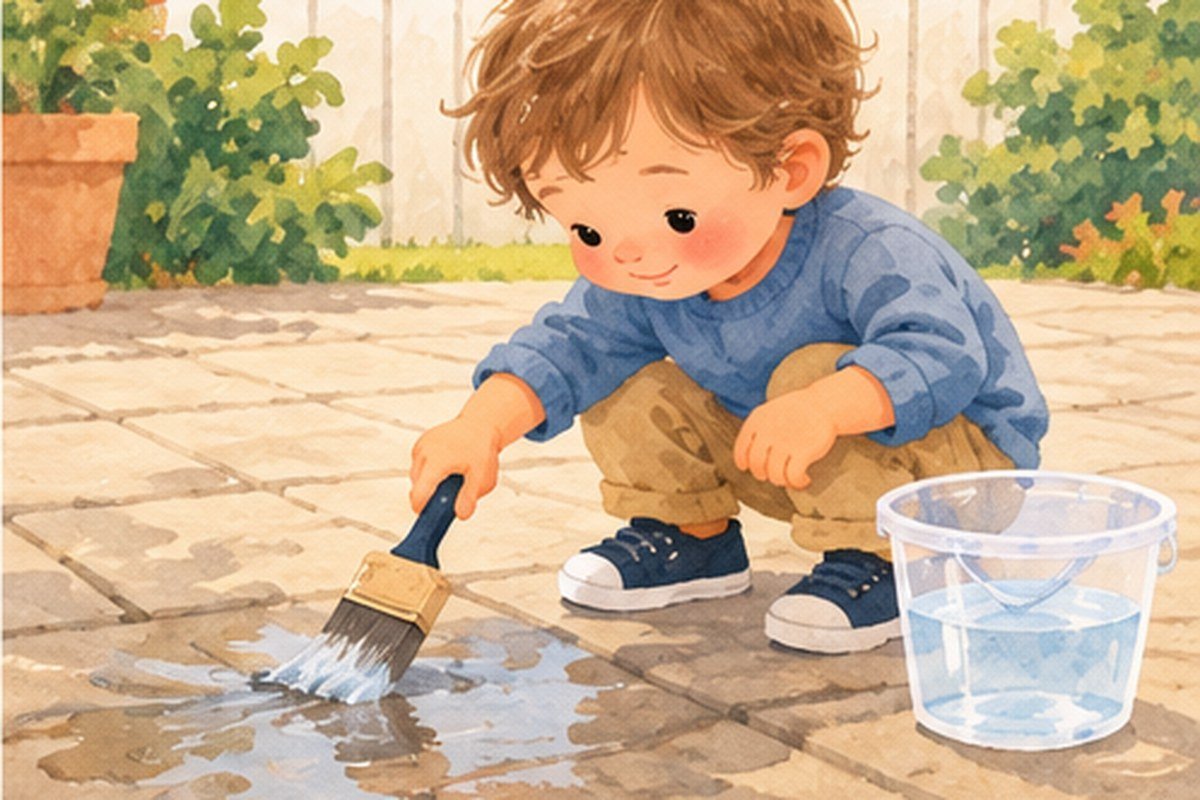
Good for: Painting without much cleanup
Time: 10–20 minutes
Setup: Almost none
Mess: Little
How to do it
Give your toddler a wide paintbrush and a small container of water.
Use a safe surface where wet marks become visible, such as pavement, a fence, or large stones outside.
They paint with water and watch the marks disappear as they dry.
How to get them interested
Paint one enormous mark.
Wait for part of it to fade, then act confused about where your picture went.
The disappearing paint usually does more work than any instructions.
Then let them take over
When they dip the brush again without waiting for you, stop making examples.
They may paint the same patch twenty times.
That is fine.
Toddler not interested?
Swap the brush for a sponge and let them make wet prints instead.
Important safety note
Supervise water play and avoid making walking surfaces dangerously slippery.
2. Sponge Stamp Painting
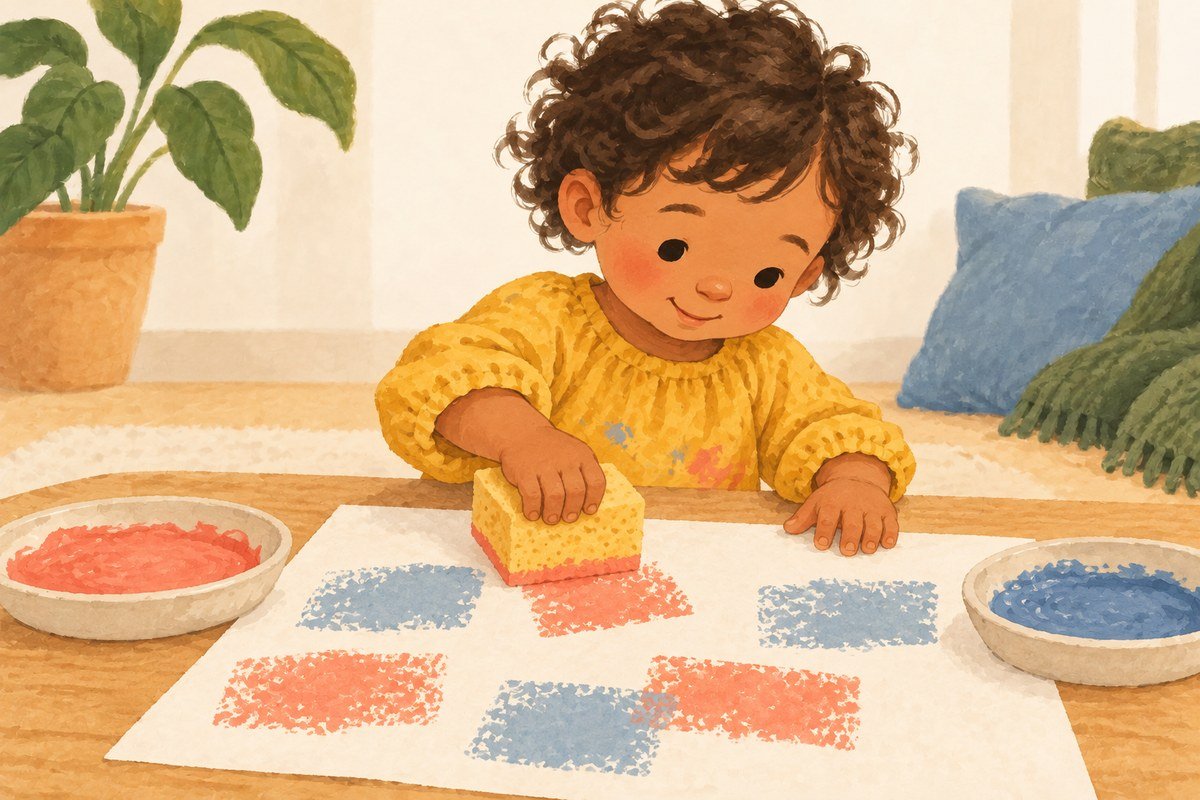
Good for: Painting, stamping, repetition
Time: 10–20 minutes
Setup: A few minutes
Mess: Medium
How to do it
Put a small amount of washable, child-safe paint on a tray.
Give your toddler a large sponge they can comfortably hold and show them how pressing it onto paper leaves a mark.
No shapes are required. A normal sponge works.
How to get them interested
Make one print yourself.
Lift the sponge slowly so they can see the mark underneath.
Then move the sponge to a blank part of the page and leave it there.
Then let them take over
When they begin pressing, lifting, and choosing the next spot themselves, stop arranging the picture.
Repetition is the activity.
Toddler not interested?
Try a different motion.
Instead of stamping, let them drag or wipe the sponge across the paper.
Important safety note
Use washable, non-toxic paint intended for children and a sponge large enough not to present a choking hazard.
3. Toy Car Paint Tracks
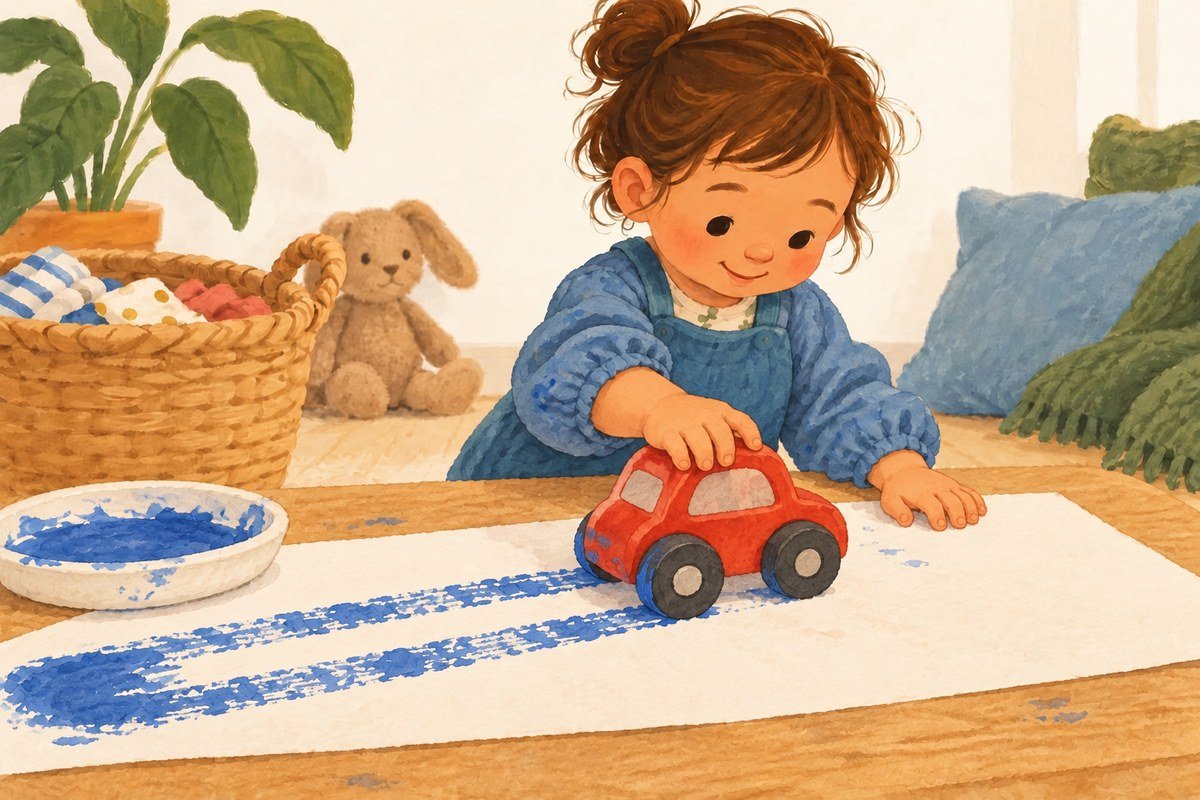
Good for: Painting, toy cars, cause and effect
Time: 10–20 minutes
Setup: A few minutes
Mess: Medium
How to do it
Put a little washable paint on a shallow tray or plate and use a toy car with wheels that can be cleaned afterward.
Roll the wheels lightly through the paint, then drive the car across a large piece of paper.
The wheels leave tracks behind.
How to get them interested
Do one drive yourself.
Pick up the car and look at the tracks behind it.
Then put the car back at the beginning of the paper.
You don’t need to explain much more.
Then let them take over
Once they begin driving back and forth without watching you for instructions, stop suggesting routes.
The road can become as chaotic as they want.
Toddler not interested?
Use a favorite car instead of whichever one you chose for the activity.
Sometimes the interesting part is the vehicle, not the paint.
Important safety note
Use washable, non-toxic child-safe paint and a sturdy age-appropriate toy car without small removable parts.
4. Finger Paint Smear
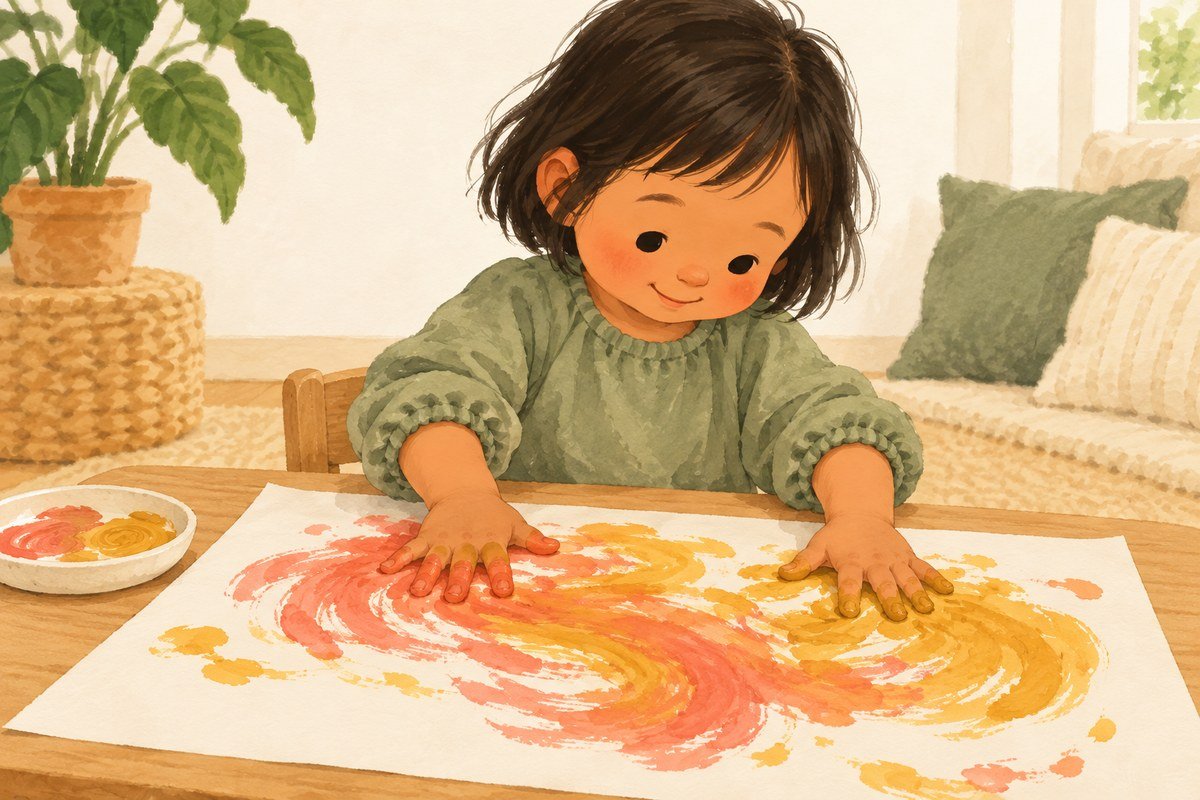
Good for: Messy painting, exploring paint
Time: 10–20 minutes
Setup: A few minutes
Mess: High
How to do it
Put a small amount of child-safe finger paint onto a large sheet of paper.
Your toddler can spread it with fingers, palms, or the side of their hand.
There does not need to be a picture.
How to get them interested
Make one short smear yourself.
Don’t cover the whole page or start showing them how to make shapes.
Leave most of the paint untouched.
Then let them take over
When they start spreading the paint in their own direction, stop demonstrating.
This is one where their version is almost certainly going to be better than your plan anyway.
Toddler not interested?
Some toddlers simply don’t like paint on their hands.
Offer a sponge or wide brush instead rather than trying to convince them that messy hands are fun.
Important safety note
Use non-toxic finger paint intended for your child’s age and supervise closely.
No-Fuss Art Activities Using Everyday Things
These are my favorite kind of art activities because I don’t have to own an art cupboard to do them.
Most use something you probably already have somewhere in the house.
1. Kitchen Tool Painting
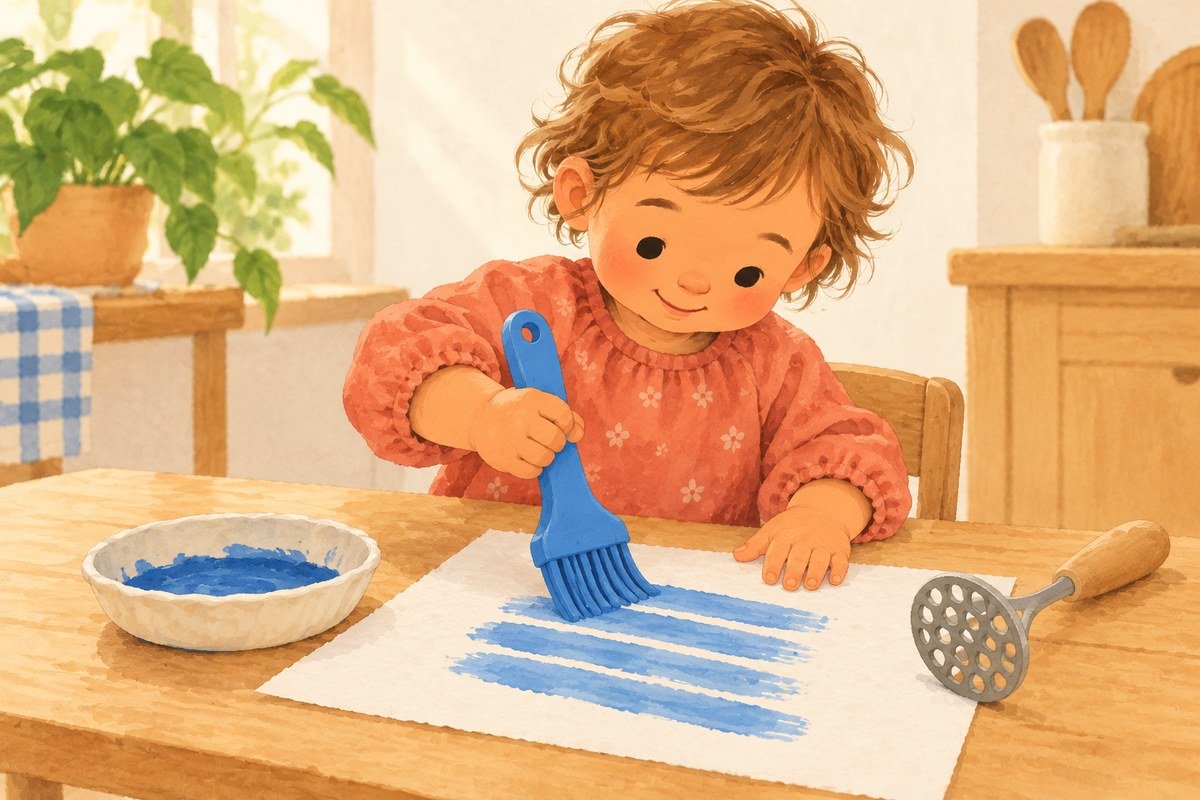
Good for: Painting, experimenting with marks
Time: 10–20 minutes
Setup: A few minutes
Mess: Medium
How to do it
Choose one or two toddler-safe kitchen tools that can be washed afterward.
A potato masher, silicone pastry brush, large whisk, or similar chunky tool can all make different marks.
Put out paper and a small amount of washable paint.
How to get them interested
Use one tool once.
Lift it up and look at the strange mark it made.
Then hand them a different tool without explaining what its mark will look like.
Now they have something to find out.
Then let them take over
When they start switching tools or repeating the same print themselves, stop demonstrating.
You don’t need to name the shapes they make.
Toddler not interested?
Let them choose the kitchen tool.
The whisk they picked themselves may be much more interesting than the excellent potato masher you selected.
Important safety note
Use only blunt, lightweight, age-appropriate kitchen tools without sharp edges or removable small parts.
2. Tape Peel Picture
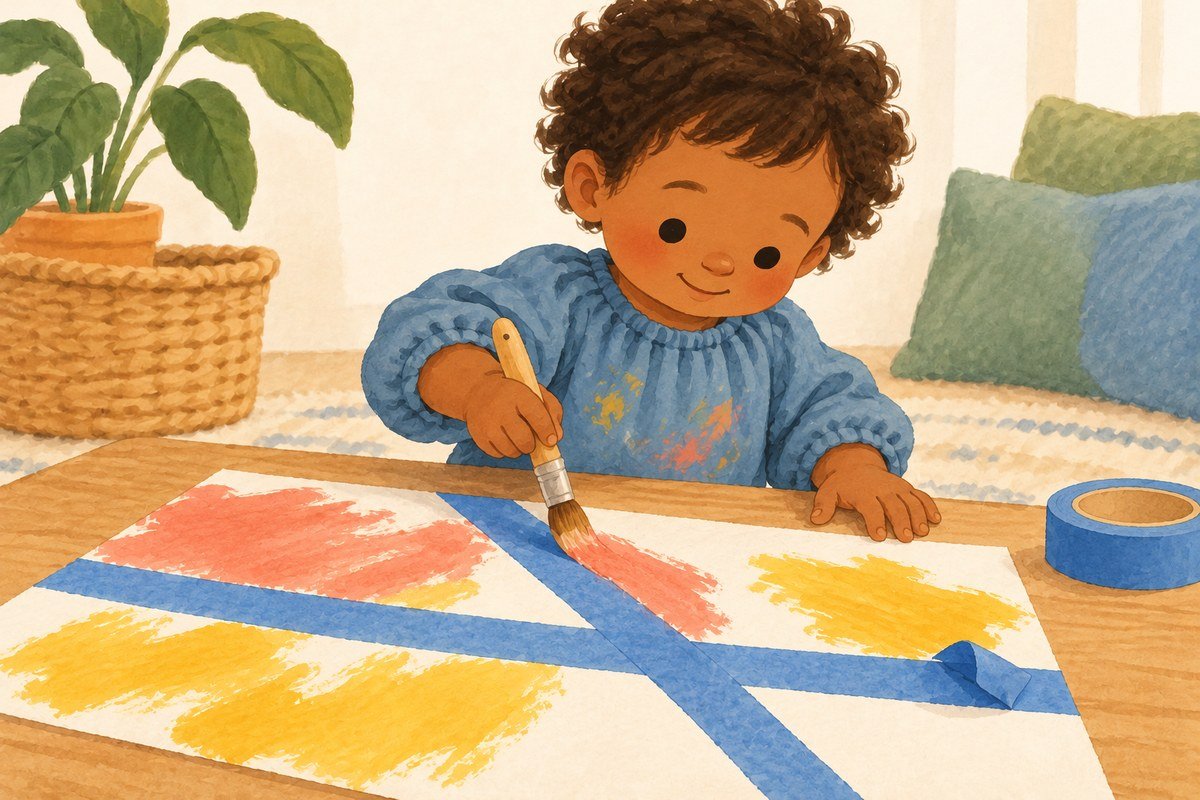
Good for: Painting, peeling, simple surprise effect
Time: 10–20 minutes
Setup: A few minutes
Mess: Medium
How to do it
Place several wide strips of painter’s tape across a large piece of paper.
Let your toddler color or paint over the paper and tape.
When they are done, peel the tape away to reveal clean lines underneath.
The result does not have to become anything recognizable.
How to get them interested
Start peeling one corner of a strip after some color has gone over it.
Stop before removing the whole piece.
That half-revealed line gives them a reason to pull the rest.
Then let them take over
If they become more interested in peeling the tape than painting, let the activity change.
The reveal may be the part they care about.
Toddler not interested?
Use only two large strips instead of setting up an elaborate tape pattern.
Important safety note
Supervise loose pieces of tape and remove them once the activity is finished.
3. Cardboard Tube Stamping
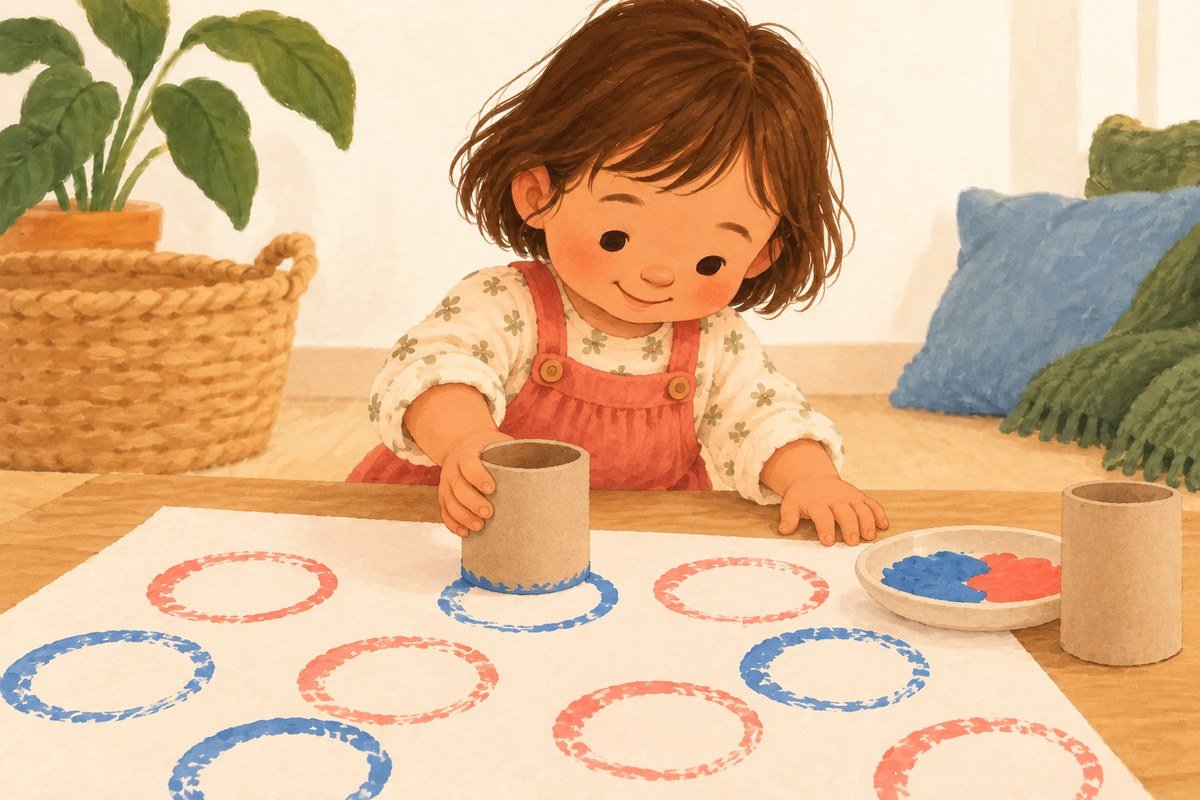
Good for: Painting, stamping, everyday materials
Time: 10–20 minutes
Setup: A few minutes
Mess: Medium
How to do it
Use a clean cardboard tube from paper packaging and a small amount of washable paint.
Dip one end lightly into the paint and press it onto paper.
The tube leaves simple circular prints.
How to get them interested
Make one circle yourself.
Then squeeze another tube slightly so it makes a different shape.
Put both beside the paper and let them discover the difference.
Then let them take over
Once they begin choosing where to stamp or which tube to use, stop arranging the pattern.
There does not need to be a finished design.
Toddler not interested?
Roll the side of the tube through a little paint and see what kind of mark that makes instead.
Important safety note
Use clean sturdy tubes and discard them if they become soggy, torn, or develop loose pieces.
4. Toy Animal Paint Prints
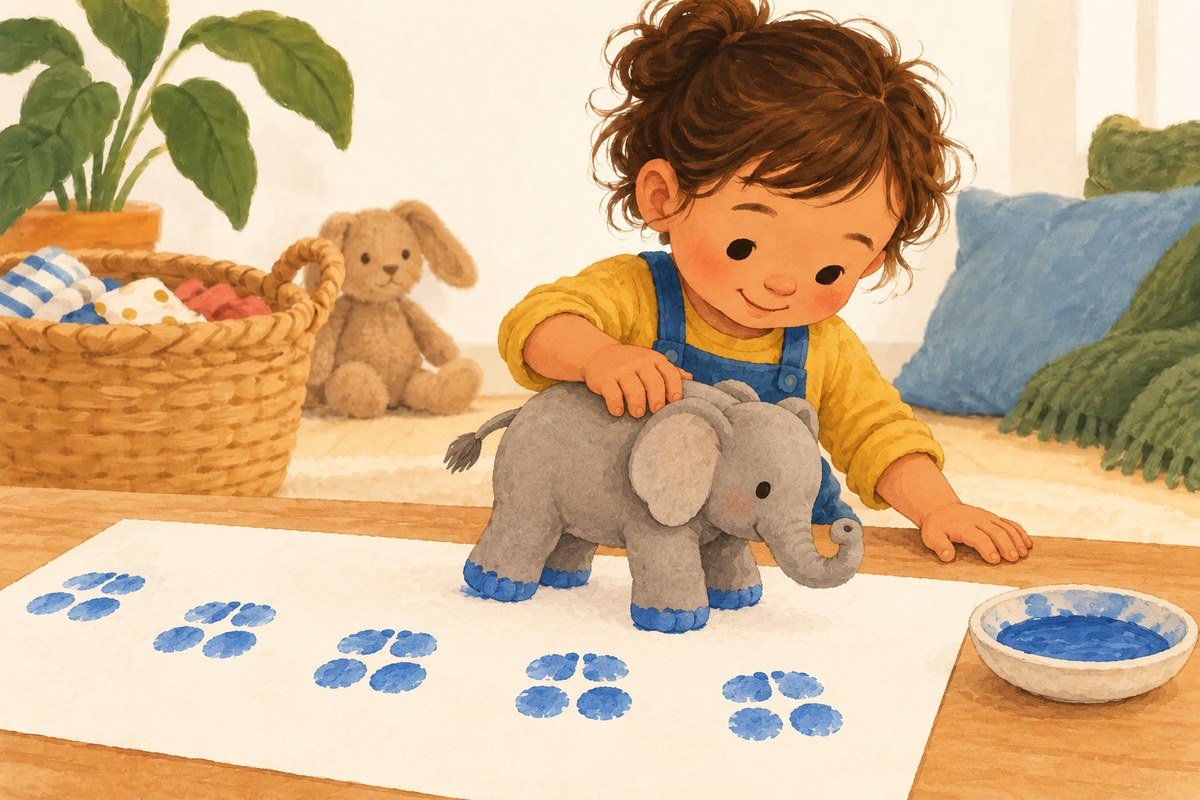
Good for: Painting, pretend play, animal toys
Time: 10–20 minutes
Setup: A few minutes
Mess: Medium
How to do it
Choose one or two chunky washable toy animals.
Put a small amount of washable paint on a tray, lightly touch the toy’s feet to the paint, then let it “walk” across paper.
How to get them interested
Start with one animal.
Walk it across the paper and then turn it around to look at the tracks it apparently left behind.
Act mildly surprised.
Then let them take over
When they grab the animal and start deciding where it walks, stop making the story for them.
They may make tracks.
They may also simply paint the entire animal.
Toddler not interested?
Try their favorite animal instead.
A dinosaur may succeed where your carefully selected horse failed.
Important safety note
Use large age-appropriate washable toys without small removable parts and non-toxic washable paint.
Outdoor and Mess-Friendly Art Activities for Toddlers
If something is going to involve a lot of paint, water, or chalk, taking it outside usually makes me much more enthusiastic about saying yes.
1. Sidewalk Chalk Scribble
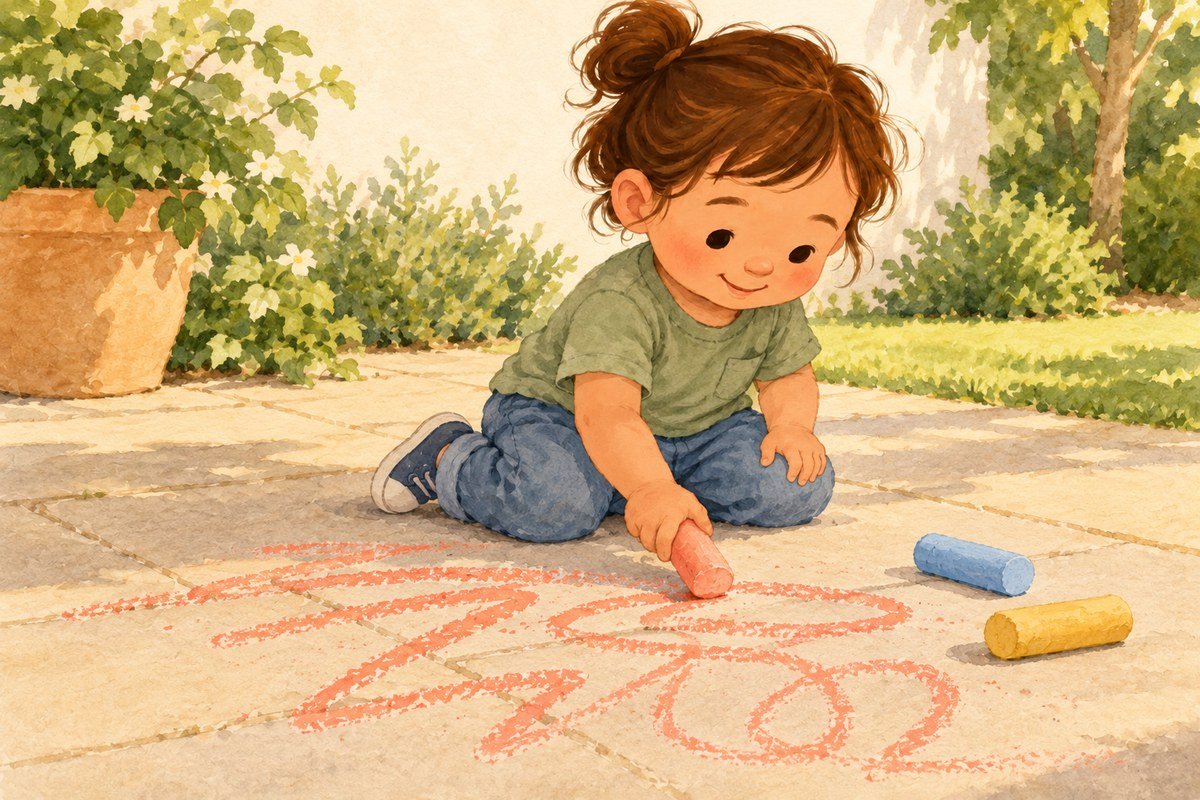
Good for: Big drawing, outdoor play
Time: 10–20 minutes
Setup: None
Mess: Little
How to do it
Give your toddler large sidewalk chalk and a safe paved surface.
They can make lines, circles, dots, scribbles, or cover one small section again and again.
How to get them interested
Draw one huge line.
Walk to the other end of it and look back at where it started.
Then give them the chalk.
Then let them take over
When they begin moving around the space and making their own marks, stop giving drawing ideas.
The pavement is already a much bigger canvas than they normally get.
Toddler not interested?
Draw around one of their toy cars, shoes, or another large familiar object and see whether they want to add to it.
Important safety note
Use age-appropriate sidewalk chalk and supervise according to the product guidance.
2. Chalk and Water Experiment
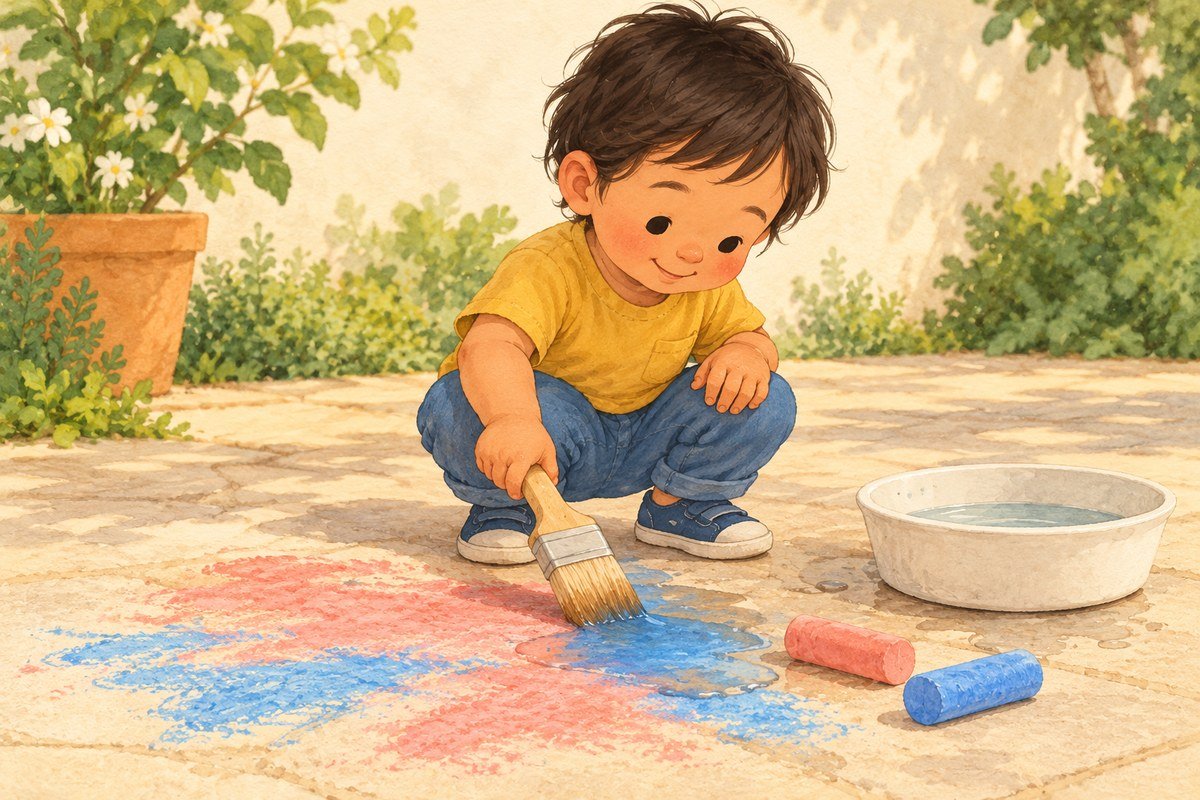
Good for: Chalk, water, experimenting
Time: 10–20 minutes
Setup: Almost none
Mess: Little
How to do it
Make a few sidewalk-chalk marks outside.
Give your toddler a wide brush and a little water and let them brush over the chalk.
They can see how the colors and texture change when the chalk gets wet.
How to get them interested
Draw one chalk patch yourself.
Brush water over half of it and leave the other half dry.
You now have something visibly different for them to investigate.
Then let them take over
When they begin choosing which marks get water, stop making new examples.
They may eventually abandon the brush and start drawing with chalk again.
That is fine.
Toddler not interested?
Let them paint plain pavement with water first.
Add chalk once the brush itself has become interesting.
Important safety note
Supervise the water and avoid creating dangerously slippery walking areas.
3. Nature Brush Painting
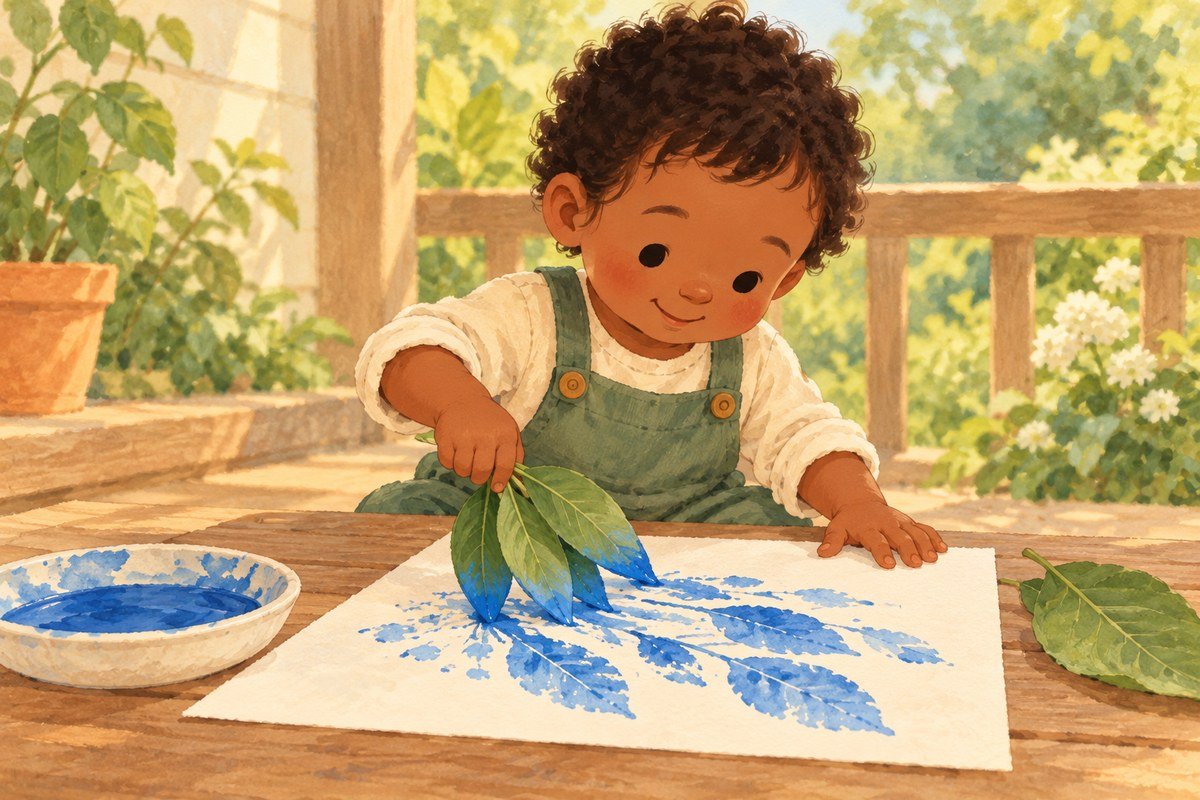
Good for: Outdoor painting, experimenting with tools
Time: 10–20 minutes
Setup: A few minutes
Mess: Medium
How to do it
Choose a safe natural object that can work like a brush.
A large leaf, a small bundle of grass, or another soft safe plant material can make different marks.
Use it with a small amount of washable child-safe paint on paper.
How to get them interested
Use a normal brush once and the nature brush once.
Put the two marks beside each other.
Then hand your toddler the strange brush.
The unusual tool is the interesting part.
Then let them take over
When they start experimenting with how the leaf or grass moves across the paper, stop trying to make it behave like a normal paintbrush.
Toddler not interested?
Let them choose the safe natural material themselves.
Finding the “brush” may be more interesting than the painting.
Important safety note
Use only safe, known plant materials. Avoid unknown plants, berries, mushrooms, thorns, irritating plants, or anything sharp.
4. Big Outdoor Paper Painting
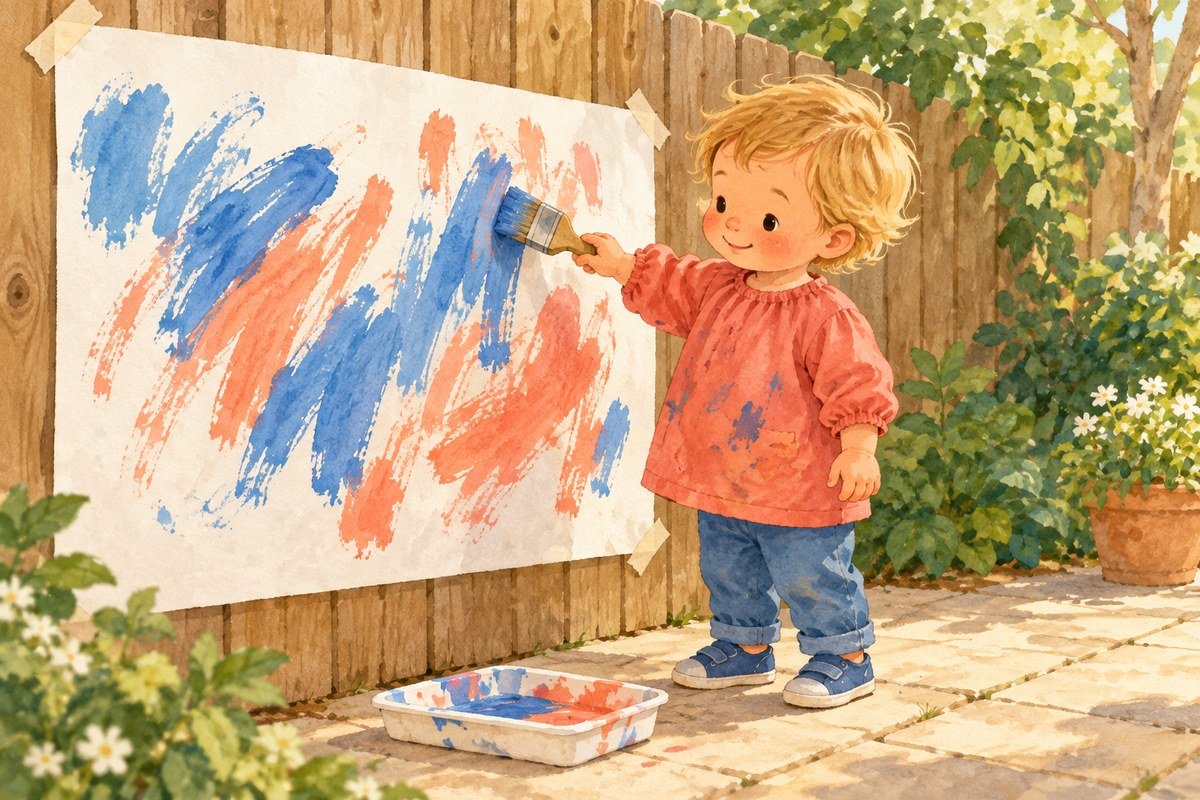
Good for: Big painting movements, outdoor messy play
Time: 15–30 minutes
Setup: A few minutes
Mess: High
How to do it
Set up a large sheet of paper outside on a safe surface.
Use a few washable child-safe paint colors and large brushes, sponges, or other simple tools.
The bigger paper lets your toddler move around instead of trying to fit everything onto one small sheet.
How to get them interested
Make one enormous brushstroke from one side toward the middle.
Stop before reaching the other side.
Leave the brush nearby.
An unfinished giant mark gives them an obvious place to begin without telling them what picture to make.
Then let them take over
When they start choosing where the paint goes next, stop filling the paper yourself.
They can use one color, all the colors, or spend ten minutes painting the same corner.
Toddler not interested?
Change the tool instead of changing the activity.
Try a sponge or a much wider brush.
Important safety note
Use non-toxic washable paint intended for children, supervise closely, and avoid creating slippery painted areas around the paper.
What Makes a Good Art Activity for a Toddler?
For me, a good toddler art activity is one where the finished picture barely matters.
That is convenient because I’m not particularly good at making nice-looking crafts.
If an activity requires me to cut out twelve shapes beforehand and then guide my son through assembling them in the correct order, I’m probably doing most of the interesting part myself.
I’d rather give him something that reacts when he uses it.
The sponge leaves a print. The car leaves tracks. The chalk changes when it gets wet. The sticker comes off the sheet and sticks somewhere new.
That gives him an obvious first thing to try.
The other thing I look for is the moment when he stops waiting for me.
If he rolls the car through the paint again, reaches for another sticker, dips the sponge himself, or moves to a new part of the paper without asking what comes next, I’ve probably done enough.
That’s when I try to stop improving the activity.
And if the beautiful art activity lasts three minutes before he decides the cardboard tube is actually a telescope, I’m not going to fight him over it.
The point was to give him something interesting to start with.
What happens after that belongs to him.
Want One Activity That Fits Right Now?
Not every art activity fits every moment.
Tell Little Moment Play your child’s age, what you need, and how much time, setup, or mess you’re willing to deal with.
Browse Toddler Activities by Age
- Activities for 1-Year-Olds
- Activities for 2-Year-Olds
- Activities for 3-Year-Olds
- Activities for 4-Year-Olds
- Activities for 5-Year-Olds