
By Antonio
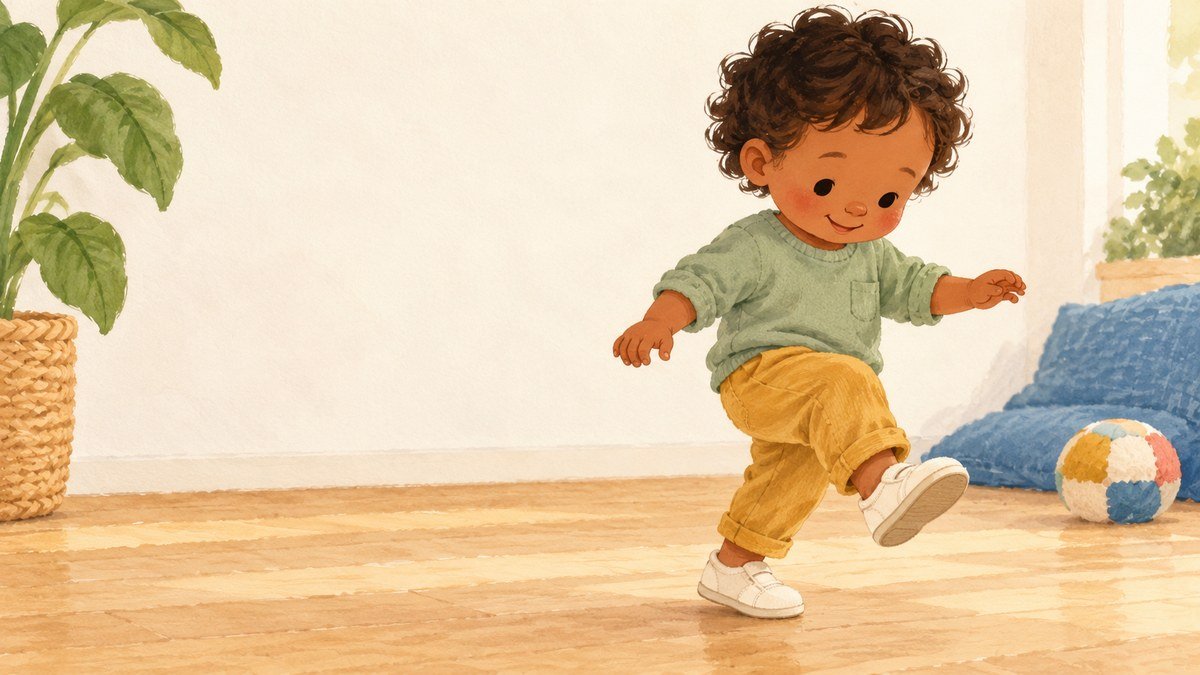
“Gross motor” is one of those phrases that sounds more technical than the activities usually are. And another one that I had no idea what it meant before I became a parent.
Also, I’m just a dad, not a physiotherapist or occupational therapist. When I use it here, I’m talking about the bigger movements toddlers make with their bodies: walking, running, crawling, balancing, jumping, pushing, throwing, kicking, and carrying things around.
Most of those movements already show up naturally in toddler play. I’ve found my job is usually less about teaching the movement and more about giving my son a reason to start doing it.
“Practice balancing” is not a particularly exciting invitation on its own.
Trying to follow a tape line while I dramatically wobble off it has a slightly better chance. Or just following the edge of a curb.
That’s the approach behind these gross motor activities for toddlers: make the first move easy to understand, give the game a little reason to exist, and then stop directing it once the toddler starts changing it themselves.
Not sure what will work right now?
Tell Little Moment Play what you need, your child’s age, and how much time, setup, or mess you’re willing to deal with.
Table of Contents
Walking, Pushing and Carrying Activities
Try these simple ways to start and stop, push something manageable, or walk while carrying a light object.
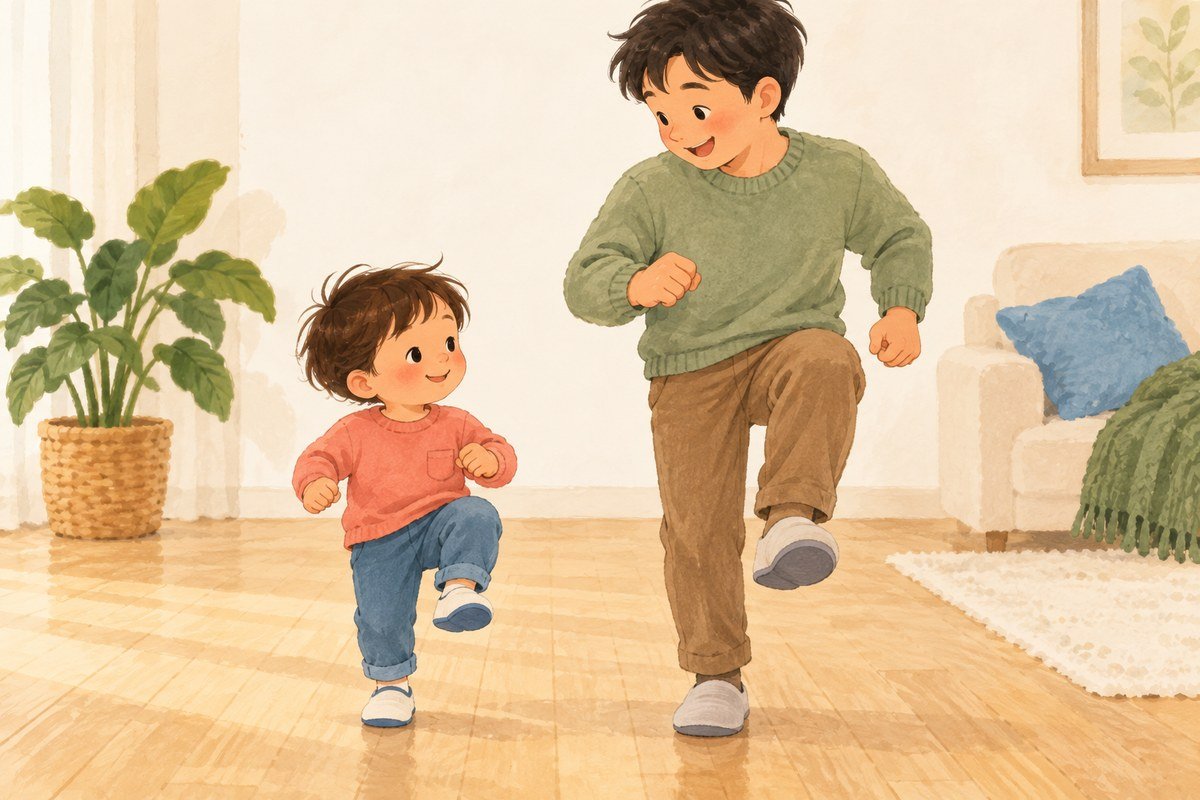
1. March and Stop
Good for: Walking, starting and stopping
Time: 5–10 minutes
Setup: None
Mess: None
How to do it
Start marching around a clear area of the room.
After a few steps, stop completely. Then start again. Try a slower or quicker walking pace if your toddler is comfortable with it.
Your toddler can march, walk, stomp, or invent something that barely resembles marching.
How to get them interested
Don’t announce the game.
Start marching somewhere you would normally just walk, such as toward the kitchen.
Then suddenly freeze mid-step.
Stay there long enough for your toddler to wonder what on earth you are doing.
Then let them take over
The handoff happens when they stop before you do or begin choosing when everyone should move again.
At that point, follow their stops instead of controlling the game.
Toddler not interested?
Forget the stopping and change the march.
Tiny steps, enormous steps, slow stomps, or walking backward may be enough to get a reaction.
Important safety note
Use a clear, non-slippery area away from sharp furniture.
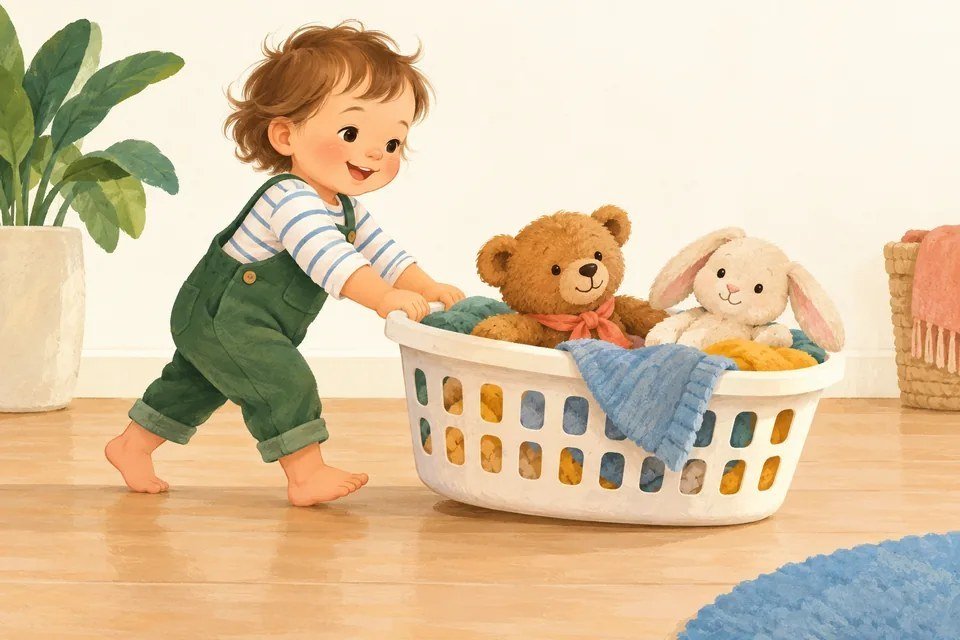
2. Laundry Basket Push
Good for: Pushing, walking, moving around
Time: 10–20 minutes
Setup: Almost none
Mess: None
How to do it
Use an empty or very lightly loaded laundry basket on a suitable floor.
Your toddler can push it from one part of the room to another, with room to turn if they want to change direction. A suitable lightweight cardboard box can be an alternative; keep it easy to move and do not let children ride inside.
How to get them interested
Put one stuffed animal inside.
Push the basket a short distance and announce that Teddy apparently needs to get somewhere.
Leave the basket there.
Then let them take over
When your toddler starts pushing without waiting for you to name the destination, stop giving directions.
The basket may become a bus, delivery van, shopping trolley, or just something satisfying to shove around.
Toddler not interested?
Let them choose the passenger.
Sometimes selecting who gets the ride is more interesting than pushing the basket itself.
Important safety note
Keep the basket light, use a clear path, and do not let children ride inside it.
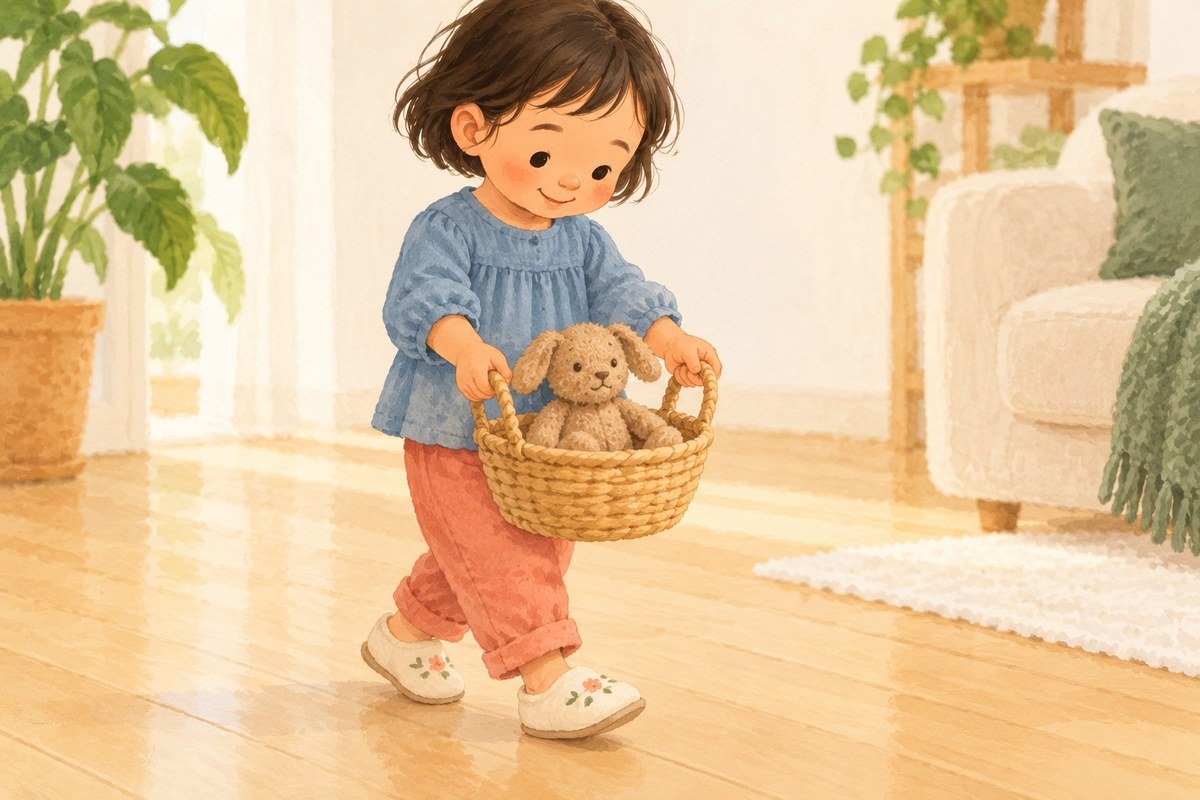
3. Teddy Basket Carry
Good for: Carrying, walking, pretend play
Time: 10–20 minutes
Setup: Almost none
Mess: None
How to do it
Put one lightweight stuffed animal in a small basket.
Let your toddler carry it from one safe spot to another, choosing a clear route with room to turn comfortably.
That’s the whole starting idea.
How to get them interested
Put Teddy into the basket and announce that Teddy urgently needs to get to the sofa.
Carry the basket there.
Then discover that Teddy apparently needs another ride.
Then let them take over
When your toddler chooses the destination themselves, stop suggesting places.
They may eventually fill the basket with other toys. Keep it light enough to carry comfortably.
Toddler not interested?
Forget the basket and let them carry Teddy directly.
The mission matters more than the equipment.
Important safety note
Keep the basket lightweight and avoid heavy or small loose objects.
Crawling and Moving Around Obstacles
Keep these routes low and stable, with room to crawl, change body position, and move around simple obstacles.
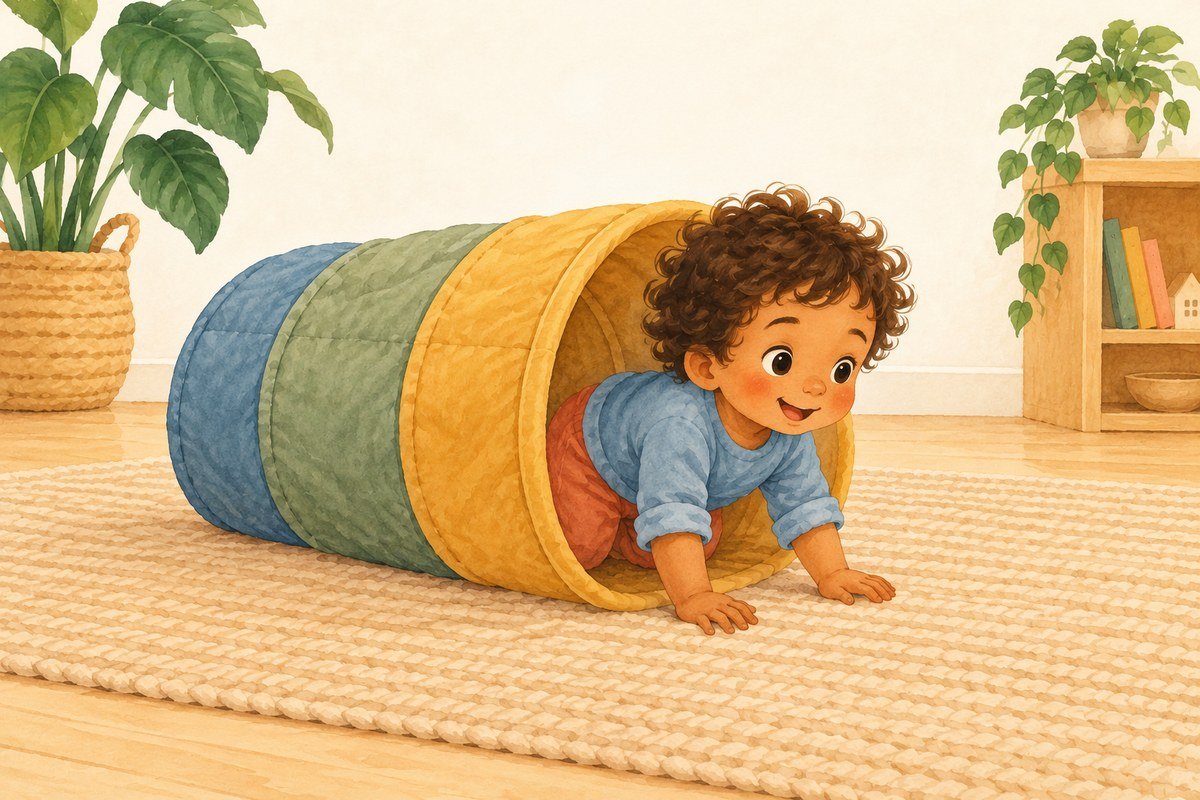
4. Crawl-Through Course
Good for: Crawling, changing body position
Time: 10–20 minutes
Setup: A few minutes
Mess: Little
How to do it
Create a simple crawling route using safe household objects.
A large cardboard box open at both ends works well. You can also create a route around cushions or under a sturdy table with plenty of clearance.
Keep it simple and stable.
How to get them interested
Send a stuffed animal through first.
Have it disappear through the tunnel and reappear at the other end.
Then leave it waiting there.
Then let them take over
Once your toddler crawls through and immediately turns around for another trip, stop adding instructions.
Repetition is doing the work now.
Toddler not interested?
Skip the whole course and use just one tunnel or one thing to crawl around.
Important safety note
Use only stable structures with plenty of space. Avoid unstable furniture, heavy blankets, or anything that could collapse onto the child.
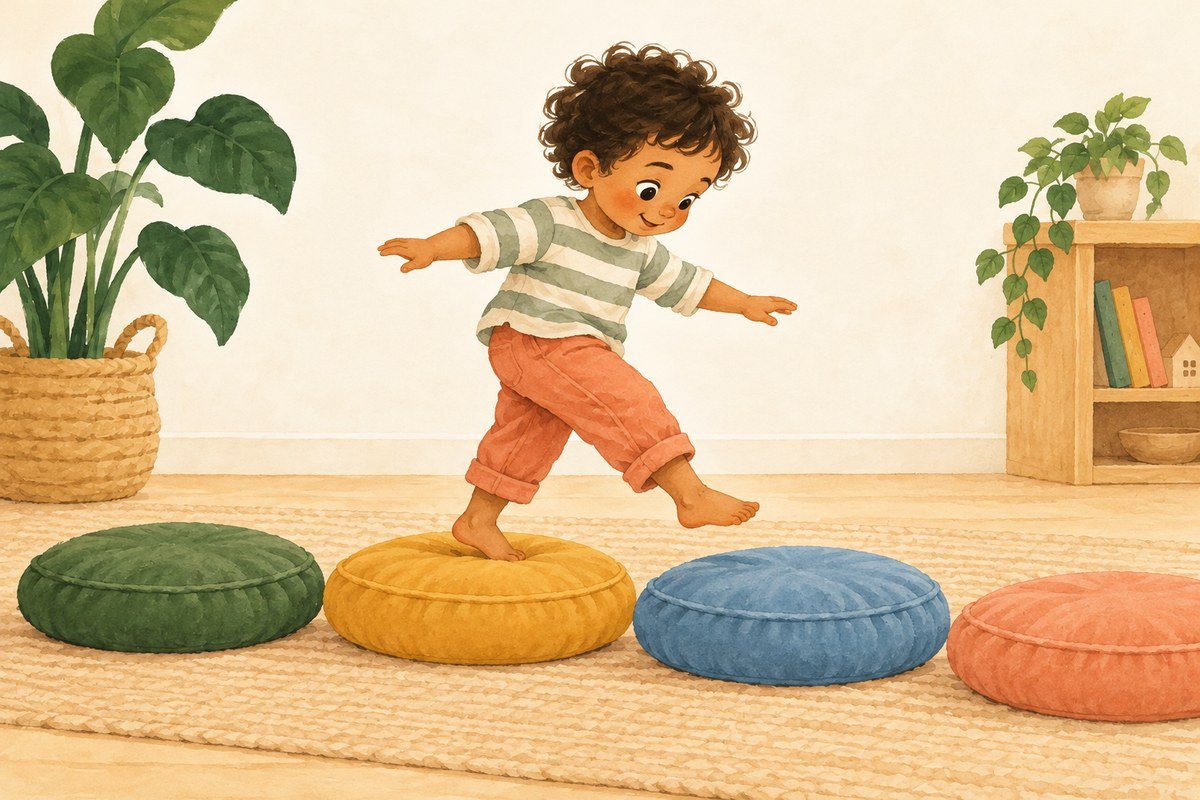
5. Pillow Obstacle Course
Good for: Stepping, crawling, changing direction
Time: 10–20 minutes
Setup: A few minutes
Mess: Little
How to do it
Place a few pillows or cushions flat on the floor.
Create a route where your toddler can walk around one, step over another, and crawl between two.
Keep everything low.
How to get them interested
Put one toy at the finish.
Take the first part of the route yourself but stop before reaching it.
Ask whether your toddler can get there.
Then let them take over
When they turn around and start doing the route again without needing the toy at the end, stop directing the course.
They may also rebuild it.
Toddler not interested?
Remove most of the obstacles and leave just one thing to step over or crawl around.
Important safety note
Keep all obstacles low and soft, with clear floor around them. Do not stack cushions for climbing.
Balance, Jumping and Stepping Activities
These use simple floor-level setups. I’m deliberately avoiding anything that asks a toddler to balance high off the ground or climb unstable furniture.
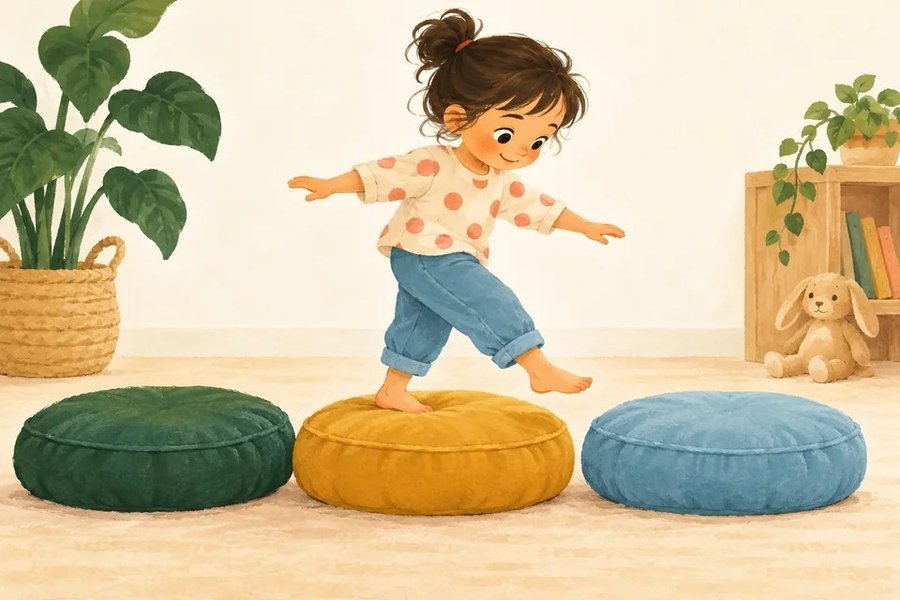
6. Cushion Islands
Good for: Stepping, balance, indoor movement
Time: 10–20 minutes
Setup: A few minutes
Mess: Little
How to do it
Put several cushions flat on the floor with small, manageable spaces between them.
Your toddler can move from one “island” to the next.
Younger toddlers can simply step between cushions rather than jump.
How to get them interested
Cross the first two islands yourself.
Then stop on one cushion as though you have discovered that the surrounding floor is suddenly somewhere you absolutely cannot stand.
Then let them take over
When your toddler moves toward the next cushion without checking where you want them to go, stop planning the route.
If they start rearranging the islands, that may become the better activity.
Toddler not interested?
Put a favorite toy on one cushion and give the route a destination.
Important safety note
Keep cushions flat and low on a clear, non-slippery floor. Do not stack them into climbing towers.
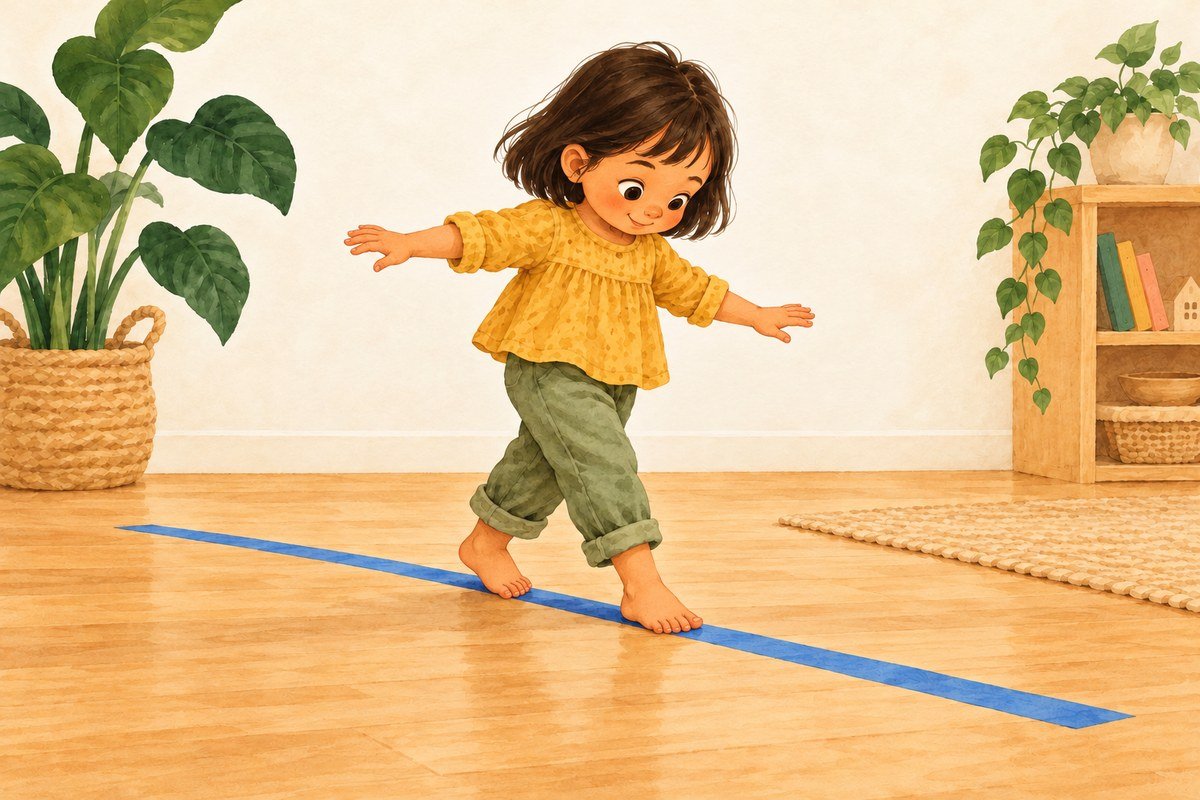
7. Tape Line Balance
Good for: Walking, balance, focused movement
Time: 5–10 minutes
Setup: Almost none
Mess: None
How to do it
Put a strip of painter’s tape on the floor.
Your toddler can walk along it, beside it, backward on it, or simply try to keep one foot somewhere near the line.
It does not need to look like a gymnast’s balance beam.
How to get them interested
Walk the line yourself.
Wobble dramatically once, regain your balance, and continue as if the line is much more difficult than it actually is.
Then let them take over
Once your toddler starts walking the line without watching your feet, stop demonstrating.
They may create their own rules about what counts as staying on it.
Toddler not interested?
Turn the line into a road for a toy first.
They may start following the car themselves.
Important safety note
Use tape suitable for the floor and remove it if it begins peeling up.
8. Step Over the River
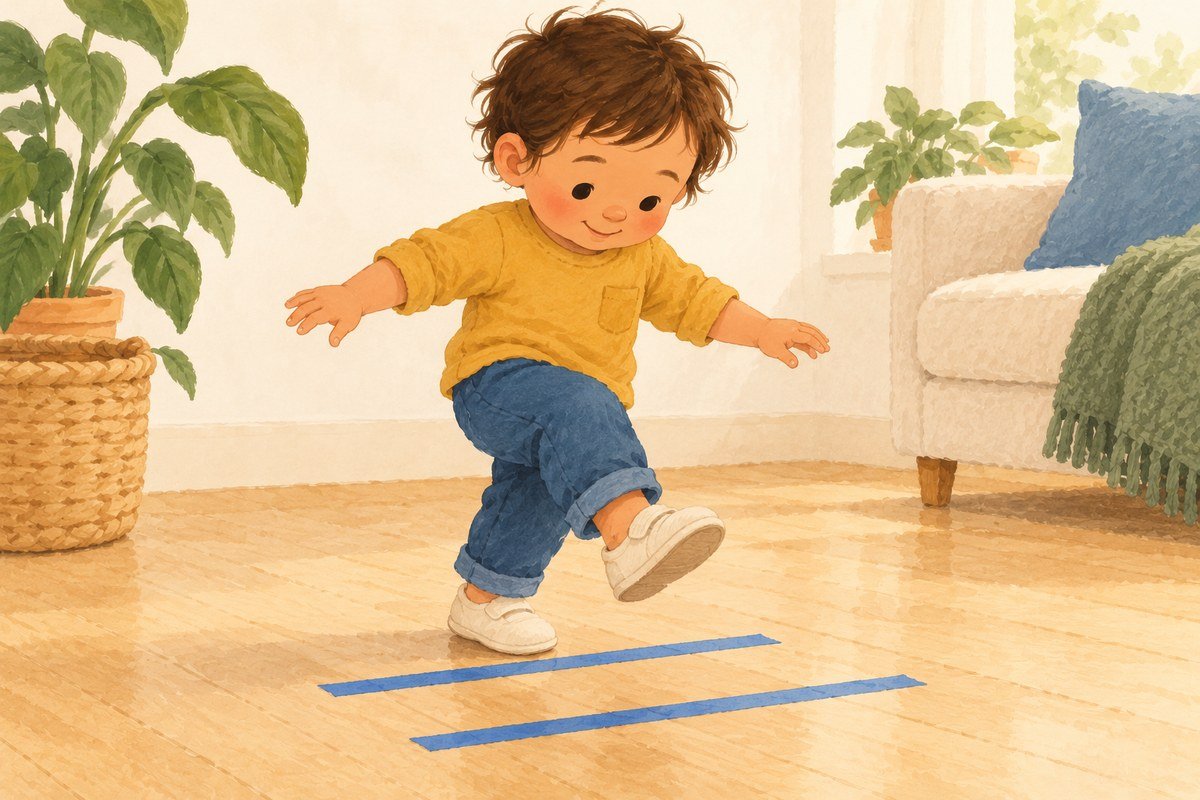
Good for: Stepping, judging distance
Time: 5–10 minutes
Setup: Almost none
Mess: None
How to do it
Put two parallel strips of painter’s tape on the floor with a narrow gap between them.
That gap is the river.
Your toddler can step over it rather than into it.
Start very narrow.
How to get them interested
Put a stuffed animal on the other side.
Stand at the edge and act mildly concerned about how you could possibly cross this enormous river.
Then take one very easy step over it.
Then let them take over
When your toddler starts crossing back and forth without waiting for you, leave the river alone.
They may decide to widen it, walk through it, or drive cars along it instead.
Toddler not interested?
Make the river even narrower and let a toy cross first.
Important safety note
Keep this as a floor-level stepping game. Do not add raised objects or encourage jumps beyond what the child is already comfortable doing.
9. Floor Marker Jumps
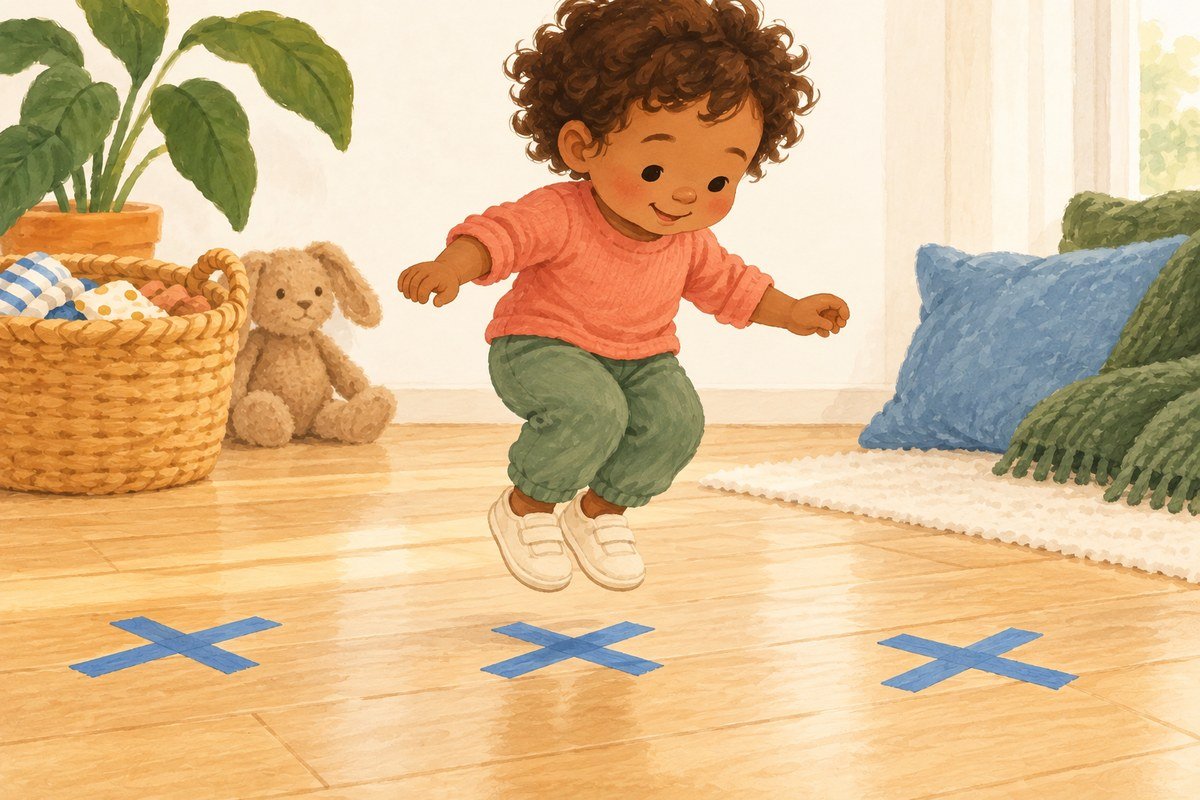
Good for: Stepping, jumping, moving between targets
Time: 5–10 minutes
Setup: A few minutes
Mess: None
How to do it
Make several flat floor markers using painter’s tape.
Place them close enough together that your toddler can step from one to the next. Older toddlers who already jump comfortably may choose to jump instead.
How to get them interested
Stand on the first marker.
Move to the second.
Then deliberately stop before the third as though you have forgotten where to go.
Then let them take over
When your toddler starts choosing which marker comes next, stop calling out directions.
If they skip half of them, that is now their route.
Toddler not interested?
Use only two markers.
Going back and forth between two obvious spots may work better than a whole course.
Important safety note
Use flat, securely attached markers on a non-slippery surface. Do not use loose paper that can slide underfoot.
Throwing, Rolling and Kicking Activities
Use soft balls or rolled socks with wide, close targets. Start with the movement your toddler can already try comfortably.
10. Sock Toss
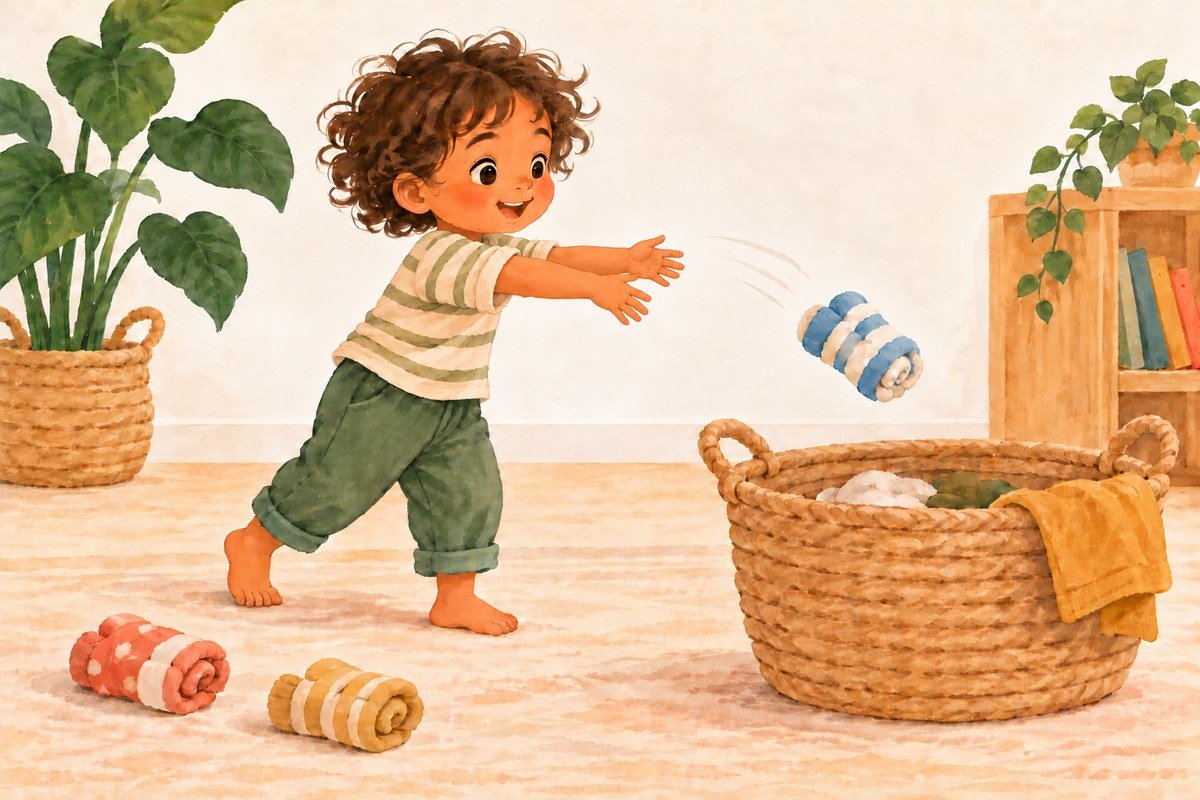
Good for: Throwing, aiming
Time: 5–10 minutes
Setup: Almost none
Mess: None
How to do it
Roll several pairs of socks into soft balls.
Put a laundry basket nearby and toss the socks in.
Move the basket closer or farther away depending on what makes the game fun.
How to get them interested
Take the first throw and miss.
Badly.
Look at the sock on the floor and then at the basket.
Give your toddler the next one.
Then let them take over
When they start retrieving missed socks themselves, stop handing them ammunition.
That retrieve-and-throw loop means the game can run without much help from you.
Toddler not interested?
Put the basket extremely close.
A successful drop from twenty centimeters away still counts.
11. Soft Ball Goal
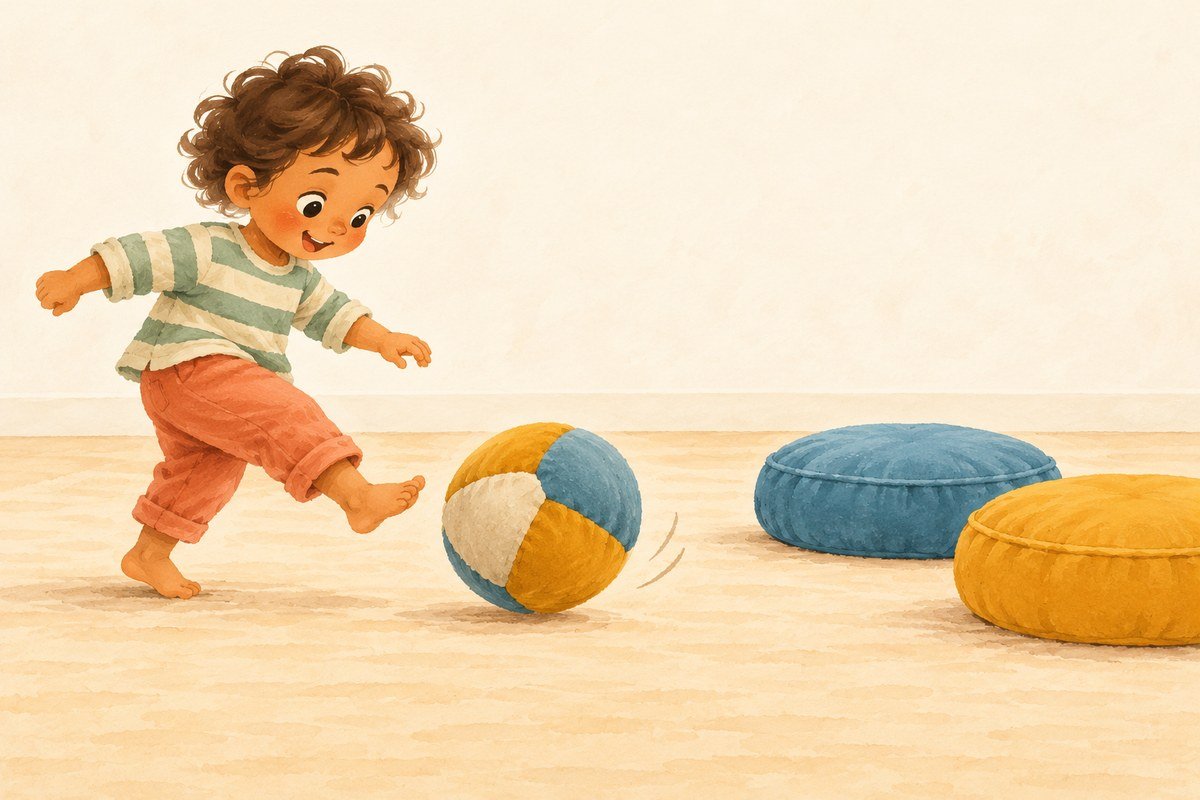
Good for: Kicking a soft ball toward a wide goal
Time: 10–15 minutes
Setup: Almost none
Mess: None
How to do it
Make a very wide goal using two safe markers.
Use a soft ball.
Place the ball a short distance away and show your toddler how to kick it toward or through the wide goal. Keep the target close and easy to reach.
How to get them interested
Kick the ball toward the goal yourself and miss the enormous target.
Then look genuinely puzzled.
Then let them take over
When your toddler retrieves the ball after a turn without waiting for you, stop resetting everything.
They have the loop.
Toddler not interested?
If kicking is not comfortable yet, roll the ball toward the wide goal instead. Keep it close enough to be easy to reach.
Toddler sport does not need strict regulations.
Important safety note
Use a soft ball in a clear area away from fragile or sharp objects.
12. Roll Through the Gate
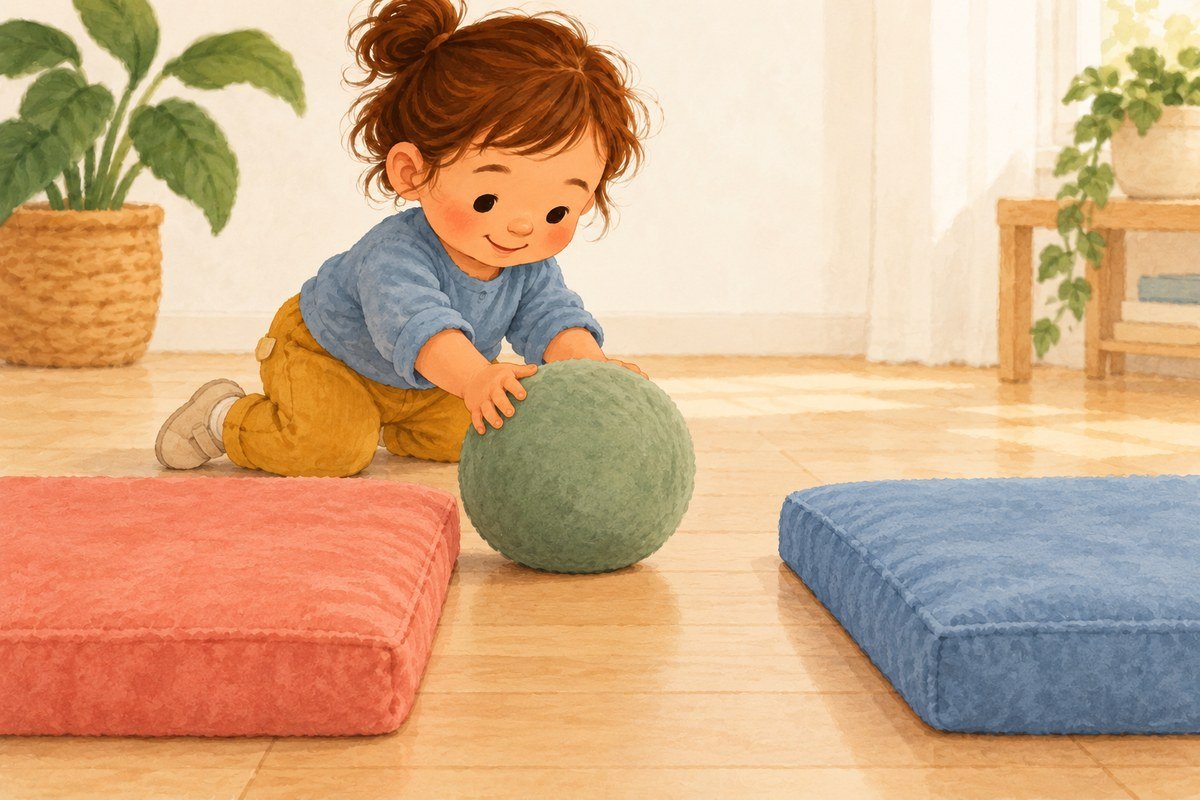
Good for: Rolling, aiming, crouching
Time: 5–10 minutes
Setup: Almost none
Mess: None
How to do it
Make a wide “gate” using two cushions, small boxes, or other safe floor-level markers.
Sit or crouch a short distance away and roll a soft ball through.
How to get them interested
Roll the first ball toward the gate and let it bump harmlessly into one side.
Try again.
Leave the next ball beside your toddler.
Then let them take over
When they retrieve and reposition the ball themselves, stop deciding where they should roll from.
The gate can move if they want it to.
Toddler not interested?
Sit on the opposite side and turn it into rolling the ball to each other through the gate.
Important safety note
Use soft, stable markers and a lightweight ball.
What Are Gross Motor Skills?
I’m using the term pretty simply on this page.
Oxford Health’s children’s therapy guidance describes gross motor skills as movements involving the larger muscles of the arms, legs, and torso, with examples including walking, balancing, jumping, and hopping.
You can also see those larger movements in the CDC’s toddler milestones. Its 2-year milestone list includes things such as running, kicking a ball, and walking up a few stairs. The CDC also makes clear that milestone checklists are developmental-monitoring tools, not substitutes for formal screening.
I’m not using any of that as a scorecard for these games.
If my son wants to step across the tape river rather than jump, I’m not going to turn the activity into a test. The point is to give him an easy reason to move and somewhere safe to try things he already wants to do with his body.
That also means I’d rather make an activity easier than repeatedly tell a toddler they are doing it wrong. Move the basket closer. Make the “river” narrower. Remove half the obstacle course. Give them a version they can get into first.
If I had an actual concern about how my child was moving or developing, I’d ask a pediatrician or another qualified health professional rather than trying to answer it from an activity list.
Want One Activity That Fits Right Now?
Tell Little Moment Play what you need, your child’s age, and how much time, setup, or mess you’re willing to deal with.
Browse Toddler Activities by Age
- Activities for 1-Year-Olds
- Activities for 2-Year-Olds
- Activities for 3-Year-Olds
- Activities for 4-Year-Olds
- Activities for 5-Year-Olds