
By Antonio
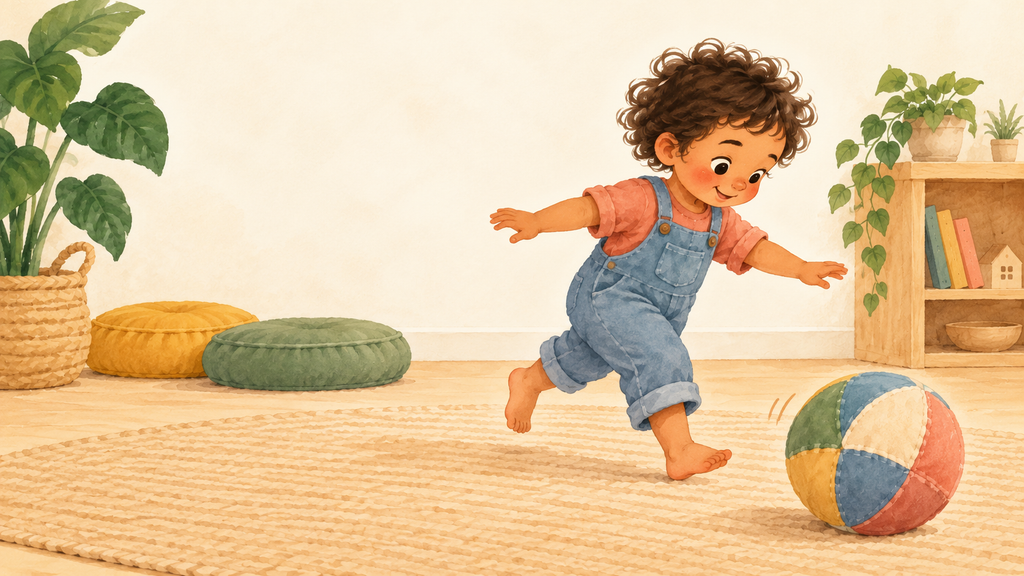
Toddlers seem to find movement whether you plan for it or not. I like to think that I’m in good physical shape. But I lost track of how many times my plan to tire my son out backfired. When I say backfired, I mean me catching my breath on the floor while he is slapping me across the back, yelling, “One more time!”
These physical activities for toddlers give that energy somewhere to go through dancing, pretend games, chasing a soft ball, and exploring outdoors.
From my experience, you don’t need much equipment (often you’re the equipment). Most of the ideas here use soft toys, a soft ball, chalk, or things you already have around the house.
Finally, I tried out some of these activities and decided to include them; some were suggested by friends, and some I found on Reddit. Just to be clear.
Not sure what will work right now?
Tell Little Moment Play what you need, your child’s age, and how much time, setup, or mess you’re willing to deal with.
Table of Contents
Fun Physical Activities for Toddlers
Physical play works better when it feels like a game instead of exercise. Toddlers are much more likely to join in if you start doing something odd, give them something to copy, or turn the movement into a small story.
These activities focus on movement without needing much space or preparation.
1. Freeze Dance
Good for: Dancing, stopping and starting
Time: 5-15 minutes
Setup: None
Mess: None
How to do it
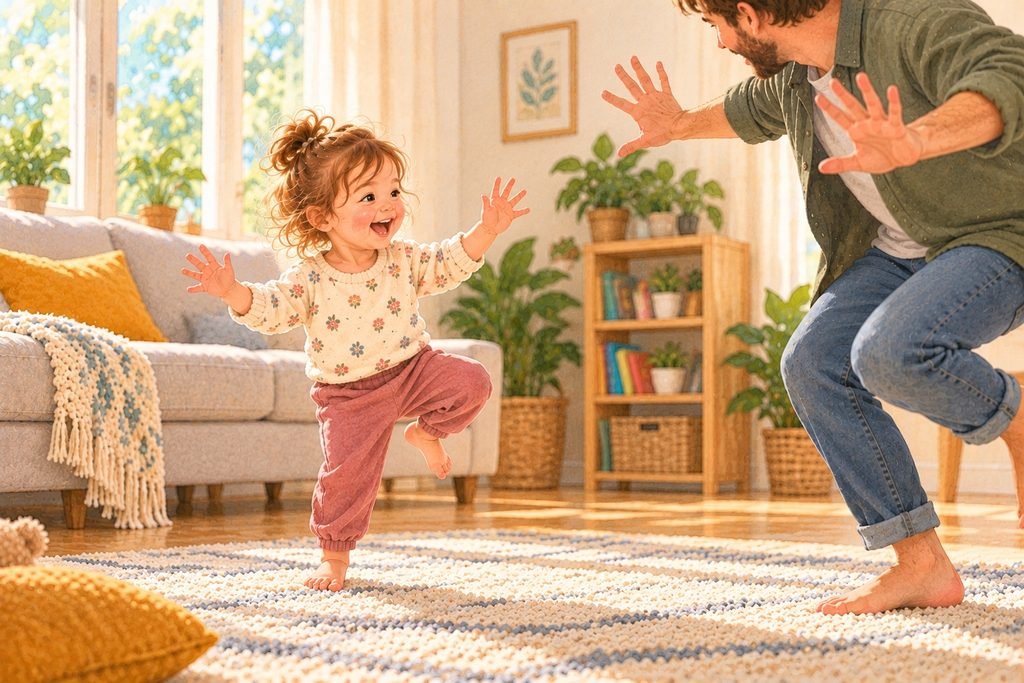
Put on a song and dance together. Every so often, pause the music and stop moving until it starts again.
You do not need to explain rules before beginning. Start dancing, stop when the music stops, and let your toddler work out what is happening by watching you.
How to get them interested
Make your own dancing ridiculous enough to be worth copying. Stomp, spin, wave your arms, or dance with a stuffed animal.
When you freeze, choose an exaggerated pose and try to hold it. Toddlers often become interested once they see that stopping is part of the joke.
Then let them take over
Let your toddler decide how everyone should dance. They can choose the next move, decide when you should freeze, or take over the pause button if they are old enough to use it with you.
The game does not need to stay organized. If it turns into five minutes of jumping to the same song, that still solves the main problem.
Toddler not interested?
Skip the freezing and just copy each other’s movements. You do one move, then wait for your toddler to show you one.
Important safety note
Clear enough floor space for dancing and keep the game away from furniture edges, stairs, and slippery surfaces.
2. Follow My Moves
Good for: Coordination and body awareness
Time: 5-15 minutes
Setup: None
Mess: None
How to do it
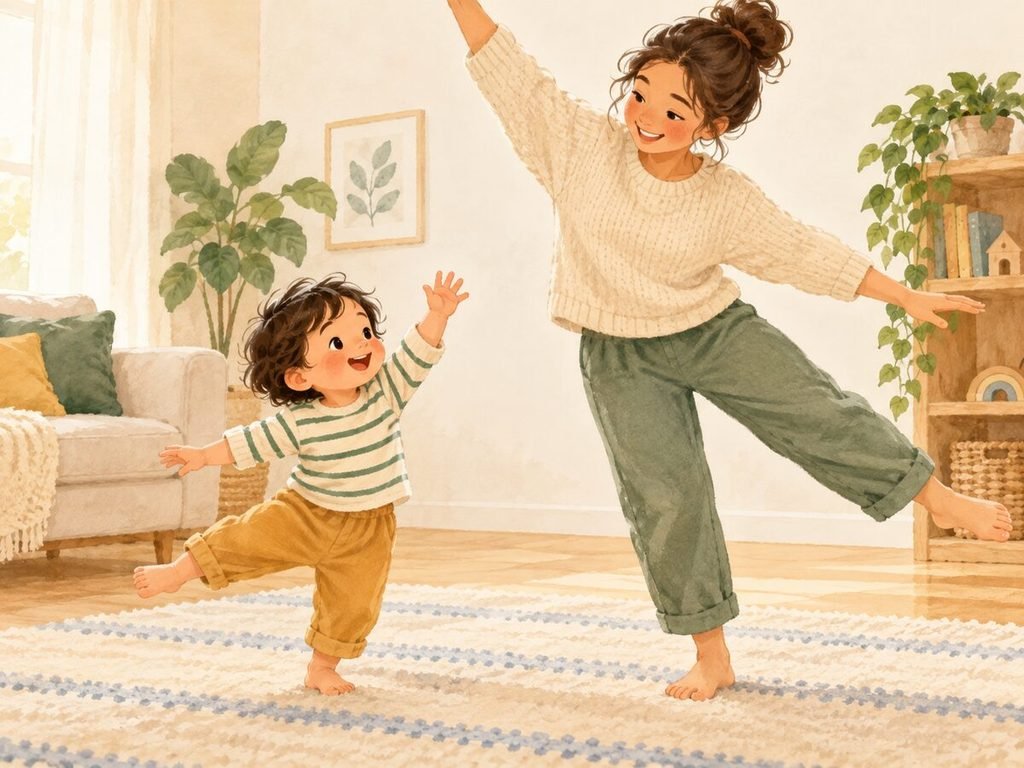
Stand where your toddler can see you and make one easy movement at a time. Touch your head, stomp twice, stretch your arms up, crouch down, or turn around.
Once they copy a few movements, combine two actions. You might stomp and clap, or crouch and reach up.
How to get them interested
Do not begin by asking them to copy you. Start doing something strange and wait for them to notice.
Touch your head with both hands and look confused, or stomp across the room as if you have forgotten how walking works. Give them a reason to watch before turning it into a game.
Then let them take over
Ask them to show you what to do next. Copy their movement even if it makes no sense, and let them become the leader.
This usually makes the game more interesting because the toddler gets to see an adult follow their instructions.
Toddler not interested?
Use a stuffed animal as the leader. Teddy can jump, fall over, stretch, or ask your toddler to show him what comes next.
Important safety note
Keep movements suitable for your child’s balance and coordination. Avoid asking young toddlers to copy jumps, spins, or poses that they cannot control yet.
3. Animal Walk Trail
Good for: Whole-body movement and pretend play
Time: 10-20 minutes
Setup: None
Mess: None
How to do it
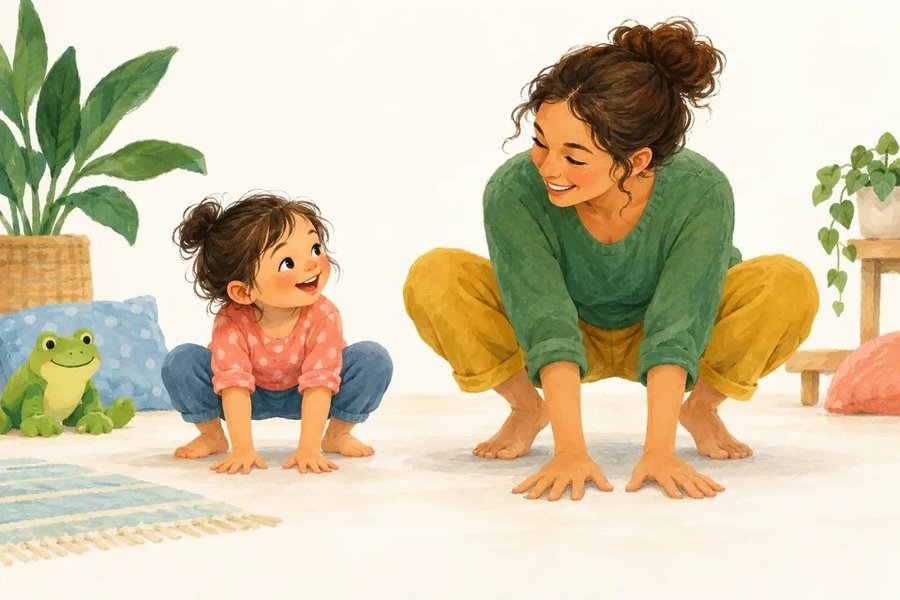
Choose a few animals and move the way you imagine they would. You can stomp like an elephant, crawl like a bear, hop like a frog, or waddle like a duck.
Travel from one side of the room to the other instead of staying in place. That turns each animal into a short movement challenge.
How to get them interested
Start before you explain anything. Crawl past your toddler and announce that you are a bear looking for somewhere to sleep.
Once they start following or laughing at you, ask what animal should appear next.
Then let them take over
Let your toddler invent the animals and decide how each one moves. A flying cow that crawls backward is completely acceptable.
Copy whatever they come up with. The game becomes theirs once they are creating the movements.
Toddler not interested?
Bring out one toy animal and make it move first. Your toddler can follow the toy instead of copying you.
Important safety note
Clear hard toys and furniture from the movement area. Keep crawling and jumping away from stairs or slippery floors.
4. Teddy Delivery Race
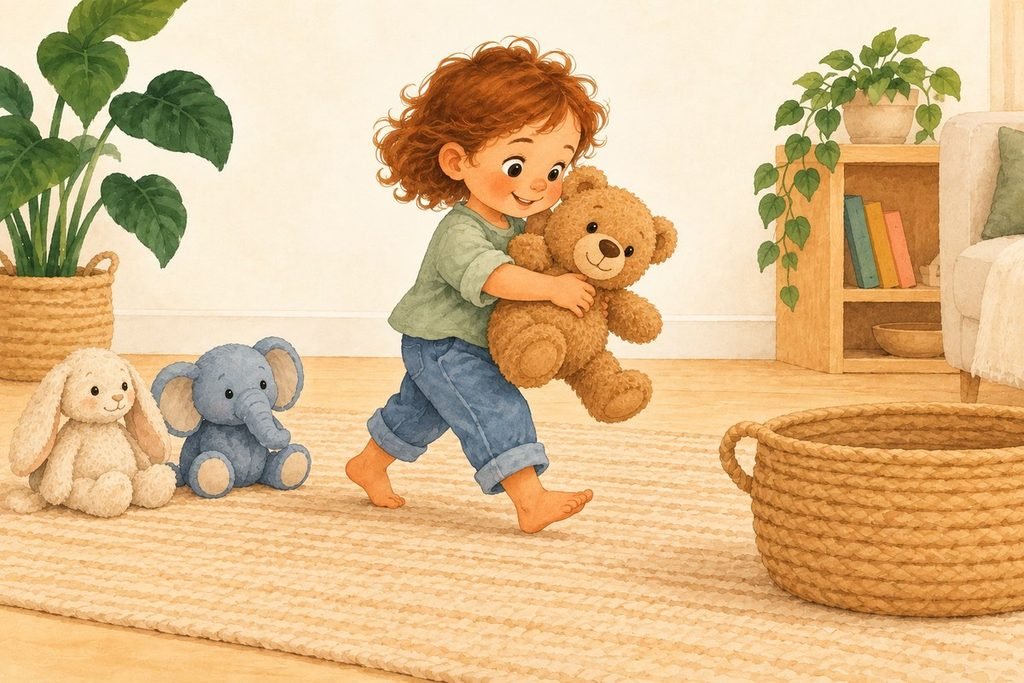
Good for: Active journeys and pretend play
Time: 10-20 minutes
Setup: Almost none
Mess: None
How to do it
Place a few stuffed animals at one side of the room and choose a destination at the other side. Your toddler takes one toy at a time to its new home, making another trip whenever a new delivery is needed.
The destination can be the sofa, a basket, a blanket, or another room if the route is safe.
How to get them interested
Pick up one toy and give it a problem. “Teddy is stuck over here. Can you get him to the sofa?”
Once one toy has been delivered, another one can need help. Giving the movement a purpose makes it more interesting than asking a toddler to run back and forth.
Then let them take over
Let your toddler choose who gets moved and where each toy belongs. They may turn the delivery route into something else, or start carrying several toys at once.
If they keep moving, the activity is working.
Toddler not interested?
Carry one toy yourself and make a big mistake by taking it to the wrong place. See whether your toddler wants to correct you.
Important safety note
Keep the route clear of toys, cords, slippery rugs, and furniture corners. Use soft objects your toddler can carry.
Indoor Physical Activities for Toddlers
Bad weather does not stop toddlers from needing movement. It just means the running, climbing, pushing, and throwing starts happening inside.
The best indoor physical activities use a small amount of space and things that will not cause trouble when the movement becomes more enthusiastic than expected.
5. Soft Ball Roll and Chase
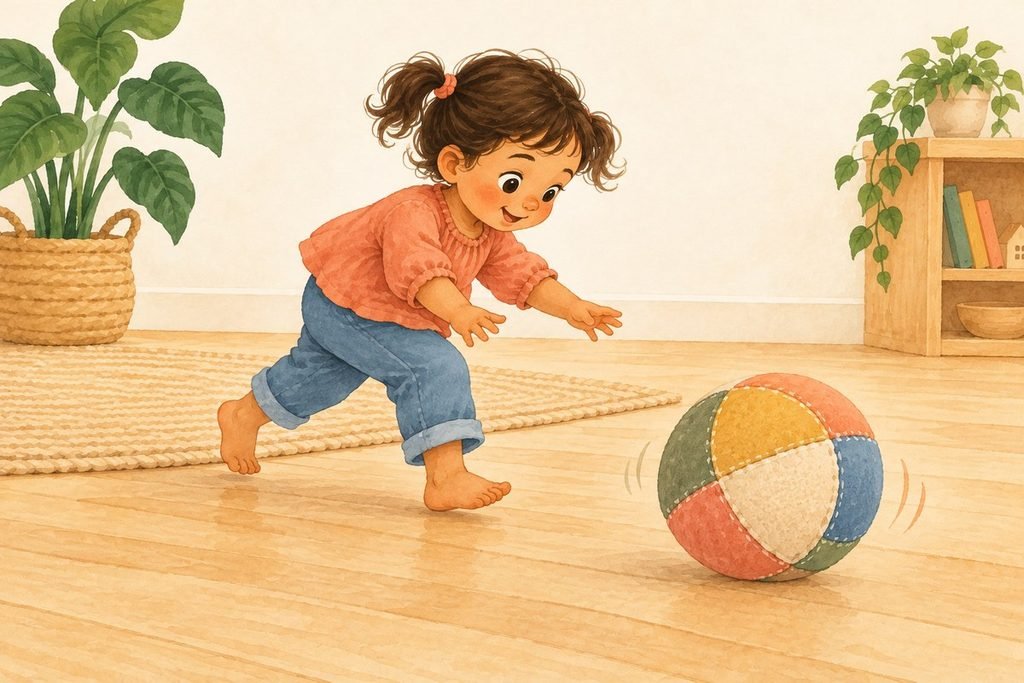
Good for: Running, tracking and coordination
Time: 5-15 minutes
Setup: None
Mess: None
How to do it
Sit or stand at one end of a clear room and roll a soft ball across the floor. Your toddler chases it, picks it up, and brings or rolls it back.
You can change the direction and speed once they understand the game.
How to get them interested
Roll the ball past them instead of straight toward them. Act surprised that it is escaping and go after it yourself.
That movement can be enough to make your toddler join the chase.
Then let them take over
Let your toddler roll the ball for you. Chase it with more enthusiasm than necessary and bring it back.
The roles can switch without changing the activity.
Toddler not interested?
Roll the ball toward a stuffed animal or basket and make that the destination instead of chasing it.
Important safety note
Use a soft ball and a clear route. Keep the game away from stairs, glass, and furniture with sharp corners.
Outdoor Physical Activities for Toddlers
You do not need playground equipment to turn outside time into physical play. A patch of pavement, grass, or a short walk can provide plenty of opportunities to run, carry, balance, and explore.
Outdoor games also have an advantage: there is usually more room for movement to get messy and loud.
6. Run to the Color
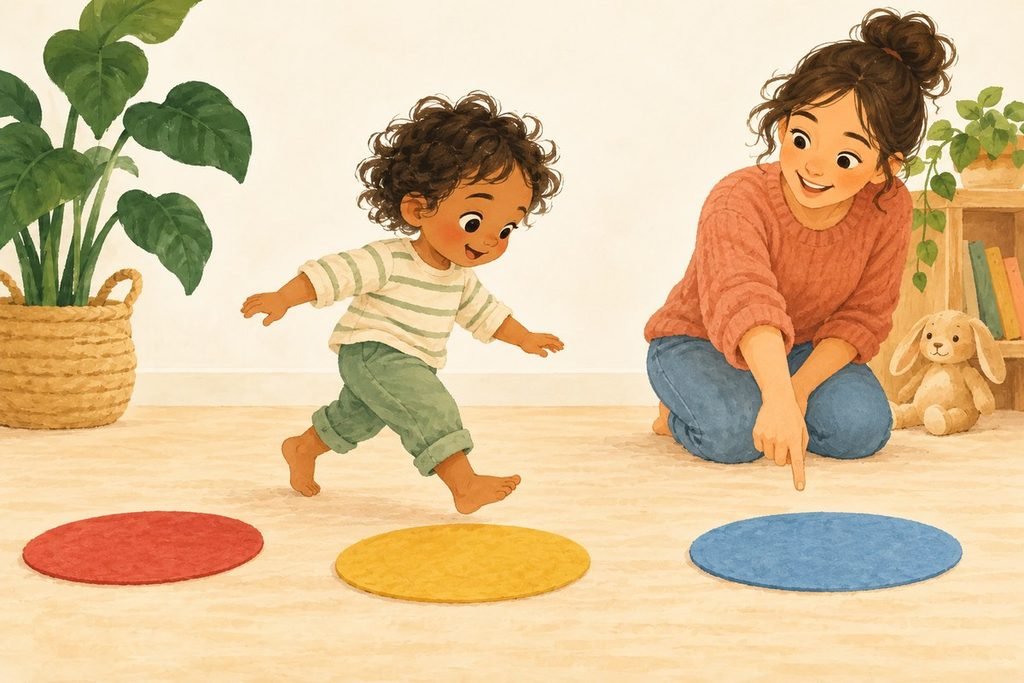
Good for: Running and listening
Time: 10-20 minutes
Setup: None
Mess: None
How to do it
Stand somewhere with several visible colors around you. Call out a color and run or walk with your toddler to something that matches it.
A red bench, green fence, yellow toy, or blue door can all become destinations.
How to get them interested
Start by choosing something obvious and race there yourself. Touch it and announce the color before choosing another destination.
Once your toddler understands the idea, let them choose the colors.
Then let them take over
Your toddler can become the caller while you follow. They may pick colors that are impossible to find, which becomes part of the game.
You can also let them choose an object instead of a color.
Toddler not interested?
Skip the colors and call out destinations they already know: tree, gate, bench, stroller.
Important safety note
Use a contained area away from traffic, driveways, water, and other hazards. Stay close enough to stop your toddler if they run beyond the play area.
7. Chalk Movement Path
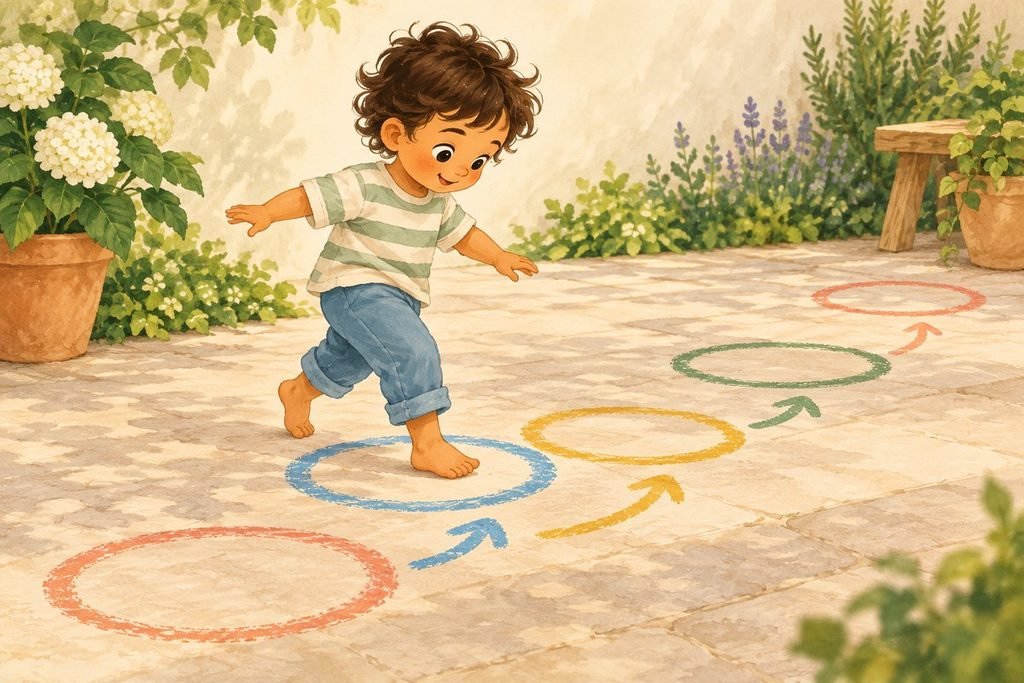
Good for: Imaginative outdoor movement and following a path
Time: 15-30 minutes
Setup: A few minutes
Mess: A little
How to do it
Draw a simple path on pavement with sidewalk chalk. Add a few places to visit, such as a pretend house, a pond, or a sleeping animal.
Keep the path simple enough that your toddler can understand it by watching you.
How to get them interested
Travel along the path yourself and act out the journey. Tiptoe past the sleeping animal, stroll around the pond, and arrive at the pretend house.
Then invite your toddler to show you another way through.
Then let them take over
Let your toddler add chalk marks or decide what each section means. A circle may become a puddle, a house, or somewhere everyone has to sit.
The path can change as the game continues.
Toddler not interested?
Forget the route and draw one place to visit. Let your toddler decide how to get there.
Important safety note
Use child-safe sidewalk chalk on a dry, flat surface away from vehicles and steep slopes.
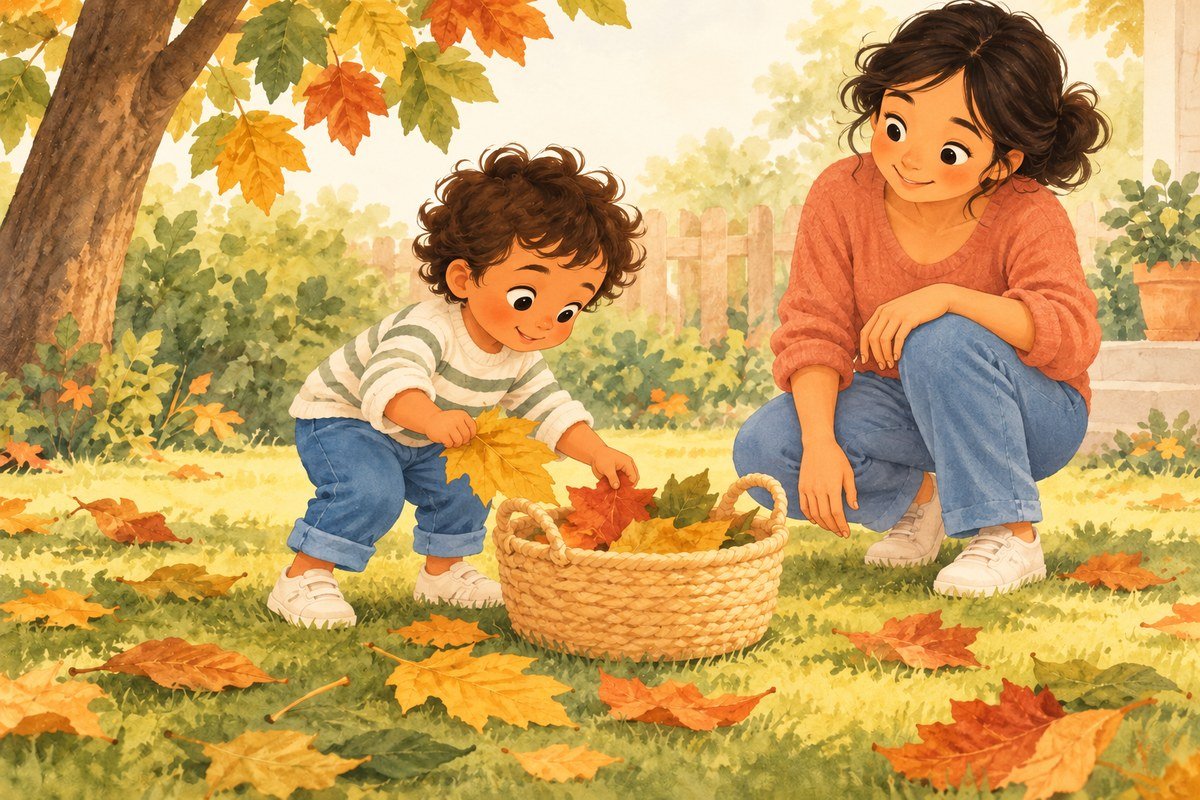
8. Nature Carry and Collect
Good for: Walking and outdoor exploration
Time: 15-30 minutes
Setup: Almost none
Mess: A little
How to do it
Give your toddler a small bucket or basket and look for safe natural objects such as fallen leaves, large sticks, pinecones, or stones that are too large to swallow.
Walk from place to place together and stop when something catches their attention. The collection is simply a reason to keep exploring.
How to get them interested
Find the first object yourself and put it in the basket. Ask whether they can find something different to add.
Toddlers often become more interested once the container has something in it.
Then let them take over
Let your toddler decide what counts as worth collecting. They may ignore the objects you expect and fill the basket with the same kind of leaf.
There is no need to correct their choices or finish a collection. Following their curiosity keeps the walk theirs.
Toddler not interested?
Give the walk one small mission, such as finding three leaves or one stick for a pretend campfire.
Important safety note
Check objects before your toddler handles them. Avoid mushrooms, berries, sharp sticks, animal waste, litter, and anything small enough to swallow.
9. Follow-the-Leader Walk

Good for: Walking, coordination and imitation
Time: 10-30 minutes
Setup: None
Mess: None
How to do it
Go for a short walk and change the way you move every so often. Take giant steps, tiny steps, march, walk slowly, or stop and stretch.
Your toddler follows until it is their turn to lead.
How to get them interested
Start the walk normally, then change your movement without warning. Take three huge steps or begin marching.
If your toddler notices, keep going until they join you.
Then let them take over
Ask them to choose how you move next. Follow their instructions and copy whatever they demonstrate.
This can turn an ordinary walk into a game without bringing anything with you.
Toddler not interested?
Use landmarks instead. Walk normally to the next tree, then race to the bench or march to the gate.
Important safety note
Choose a safe walking area and keep your toddler away from roads, cyclists, driveways, stairs, and water.
Choosing Physical Activities That Fit Your Toddler
Choose the game around the moment. If your toddler wants to move, try a dance, a pretend delivery, or a ball to chase. If interest is low, start with one small action rather than explaining a whole game.
Use the space you have. Indoors, clear a route and use soft toys or a soft ball. Outdoors, choose a contained area away from traffic and other hazards, with enough room to move together.
Keep the first version simple. Shorten the route, use one toy, or join in yourself. You can add another destination or change the game if your toddler wants more.
I would follow the toddler in front of me rather than treat the instructions as a test. If they change the story or invent a different way to move, that can become the activity.
The best physical activity is usually one that feels safe, achievable, and fun enough that they choose to repeat it. Stay nearby, adjust the pace to your toddler, and pause or choose something else when they have had enough.
Want One Activity That Fits Right Now?
You do not always need a list of nine ideas. Sometimes you need something your toddler can do now, with the time and energy you have.
The Little Moment Play Finder uses age, available time, setup, mess, and what you need from the activity to give you one suggestion.
Browse Toddler Activities by Age
- Activities for 1 Year Olds
- Activities for 2 Year Olds
- Activities for 3 Year Olds
- Activities for 4 Year Olds
- Activities for 5 Year Olds