
By Antonio
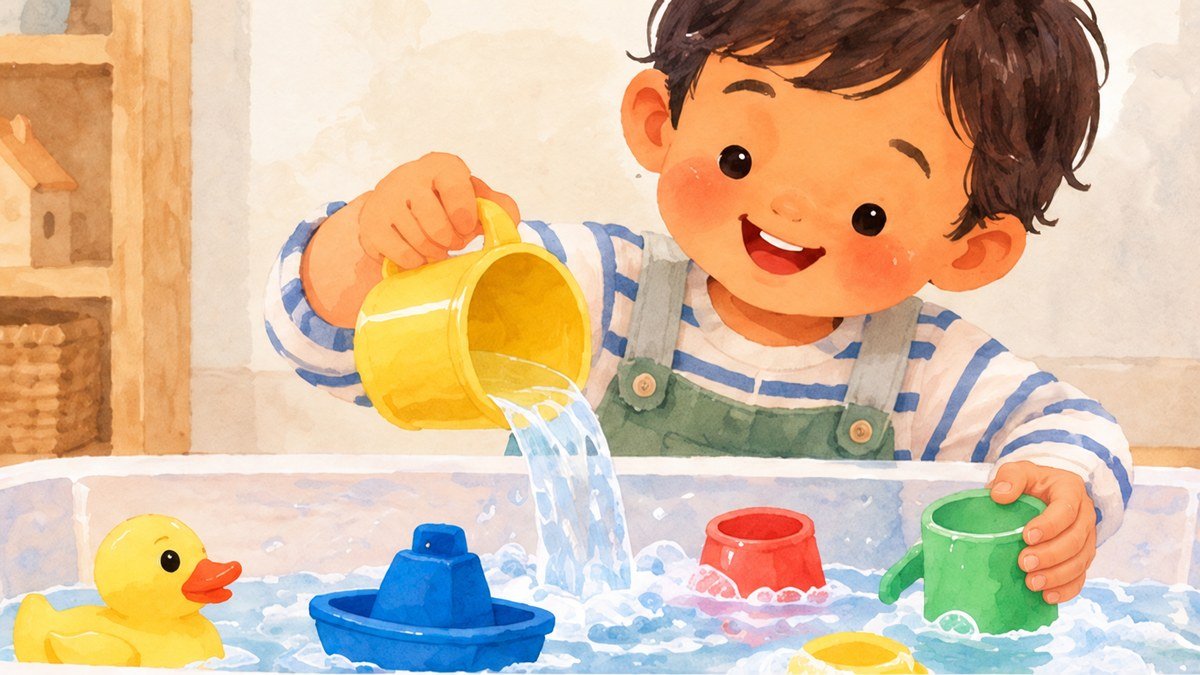
Sensory activities for toddlers do not have to mean filling a plastic tub with rice, buying special toys, or accepting that your kitchen floor is about to become part of the activity.
Much sensory play comes from things you already have around the house: water, cushions, kitchen utensils, fabric, sponges, toy cars, and the like.
As I always like to highlight, the activity itself is only half the job. Sometimes putting something in front of a toddler and saying “go play” works. Often it doesn’t.
Starting the game yourself, doing something silly, or giving them a small problem to solve can make the difference. Kids are pretty much mind-readers, and they will spot your enthusiasm (or lack of it) easily. Then, if it works, you step back.
Need One Activity Right Now?
If you don’t want to browse through ideas, use the Little Moment Play finder. Tell it your child’s age, how much time you have, how much setup or mess you’re willing to deal with, and what you need right now.
Table of Contents
- Easy Sensory Activities for Toddlers
- Fun Sensory Activities for Toddlers
- Sensory Bin and Table Activities for Toddlers
- Indoor Sensory Activities to Try at Home
- Water Sensory Activities for Toddlers
- Outdoor Sensory Activities for Toddlers
- What Makes a Good Sensory Activity for a Toddler?
- Find an Activity That Fits Right Now
- Browse Activities by Age
- More Toddler Activities
Easy Sensory Activities for Toddlers
These are the ones I’d start with if you want something simple. They need little preparation and use things many families already have.
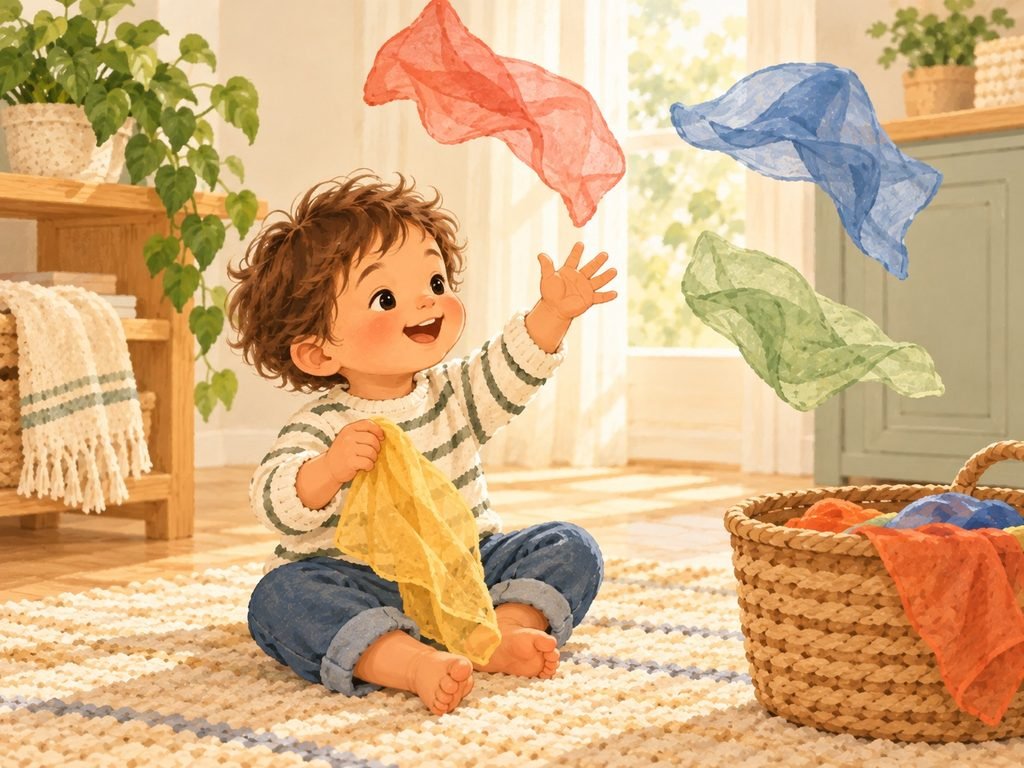
1. Scarf Float
Good for: Calm sensory play
Time: 5-10 minutes
Setup: None
Mess: None
How to do it
Toss a lightweight scarf or small piece of fabric into the air and watch it float down. Try catching it, letting it land on different objects, or seeing how slow you can make it fall.
How to get them interested
Throw it once yourself and react to how long it stays in the air.
“Whoa. Can we make it fall even slower?”
Toddlers are often more interested in copying something they’ve just watched than being handed the object with no context.
Then let them take over
Give them the scarf and let them experiment with throwing, catching, dropping, and carrying it.
Toddler not interested?
Try dropping it onto your own head or a stuffed animal. Making yourself look a bit ridiculous sometimes helps.
Important safety note
Use a short, lightweight piece of fabric. Avoid long scarves, cords, or anything that could wrap around the child’s neck.
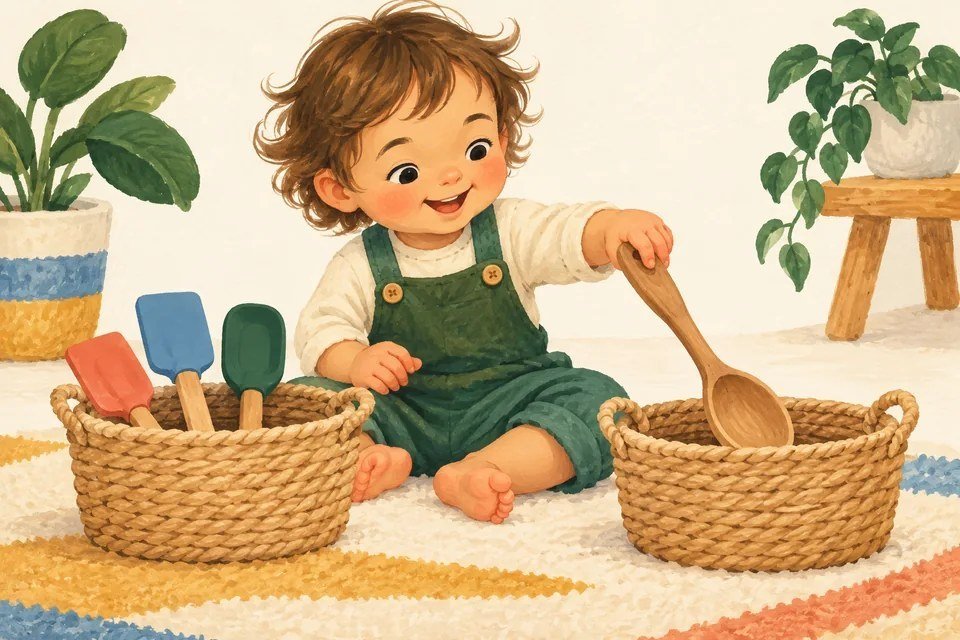
2. Kitchen Basket Transfer
Good for: Touch, movement and independent play
Time: 10-20 minutes
Setup: Almost none
Mess: None
How to do it
Put several large, safe kitchen utensils in one bowl or basket and another empty container nearby.
Let your toddler move the objects from one container to the other, sort them, stack them, or carry them around.
How to get them interested
Move one utensil yourself.
“Can you help me get all of these over there?”
It feels more like a job than an activity, which can be part of the appeal.
Then let them take over
Hand them the next object, then stop helping and see what they decide to do with the rest.
Toddler not interested?
Try giving the objects destinations instead.
“The spoon goes in this basket. Where should the whisk live?”
Important safety note
Use large, lightweight, blunt, non-breakable utensils. No knives, forks, glass, or small objects.
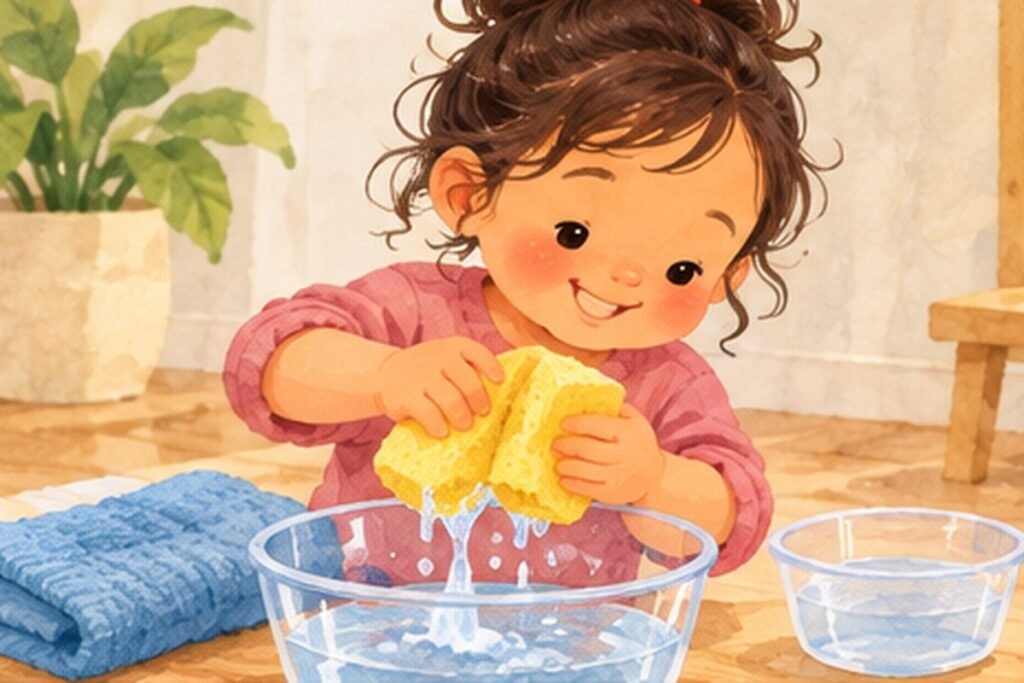
3. Sponge Squeeze
Good for: Hand strength and tactile play
Time: 5-10 minutes
Setup: Almost none
Mess: A little
How to do it
Put a small amount of water in a bowl and give your toddler a clean sponge.
Let them soak it, squeeze the water out, and repeat. Add a second empty bowl if they want to move the water between containers.
How to get them interested
Soak the sponge yourself and give it a squeeze.
“Where did all that water come from?”
Then let them take over
Hand over the sponge and let them discover how much water they can pick up, squeeze out, or move.
Toddler not interested?
Try squeezing the sponge over a toy or letting them “wash” part of the table.
Important safety note
Stay close and supervise whenever water is involved, even when you’re using a small amount.
Fun Sensory Activities for Toddlers
Sensory play can be physical too. Pushing, jumping, crawling, balancing, and carrying give toddlers different types of sensory input.
1. Cushion Islands
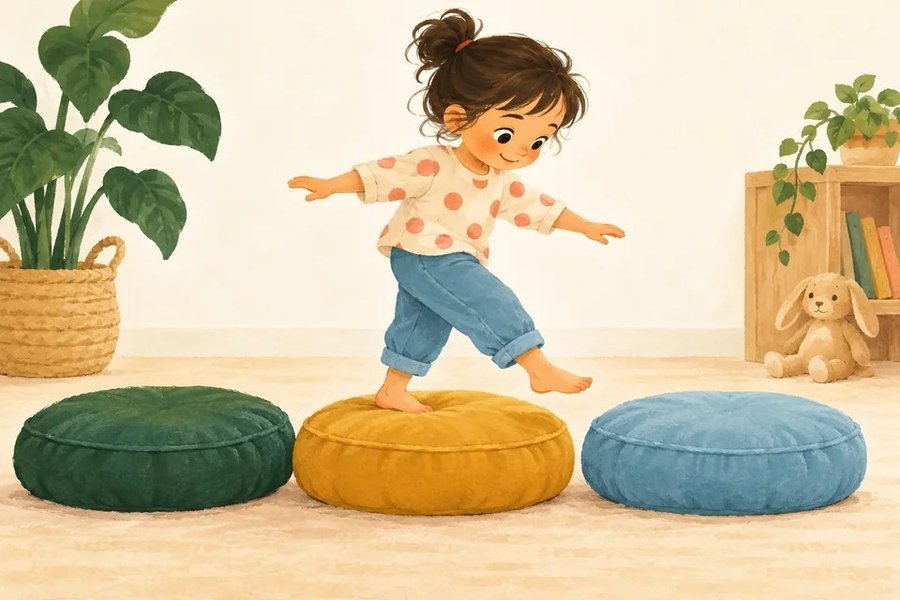
Good for: Movement and balance
Time: 15-30 minutes
Setup: A few minutes
Mess: None
How to do it
Place cushions or pillows across the floor with small gaps between them.
The challenge is to move from one “island” to the next without touching the floor.
How to get them interested
Cross the first couple yourself.
“Oh no. The floor is lava.”
You don’t need a long story. The idea is often enough.
Then let them take over
Let your toddler decide where the next cushion goes or invent their own route.
Toddler not interested?
Put a favorite toy on the final island and turn it into a rescue mission.
Important safety note
Keep cushions on a flat, clear floor away from stairs, sharp furniture, and slippery surfaces.
2. Animal Walk Trail
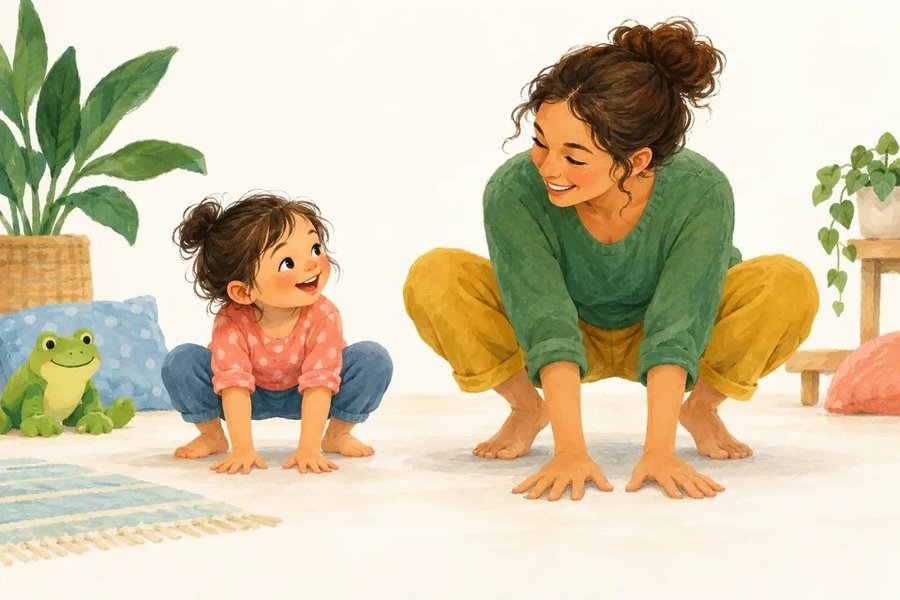
Good for: Whole-body sensory play
Time: 10-20 minutes
Setup: None
Mess: None
How to do it
Move around the room like different animals.
Stomp like an elephant, crawl like a bear, hop like a frog, or invent an animal that moves in a ridiculous way.
How to get them interested
Don’t explain the game first. Start doing one.
A grown adult waddling around the living room like a duck tends to explain the idea.
Then let them take over
Ask which animal comes next and copy whatever movement they choose.
Toddler not interested?
Use one of their toys as the animal and make it demonstrate the movement first.
Important safety note
Clear enough floor space for movement and adapt jumps or balancing to your child’s ability.
3. Soft Ball Delivery
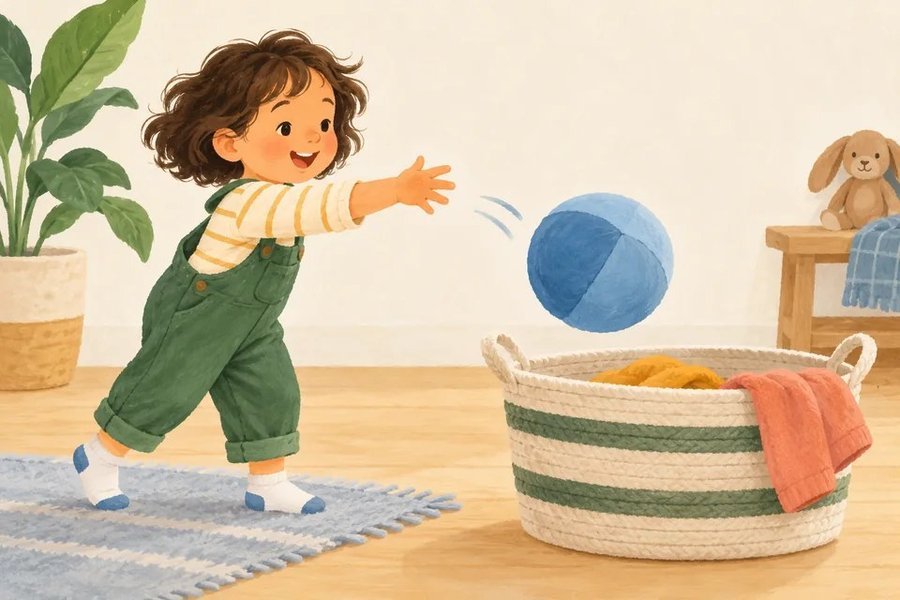
Good for: Movement, aiming and carrying
Time: 10-20 minutes
Setup: Almost none
Mess: None
How to do it
Give your toddler a soft ball and a basket, box, or other target.
Start close and let them throw or carry the ball to the target. Move farther away if they want more of a challenge.
How to get them interested
Score once yourself from close range.
“Your turn.”
That’s often more inviting than explaining the rules.
Then let them take over
Let them choose where to stand and where the target should go.
Toddler not interested?
Turn it into a delivery game instead. The ball needs to get from the sofa to its “home.”
Important safety note
Use a soft ball and keep fragile objects out of the play area.
Sensory Bin and Table Activities for Toddlers
Sensory bins are popular for a reason, but they don’t have to contain rice, dried beans, water beads, or dozens of tiny pieces.
For younger toddlers, I prefer activities built around large objects that are easier to supervise.
1. Texture Basket
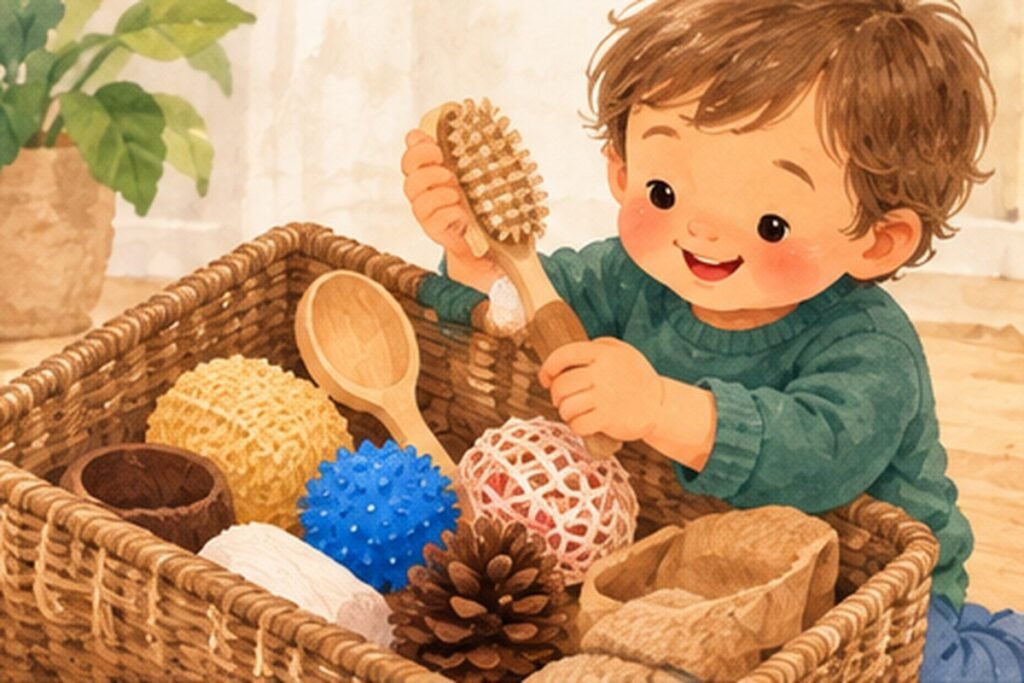
Good for: Exploring different textures
Time: 10-20 minutes
Setup: A few minutes
Mess: None
How to do it
Put a few large household objects with different textures into a basket.
A clean sponge, wooden spoon, silicone utensil, soft cloth, large brush, or textured ball can work.
Let your toddler touch, squeeze, rub, carry, and compare them.
How to get them interested
Take two objects yourself.
“This one’s soft. This one’s bumpy.”
Then hand one over instead of explaining the whole basket.
Then let them take over
Let them choose what to explore and how. There isn’t a correct way to use the basket.
Toddler not interested?
Hide one object underneath the cloth and let them find it.
Important safety note
Use large, toddler-safe objects with no sharp edges, loose pieces, or choking hazards.
2. Lid Match Helper
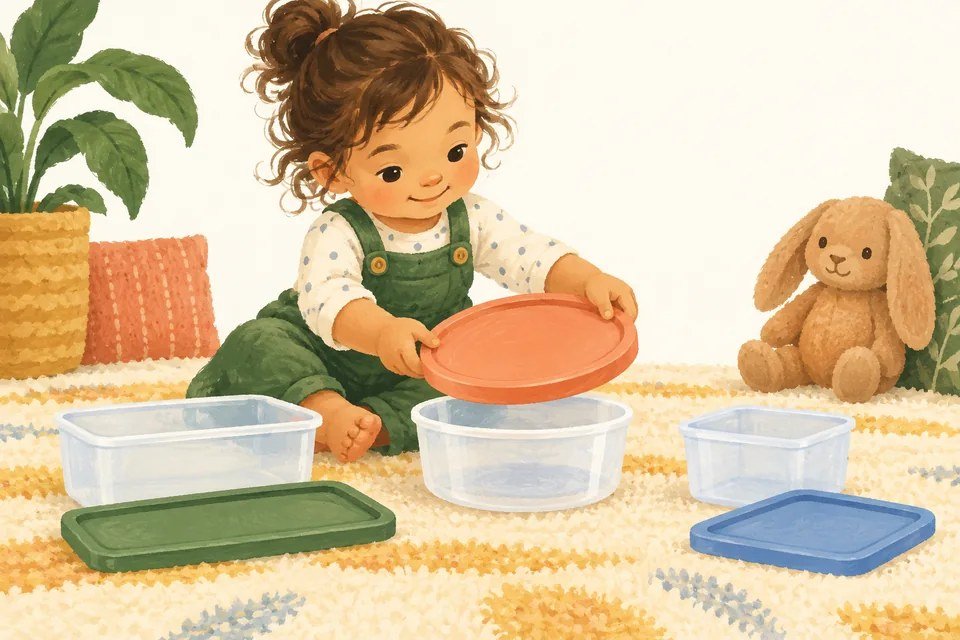
Good for: Shape, touch and problem-solving
Time: 5-10 minutes
Setup: Almost none
Mess: None
How to do it
Mix several large food containers and their matching lids.
Let your toddler experiment with which lid fits which container.
How to get them interested
Put the wrong lid on one container.
“Hmm. Does this look right?”
Being wrong on purpose is useful with toddlers.
Then let them take over
Let them correct you and solve the other matches.
Toddler not interested?
Put a small toy inside one container so finding the lid becomes part of putting the toy “to bed.”
Important safety note
Use lightweight, unbreakable containers without sharp edges.
3. Big Object Scoop and Pour
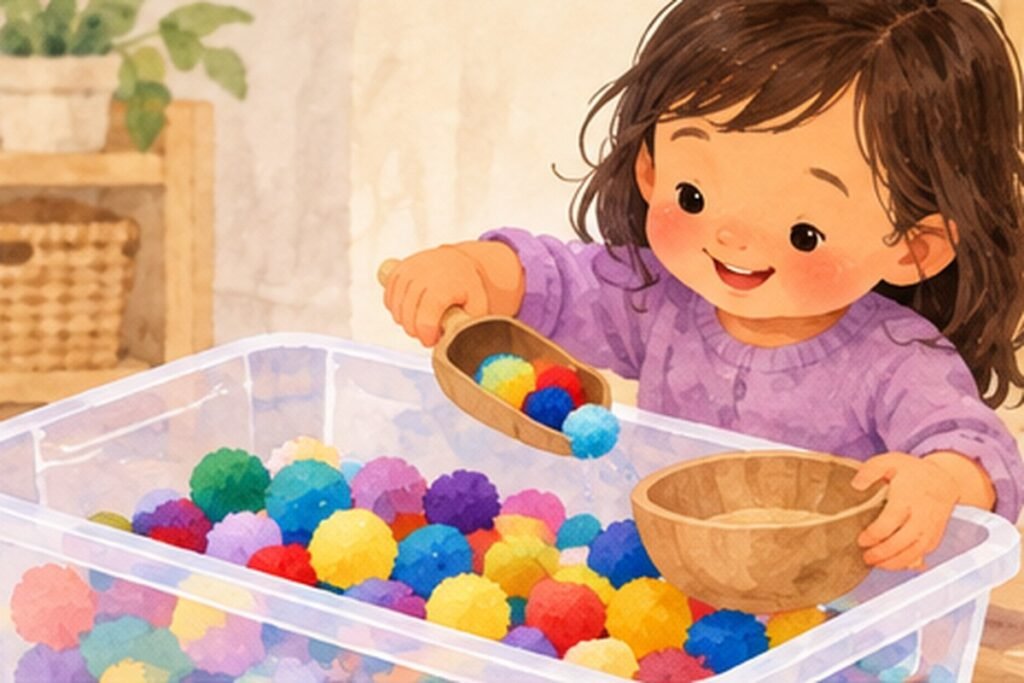
Good for: Scooping and transferring
Time: 10-20 minutes
Setup: A few minutes
Mess: A little
How to do it
Use a container filled with large toddler-safe objects and give your child a scoop, cup, or small bowl.
They can transfer the objects between containers, pour them out, fill the cup again, and repeat.
How to get them interested
Fill one cup and pour it into the second container.
“Can you fill this one?”
Then let them take over
Stop directing the transfer and let them decide whether they want to scoop, sort, carry, or dump everything out.
Toddler not interested?
Add one object that stands out and bury it underneath the others for them to find.
Important safety note
Avoid rice, dried beans, beads, and other small loose fillers with young toddlers. Use objects that are too large to swallow.
Indoor Sensory Activities to Try at Home
You don’t need a dedicated sensory setup. Some ordinary indoor play already includes pushing, sorting, peeling, carrying, and handling objects.
1. Laundry Basket Push
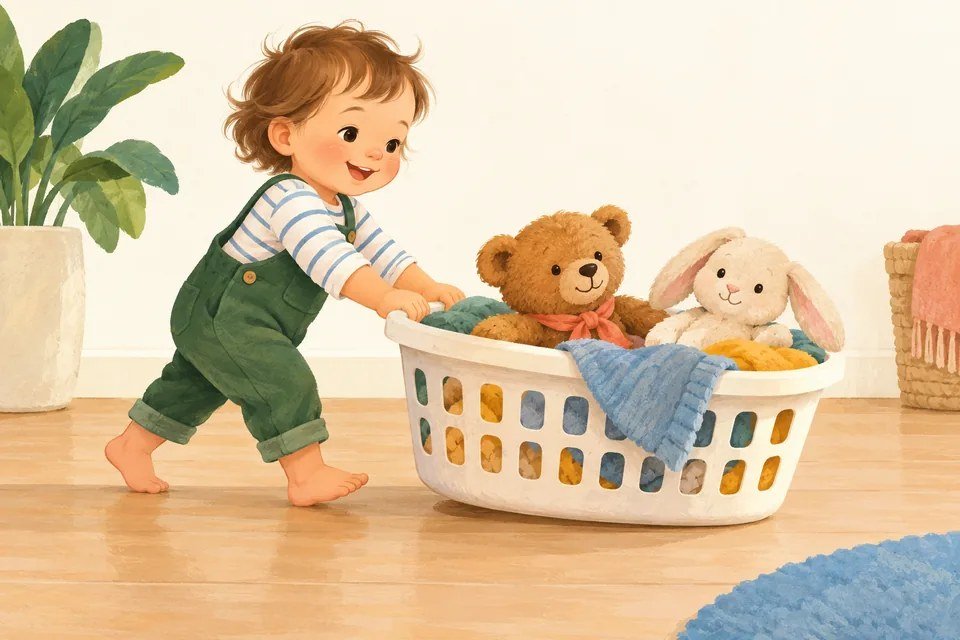
Good for: Heavy movement and indoor energy
Time: 10-20 minutes
Setup: None
Mess: None
How to do it
Put a few soft toys in an empty laundry basket and let your toddler push it across the floor.
Create destinations around the room if they want a goal.
How to get them interested
Put a teddy inside.
“Teddy needs a ride to the sofa.”
Then let them take over
Give them more toys to transport and let them decide where everything needs to go.
Toddler not interested?
Push the basket yourself once and make a show of delivering the toy.
Important safety note
Use the basket on a flat surface away from stairs. Don’t let the child climb inside while another person pushes it.
2. Quiet Sorting
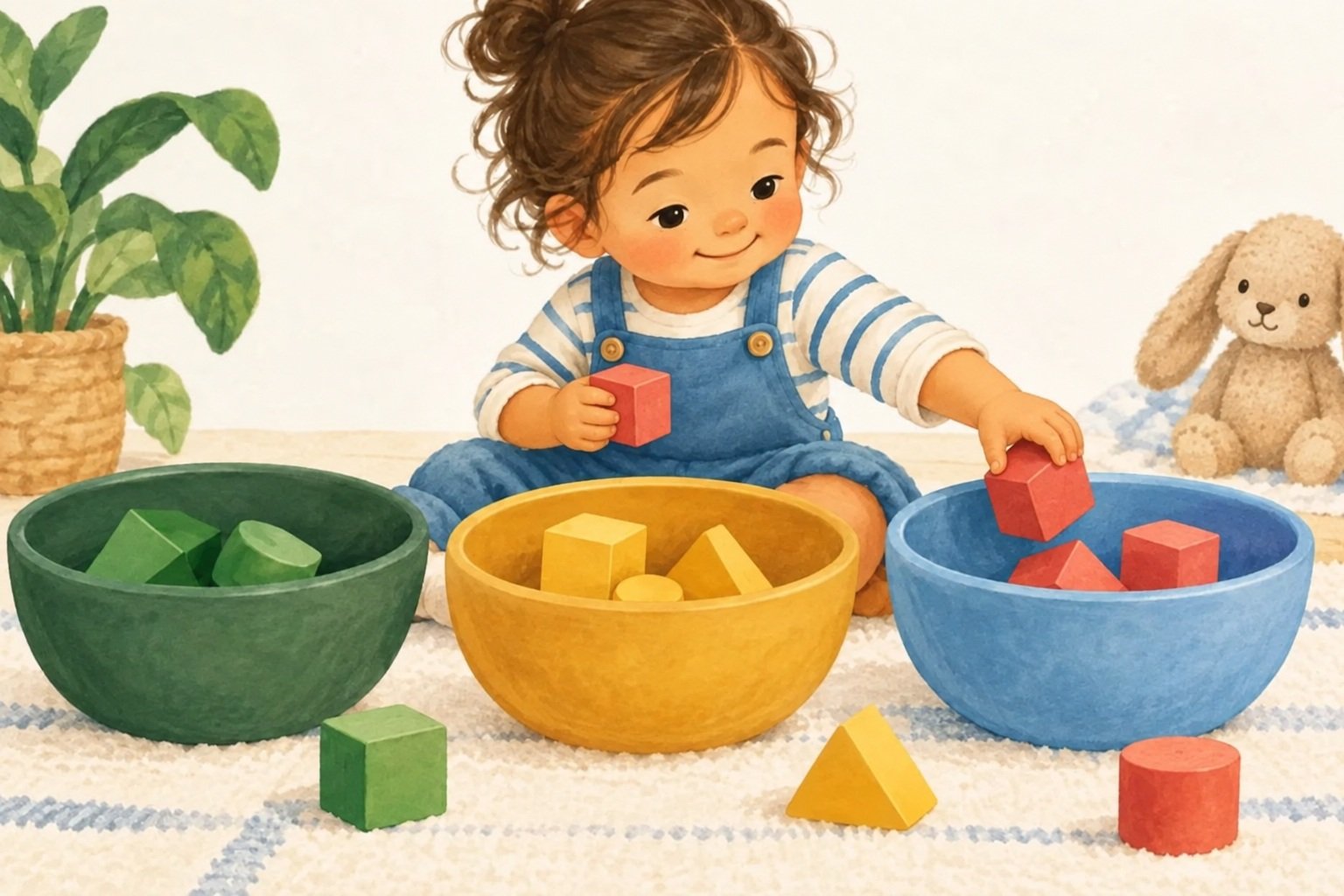
Good for: Calm tactile play and sorting
Time: 10-20 minutes
Setup: Almost none
Mess: None
How to do it
Put several large household objects on the table or floor and provide two or three bowls.
Sort them by type, color, texture, shape, or whatever makes sense with the objects you chose.
How to get them interested
Sort a couple correctly, then put one in the wrong place.
“Wait. Does this belong here?”
Then let them take over
Let them correct you and invent their own sorting rules.
Toddler not interested?
Forget sorting. Let them move the objects between bowls or line them up instead.
Important safety note
Do not use coins, buttons, beads, or other objects small enough to present a choking hazard.
3. Sticker Rescue
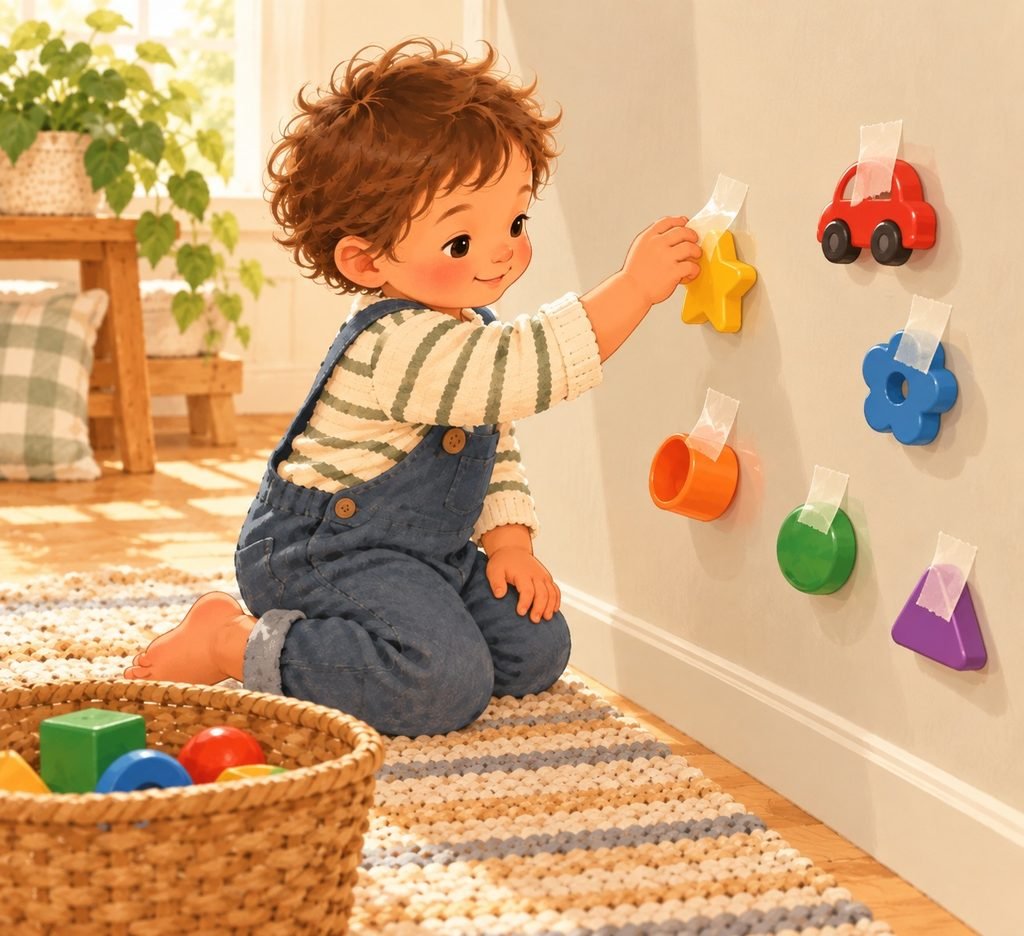
Good for: Peeling, pulling and fine motor sensory play
Time: 10-20 minutes
Setup: A few minutes
Mess: None
How to do it
Use painter’s tape to attach several large toys to a safe table or surface.
The job is to pull the tape away and rescue them.
How to get them interested
Rescue the first toy together.
“Oh no. They’re stuck.”
Then let them take over
Point toward the remaining toys and see whether they continue without you.
Toddler not interested?
Tape only one favorite toy instead of preparing a whole group.
Important safety note
Use removable tape and large age-appropriate toys. Keep loose pieces of tape away from children who still put objects in their mouths.
Water Sensory Activities for Toddlers
Water is one of the easiest sensory materials to use. It also needs close supervision, so these work best when you’re staying beside the activity.
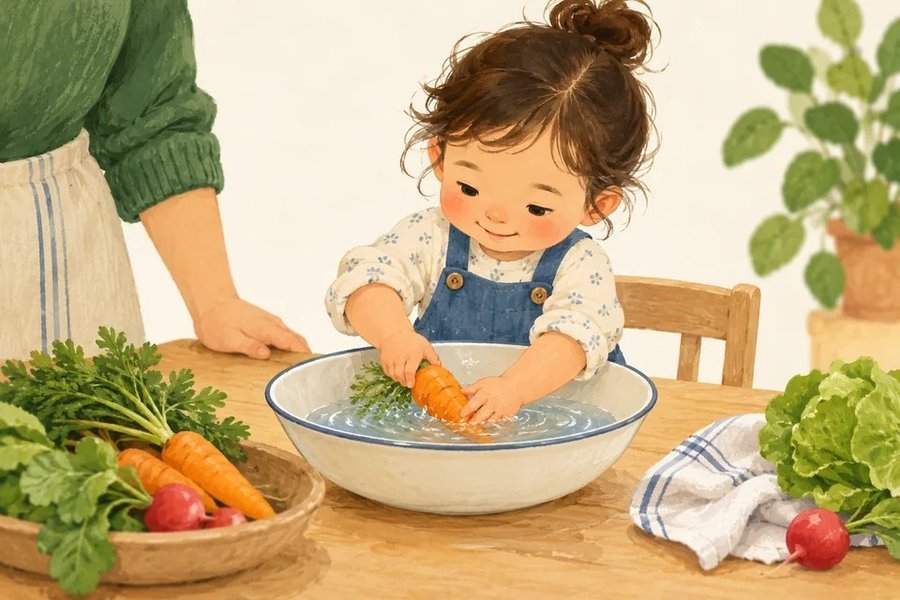
1. Vegetable Wash Station
Good for: Water play while helping in the kitchen
Time: 10-20 minutes
Setup: A few minutes
Mess: A little
How to do it
Put a small amount of water in a bowl with a few vegetables and a cloth or sponge.
Let your toddler wash the vegetables while you prepare food nearby.
How to get them interested
Wash one carrot yourself.
“This one is dirty. Can you make the next one clean?”
Then let them take over
Give them the remaining vegetables and let them keep washing while you stay nearby.
Toddler not interested?
Add a second dry bowl where the “clean” vegetables need to go.
Important safety note
Stay close and supervise around water. Only use foods that are safe for your child to handle.
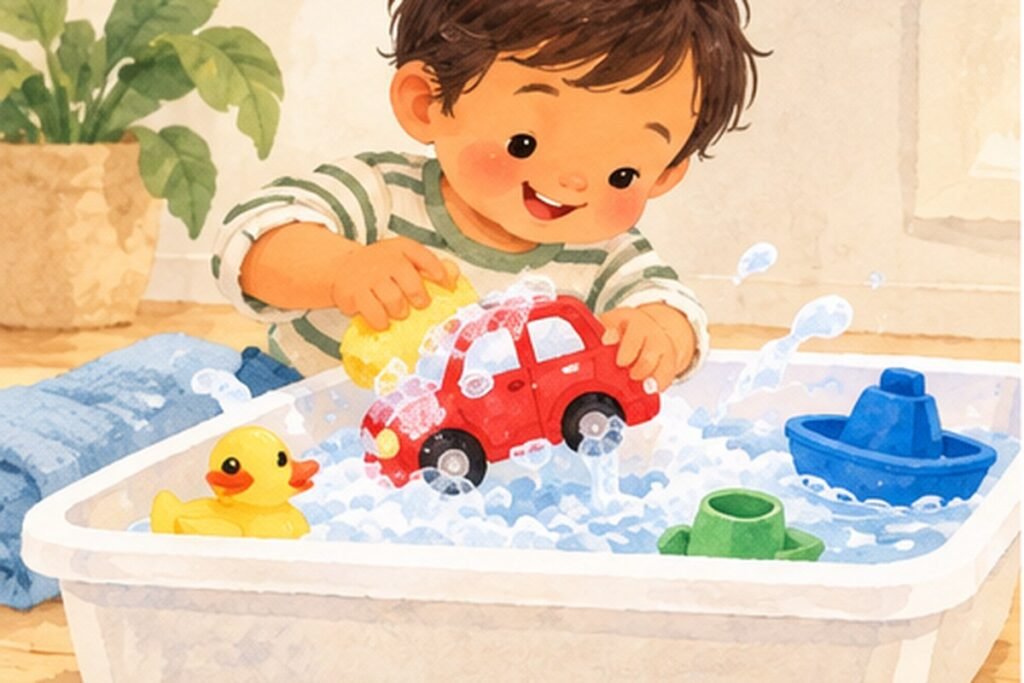
2. Toy Wash Station
Good for: Water, squeezing and pretend play
Time: 10-20 minutes
Setup: A few minutes
Mess: A little
How to do it
Put a small amount of water in a shallow bowl with a sponge or cloth and a few washable plastic toys.
Let your toddler wash and dry them.
How to get them interested
Pick up one toy.
“This car is filthy.”
Wash it and place it in the clean pile.
Then let them take over
Hand them the sponge and let them decide which toy needs washing next.
Toddler not interested?
Give the toys silly reasons for needing a bath.
Important safety note
Stay within arm’s reach during water play. Use washable toys with no batteries or electrical parts.
Outdoor Sensory Activities for Toddlers
Going outside gives you a sensory setup without having to build one. There are different surfaces, sounds, temperatures, smells, and things to notice almost everywhere.
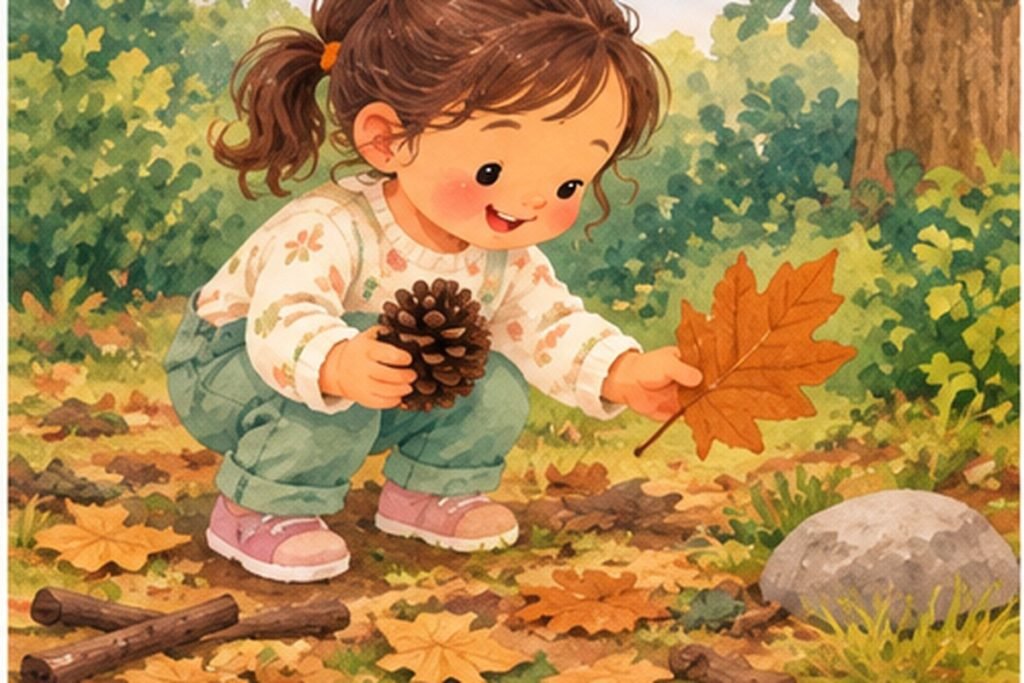
1. Nature Texture Hunt
Good for: Touch, observation and outdoor exploration
Time: 15-30 minutes
Setup: None
Mess: A little
How to do it
Walk around the garden, park, or another safe outdoor area and look for different textures.
Try finding something smooth, rough, soft, hard, bumpy, or crunchy.
You don’t need to collect anything. Touching or pointing is enough.
How to get them interested
Find the first one yourself.
“This tree is rough. Can you find something smooth?”
Then let them take over
Let your toddler choose what counts. If they become more interested in a stick than your texture hunt, the stick wins.
Toddler not interested?
Change the challenge to finding colors instead.
Important safety note
Check unfamiliar plants and objects before allowing your child to touch them. Avoid mushrooms, berries, animal waste, sharp objects, and plants you don’t recognize.
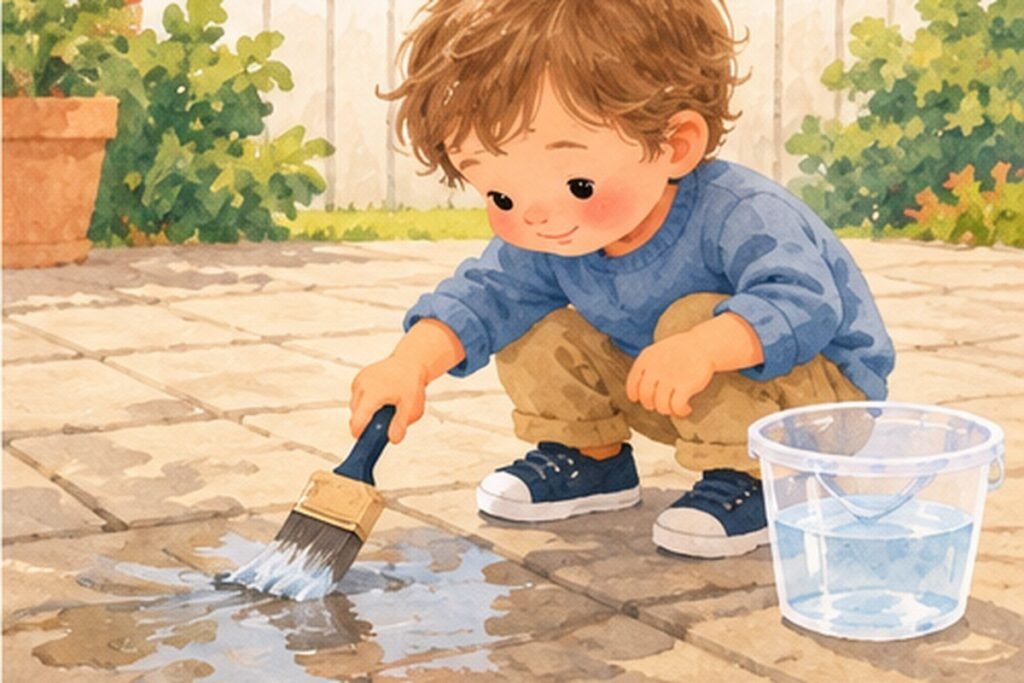
2. Water Painting Outside
Good for: Low-mess water play
Time: 10-20 minutes
Setup: Almost none
Mess: A little
How to do it
Give your toddler a container with a small amount of water and a large paintbrush.
Let them “paint” a patio, fence, outdoor table, stones, or another safe surface.
The picture disappears as the water dries.
How to get them interested
Paint one large shape yourself.
“Where did my picture go?”
Then let them take over
Hand over the brush and let them paint what they want.
Toddler not interested?
Skip the picture idea and let them paint individual stones or make wet footprints with the brush.
Important safety note
Supervise the water container and choose a surface that isn’t slippery.
What Makes a Good Sensory Activity for a Toddler?
A good sensory activity doesn’t need to stimulate every sense at once.
In fact, simple often works better.
Toddlers already get a lot from pushing something heavy, feeling two textures, splashing some water, squeezing a sponge, jumping between cushions, or figuring out how an object works.
I look for a few things when choosing activities for Little Moment Play.
The materials should suit the child’s age. The setup shouldn’t take longer than the activity unless the setup itself is fun. The toddler should have room to change the game instead of following one exact set of instructions.
And I don’t think sensory play should mean forcing a child to interact with a texture they dislike.
Some toddlers love getting their hands wet or sticky. Others want them clean again. Both reactions tell you something. You can offer the activity without making finishing it the goal.
The same goes for mess. If you’re tired and don’t want to clean shaving foam out of your kitchen, don’t choose shaving foam. An activity that fits the parent is more likely to happen.
Find an Activity That Fits Right Now
The activities above give you plenty to try, but sometimes you don’t need sixteen ideas. You need one.
The Little Moment Play finder recommends one activity based on your child’s age, the time you have, setup, mess, and what you need right now.
Browse Activities by Age
- Activities for 1 Year Olds
- Activities for 2 Year Olds
- Activities for 3 Year Olds
- Activities for 4 Year Olds
- Activities for 5 Year Olds