
One year old is a strange age for activities because the difference between “one” and “almost two” feels enormous. At least it was for me.
The approach is that the simpler the idea, the better it lands when your kid is around 12 months. And it makes sense. Their brains are just beginning to develop, so you don’t want to bombard them with puzzles. (Although I’ll be honest, I tried)
I learned quickly that giving my son an activity wasn’t enough. I usually had to make the first part interesting before he wanted anything to do with it.
So these activities for 1-year-olds are less about elaborate setups and more about simple things they can explore, copy, move, and repeat. What makes everything easy is the fact that around this age, they’ll find pretty much anything interesting. Just watch the videos of babies giggling at someone sneezing.
Need a custom-fit activity?
Tell me what you need, how much time you have, and how much setup or mess you’re willing to deal with. Little Moment will give you one activity to try.
Fun Activities for 1 Year Olds
When my son was one, some of the biggest successes were ridiculously simple.
Silly faces worked. Throwing things into the air worked. For a while, I could just bounce a ball between my hands and he’d watch like I was performing some incredible magic trick.
I think that’s especially true with one-year-olds. What fascinates one kid might do absolutely nothing for another. So I wouldn’t worry too much about finding the “right” activity. Try things, be a little silly, and pay attention to what gets a reaction.
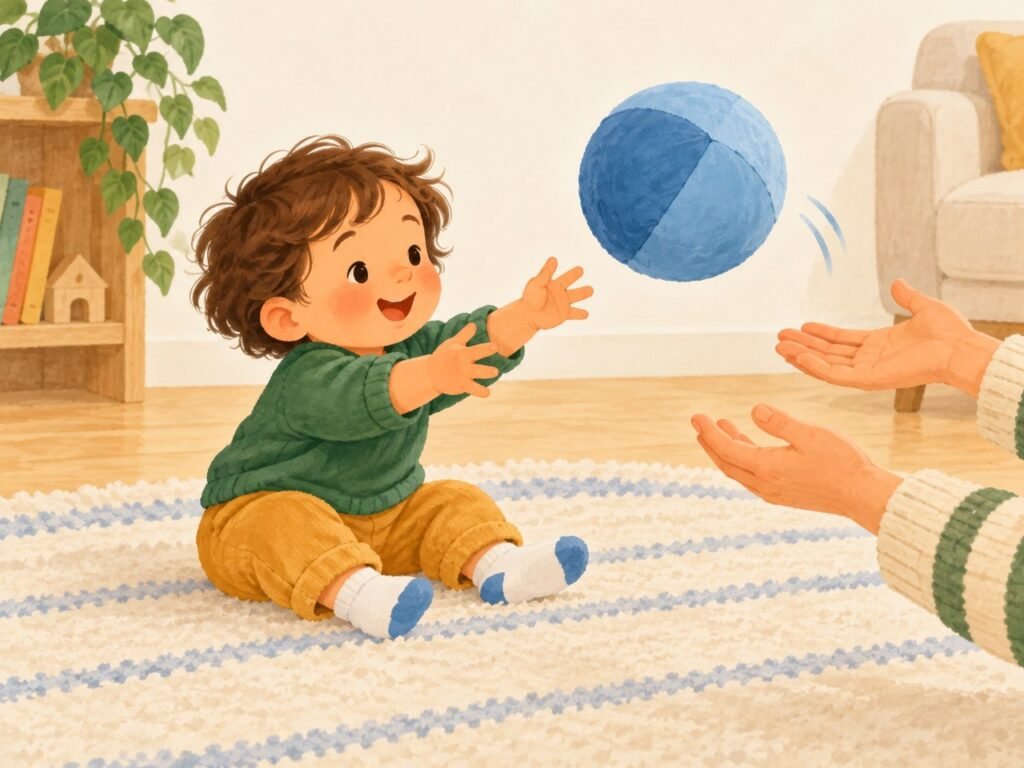
Bounce the Ball
Good for: Simple play, getting their attention
Time: 5–10 minutes
Setup: None
Mess: None
How to do it
Sit near your child with a soft ball and bounce it gently between your hands or against the floor.
Change the rhythm every now and then. Bounce it slowly, stop completely, then suddenly start again.
There doesn’t need to be a goal beyond watching what catches their attention.
How to get them interested
For us, the bouncing itself did most of the work.
But I’d exaggerate it a little. Watch the ball yourself. React when you nearly drop it. Make a silly face when it goes somewhere unexpected.
At one, I found that my reaction to something could sometimes be more interesting than the thing itself.
Then let them take over
If they reach for the ball, give it to them.
They probably won’t reproduce whatever you were doing, and that doesn’t matter. Let them roll it, throw it, hold it, or come up with their own version.
Antonio’s note
I remember bouncing a ball between my hands when my son was around one, and he was mesmerized by it.
The activity wasn’t clever. I think that’s partly why I remember it. At that age, I was still discovering how little you sometimes need to keep a child interested.
Toddler not interested?
Try rolling the ball instead, dropping it gently, or adding a ridiculous sound whenever it moves.
And if none of that gets a reaction, try something else. One-year-olds are very good at making your carefully selected activity completely irrelevant.
Important safety note
Use a soft, age-appropriate ball that is too large to be a choking hazard. Keep throws gentle and away from your child’s face.
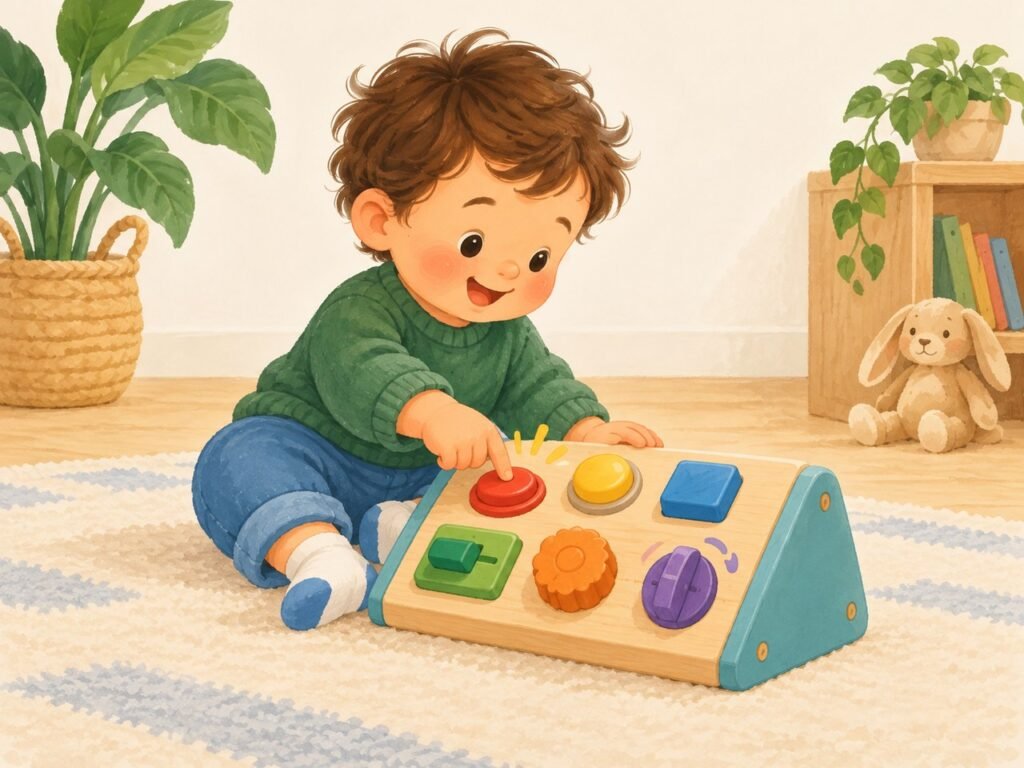
Press All the Buttons
Good for: Keeping busy, cause-and-effect play
Time: 5–15 minutes
Setup: None
Mess: None
How to do it
Use an age-appropriate toy with large buttons, switches, or other controls they can safely press.
Then just let them experiment.
Pressing one button over and over again may not look like much of an activity to you, but if they’re interested, I wouldn’t rush to make it more complicated.
How to get them interested
Press one button yourself and react to whatever happens.
Then leave your hand hovering over another one for a moment and let them beat you to it.
With my son, I barely had to introduce this type of activity. If there was a button somewhere, he usually found it himself.
Then let them take over
Once they start pressing, let them explore.
You don’t have to show them every feature or turn it into a lesson. Part of the fun is figuring out which button does what.
Antonio’s note
My son became obsessed with buttons pretty early.
Naturally, this included the buttons I actually needed, especially my keyboard while I was trying to work.
I ended up buying several toys specifically because they gave him things he was allowed to press.
But this is also where I started realizing how different kids can be, especially around one. Buttons happened to work for mine. Your kid might not care at all.
I think the useful part is noticing whatever their version of “buttons” is and not being afraid to experiment until you find it.
Toddler not interested?
Don’t try too hard to sell it.
Try a different type of button or toy another day. Discovering what your child likes is part of the activity at this age.
Important safety note
Use toys designed for your child’s age with securely enclosed batteries and no loose or removable small parts. Don’t use remotes, appliances, or other household electronics as substitutes just because they have tempting buttons.
Sensory Activities for 1 Year Olds
I don’t have one specific sensory game that stands out from this age.
Most of it was just ordinary things becoming interesting: fabric moving through the air, different objects in his hands, sounds, shapes, and whatever happened to catch his attention that day.
At the time I wasn’t really thinking, “this is sensory play.” I was mostly noticing what he wanted to touch, repeat, or inspect for much longer than I expected.
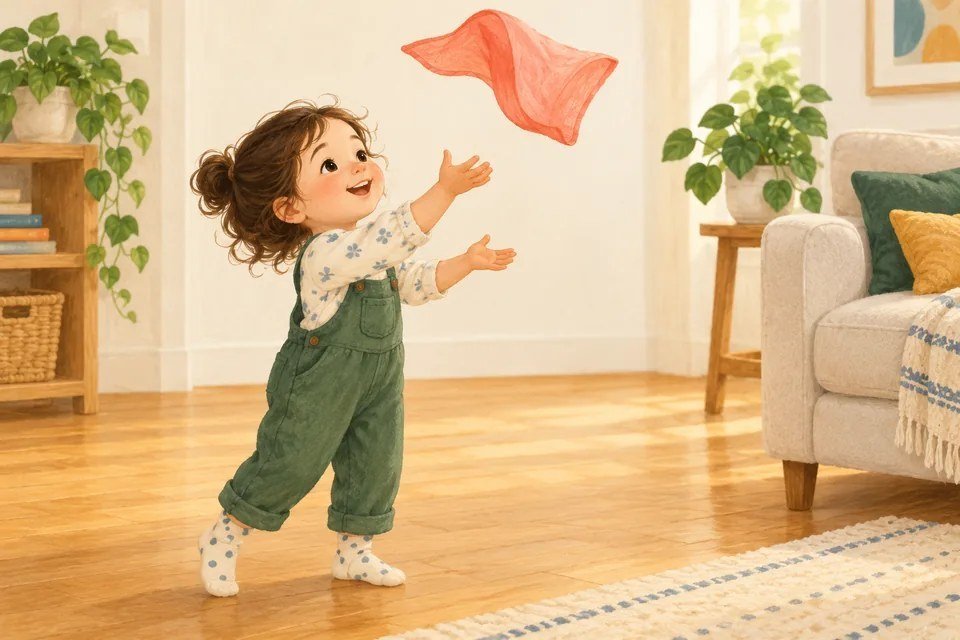
Scarf Float
Good for: Gentle sensory play, watching movement
Time: 5–10 minutes
Setup: None
Mess: None
How to do it
Take a lightweight scarf, play silk, or another soft piece of fabric and toss it gently into the air.
Let your child watch it float down. Drop it beside them, let them grab it, or hide a toy underneath it.
How to get them interested
Throw it above yourself first and react when it lands somewhere unexpected.
Peek out from behind it, make it disappear behind your back, or let it land on your head.
Then let them take over
Hand them the scarf and see what they do with it.
They may wave it, pull it, hide something underneath it, or simply inspect it. That’s enough.
Toddler not interested?
Hide a favorite toy underneath and reveal it slowly.
If that still doesn’t work, move on. This one is easy to try again another day.
Important safety note
Use only lightweight, breathable fabric and supervise closely. Never allow fabric to wrap tightly around the neck or cover the face.
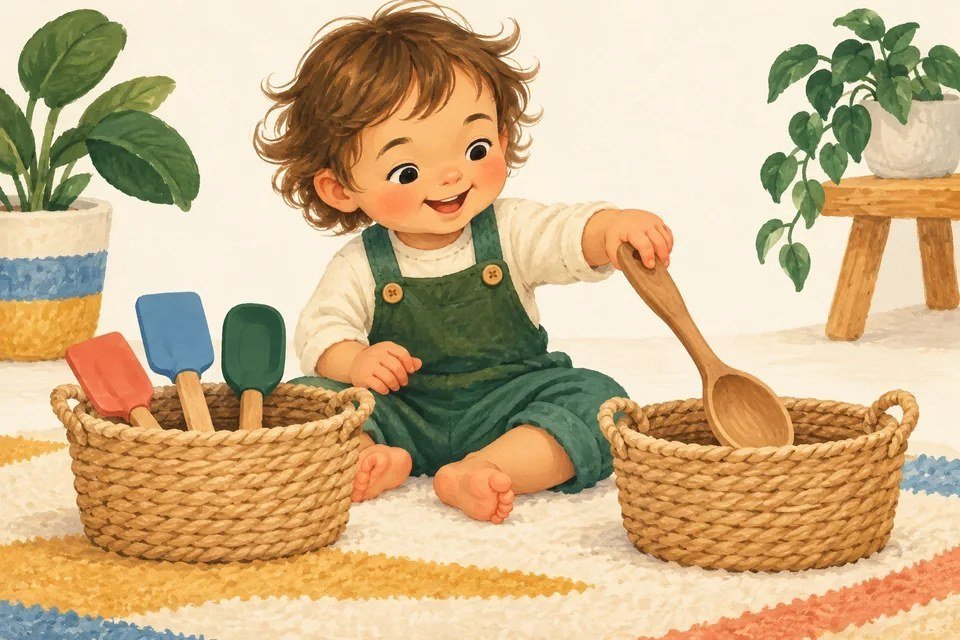
Kitchen Basket Transfer
Good for: Sensory exploration, simple repetitive play
Time: 10–15 minutes
Setup: Almost none
Mess: None
How to do it
Put a few large, safe kitchen objects in one basket or container.
Things like a wooden spoon, silicone spatula, plastic cup, or other large child-safe objects work well.
Place an empty container beside it and let your child move things from one to the other.
How to get them interested
Move the first object yourself.
Drop it into the second container and make a little sound when it lands.
Do it once or twice, then leave the next object for them.
Then let them take over
Once they understand that things can move from one basket to the other, stop organising it.
If they put everything back in the original basket, that’s still the game.
Toddler not interested?
Swap one or two objects for something with a different shape or texture.
Important safety note
Use only large, clean, child-safe items with no sharp edges, breakable pieces, or choking hazards. Stay nearby throughout the activity.
Educational Activities for 1 Year Olds
For me, “learning” at one wasn’t about trying to turn every game into a lesson.
It was mostly naming things and being very deliberate about how I said them.
Ball. Dog. Car. Spoon.
It sounds almost too simple to count, but it worked for us then and it still works now that he’s older.
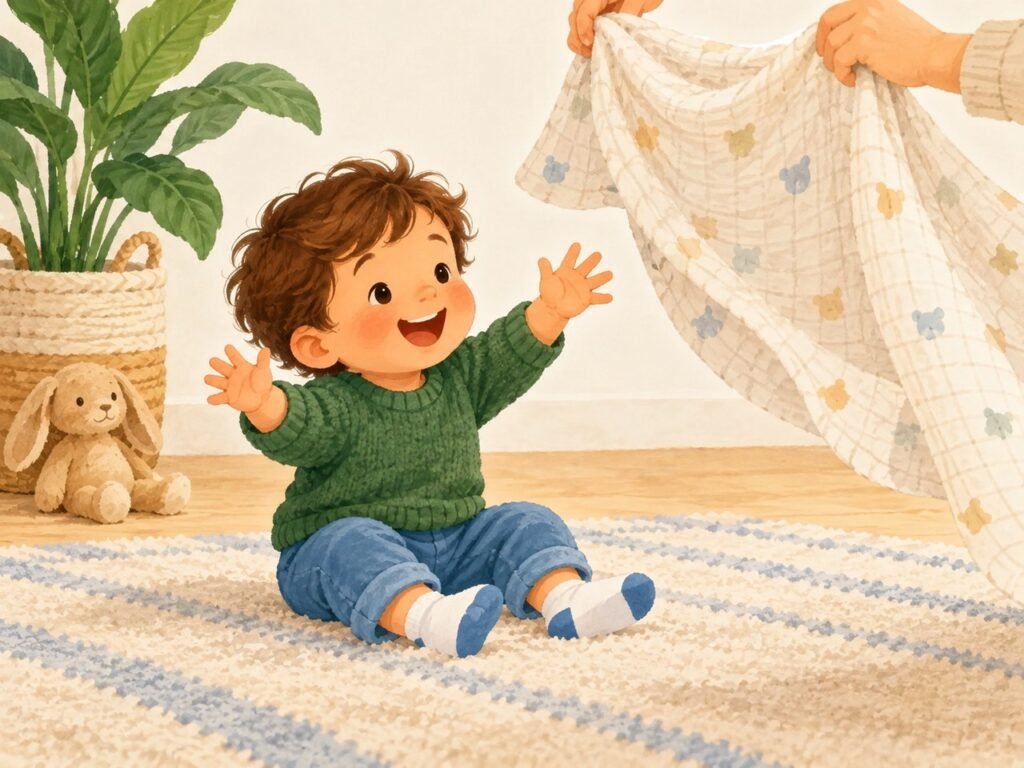
Peekaboo
Good for: Simple interaction, anticipation, shared play
Time: 5–10 minutes
Setup: None
Mess: None
How to do it
Hide your face behind your hands, a light cloth, or the side of a piece of furniture.
Wait a moment, then appear again.
That’s basically the entire game.
How to get them interested
Make the reveal a little dramatic.
Change the timing. Sometimes appear quickly, sometimes wait an extra second.
Then let them take over
If they start hiding themselves, let them run the game.
React when they reappear even though you know exactly where they are.
Antonio’s note
Peekaboo was one of those classic games that actually worked for us.
There’s a reason parents have apparently been doing it forever.
Important safety note
If you use fabric, keep it lightweight and never allow it to remain over your child’s face.
Name What You See

Good for: Simple language exposure, shared attention
Time: 5–15 minutes
Setup: None
Mess: None
How to do it
Use a picture book, toys around the room, or just things you see during the day.
Point to something and say its name clearly.
“Dog.”
“Ball.”
“Car.”
You don’t need to quiz them or ask them to repeat everything.
How to get them interested
Start with things they already seem interested in.
If they keep pointing at the same dog on the page, name the dog again. Repetition is fine.
Then let them take over
Let them point.
You provide the word.
Antonio’s note
This was probably the most deliberate “learning” thing I did at that age.
I paid attention to how clearly I named things. Nothing complicated.
I still do it now, and I expect I’ll keep doing it as he gets older.
Fine Motor Activities for 1 Year Olds
At one, anything that required a bit more dexterity could get frustrating pretty quickly.
Block stacking was a good example. He wasn’t especially good at it at first, and later I bought stacking toys that he insisted on stacking in what I considered the “wrong” way.
I couldn’t convince him otherwise.
Eventually I realised the important part was that he was still interested and still trying.
If a child can find some enjoyment in failing and slowly getting better, I think that makes this stage much easier for everyone.
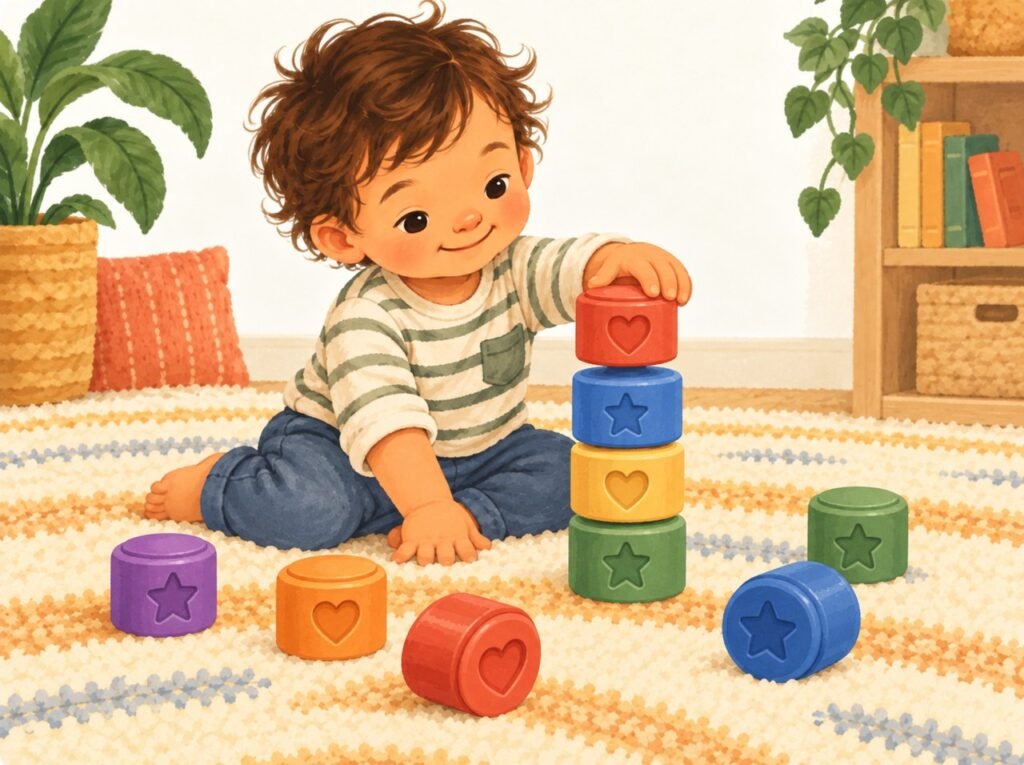
Block Stacking
Good for: Hand coordination, experimenting
Time: 5–15 minutes
Setup: None
Mess: None
How to do it
Put two or three large blocks in front of your child.
Stack one on another and let them try.
Don’t start with a giant tower. Two blocks is already a challenge when you’re learning.
How to get them interested
Build a tiny tower yourself.
Let it fall and react.
If knocking the tower down is more interesting than building it, start there.
Then let them take over
Let them stack however they want.
If the order looks completely wrong to you but they’re enjoying themselves, leave it alone.
Toddler not interested?
Build the tower yourself and let them be the official demolition crew.
Important safety note
Use large, lightweight blocks designed for your child’s age and keep the play area clear of hard or sharp objects.
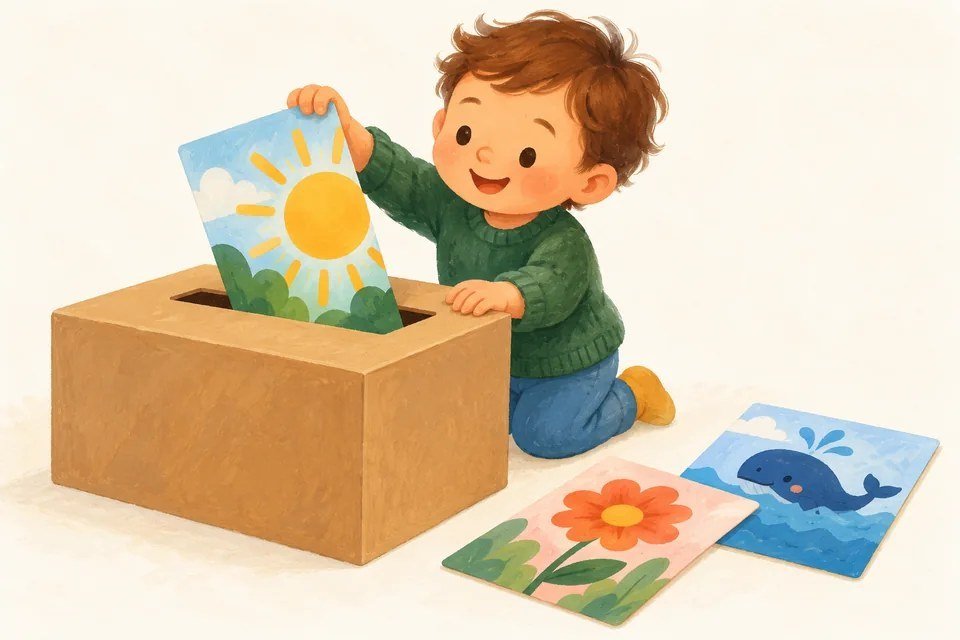
Posting Box
Good for: Hand coordination, repetitive play
Time: 10–15 minutes
Setup: A few minutes
Mess: None
How to do it
Cut a wide slot into a simple cardboard box.
Give your child a few large cards or other safe objects that fit through the opening.
Let them drop the objects inside, then open the box and start again.
How to get them interested
Put one object through the slot yourself.
React when it disappears and say something like, “Where did it go?”
Then let them take over
Once they start posting objects, let them choose the order and pace.
If taking everything back out becomes more interesting than putting things in, that’s fine too.
Toddler not interested?
Try using one object they already like.
Important safety note
Use only objects that are too large to fit inside your child’s mouth. Make sure the cardboard has no staples, sharp edges, or loose pieces.
Gross Motor Activities for 1 Year Olds
Walking and balancing were the big physical things for us around this age.
One thing I learned very early, and still try to do now, is to let my son struggle a little before stepping in.
Crawling was one of the first examples. He’d get angry when he couldn’t quite do what he wanted. Later the same thing happened with puzzles and plenty of other things.
The hard part as a parent is knowing when the struggle is useful and when they’ve simply had enough.
I still remember the first time he stood on his own without holding onto anything. Seeing something they’ve been failing at suddenly click is one of the best feelings.
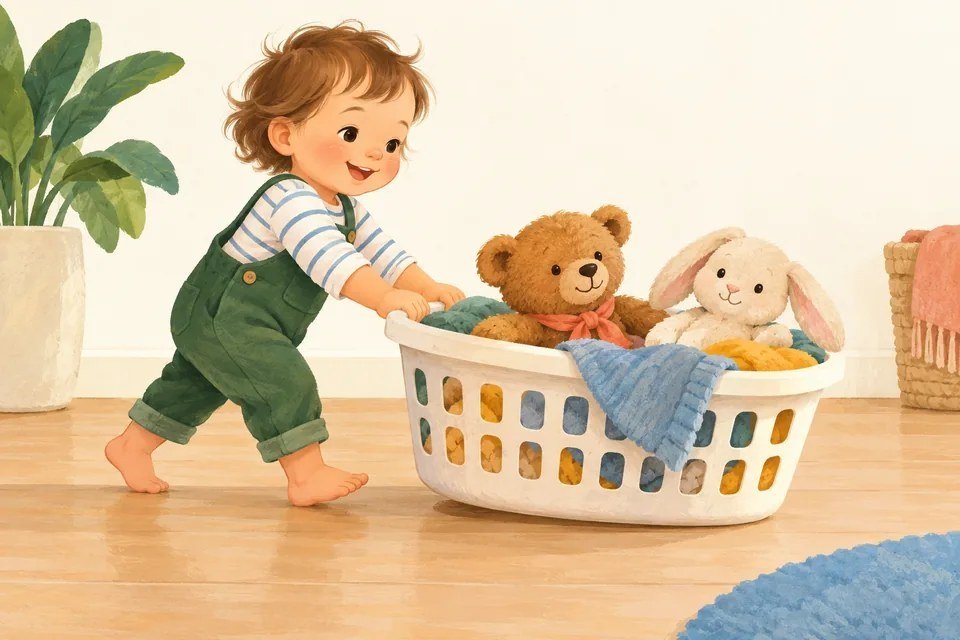
Laundry Basket Push
Good for: Movement, early walking practice
Time: 5–15 minutes
Setup: None
Mess: None
How to do it
Use a lightweight laundry basket on a clear, flat floor.
Let your child push it slowly while you stay close.
How to get them interested
Push the basket yourself first.
Put a favorite toy or a few soft items inside and move it a short distance.
Then let them take over
Once they start pushing, stay nearby without steering every movement.
Toddler not interested?
Put a favorite stuffed toy inside and give the toy a ride.
Important safety note
Use only on a flat, clear, non-slip surface away from stairs. Stay close enough to catch or steady your child if they lose balance.
Soft Ball Delivery
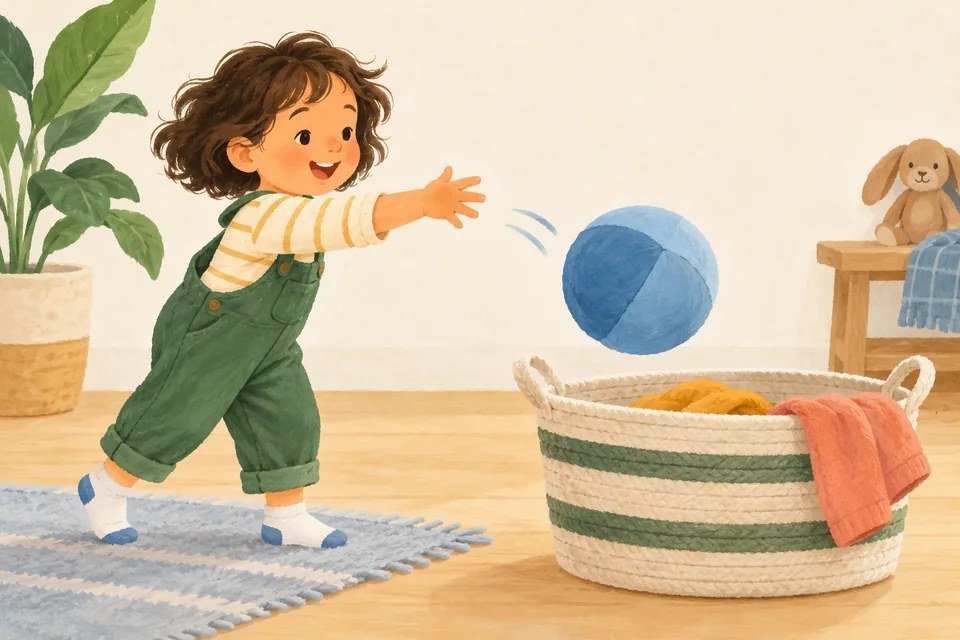
Good for: Movement, reaching, crawling or walking
Time: 5–10 minutes
Setup: Almost none
Mess: None
How to do it
Put a basket a short distance away and give your child a soft ball.
Show them how to carry, roll, or toss the ball toward the basket.
If they’re still crawling, keep everything close enough that crawling works perfectly well.
How to get them interested
Put the ball into the basket yourself first and celebrate it far more than the achievement deserves.
Then let them take over
Let them decide whether the ball goes into the basket, beside it, behind it, or somewhere completely unrelated.
Toddler not interested?
Roll the ball toward them instead and turn it into a simple back-and-forth game.
Important safety note
Use a soft ball large enough that it cannot be swallowed. Keep the play area clear of stairs and hard obstacles.
Find One Activity That Fits Right Now
Sometimes you don’t need another list of ideas. You just need one thing that has a decent chance of working right now.
Tell Little Moment Play what you need, your child’s age, your time, and how much setup or mess you’re willing to deal with.
Browse Activities by Age
Looking for ideas for a different age? Browse the other Little Moment Play activity guides: