Two-year-olds can be both easy and impossible to entertain, sometimes within the same five minutes.
I know that from trying to get work done with my own two-year-old nearby. Some activities have bought me half an hour. Others have lasted about as long as it took me to explain them.
Here I’ll list some simple activities for 2-year-olds that I think are worth trying, organized around the kind of moment you’re dealing with right now. Alternatively, you can try the activity finder by clicking the button below.
Need a custom-fit activity? Tell me what you need, how much time you have, and how much setup or mess you’re willing to deal with. Little Moment will give you one activity to try.
At two, I’ve found that the simplest ideas often work best. You usually don’t need a complicated setup. You need something clear, something they can copy, and sometimes a slightly ridiculous first 30 seconds to make it interesting.
Move Things From Here to There
Put two containers in different places and give your toddler something safe to carry between them.
Good for: Burning energy, keeping busy Time: 10–30 minutes Setup: Almost none Mess: Almost none
How to do it Place one container in one room and another a short distance away. Fill one with safe objects and move them from one container to the other.
How to get them interested Don’t start by telling them what to do. Start doing it yourself. Make the trip exaggerated, make a silly noise when you drop something in, and let them watch.
Then let them take over Once they reach for the container or copy you, step back and let them run the operation.
My personal experience
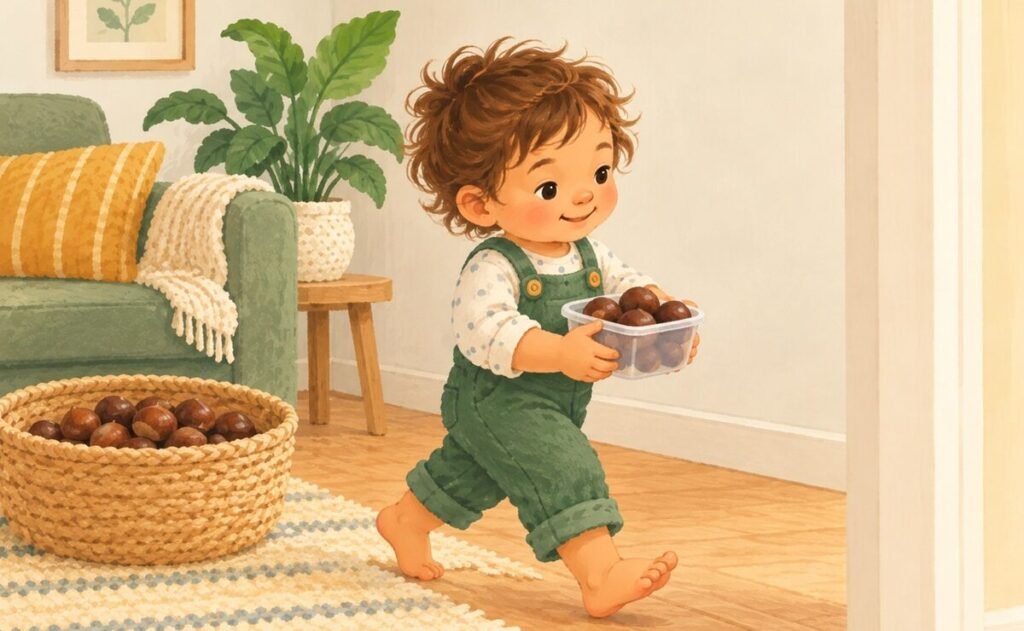
I did this with chestnuts and two boxes. I started hauling them from my living room to the bedroom myself, and after a while my son grabbed the container and took over. He kept going for around 30 minutes like a tiny Sisyphus. I’m pretty sure that if I’d simply told him to move the chestnuts, nothing would have happened.
Important safety note:
Use objects that are appropriate for your child and not a choking hazard. Chestnuts are not suitable for children who still put small objects in their mouths.
Laundry Basket Push
Turn an empty laundry basket into something your toddler can push around the room, especially if they need to burn off a little energy indoors.
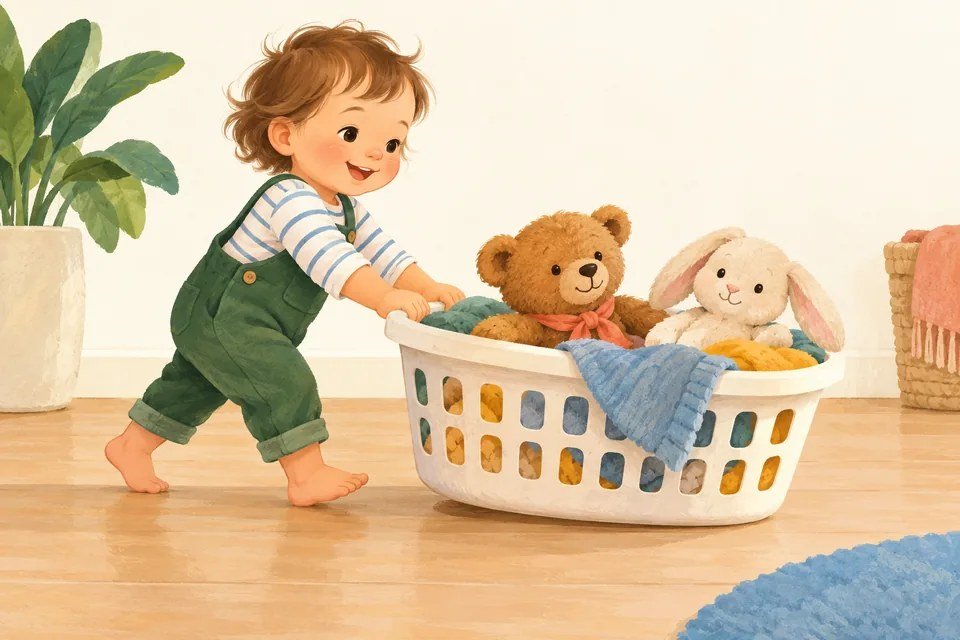
How to do it Put a few lightweight soft toys in an empty laundry basket and give your toddler a simple destination to push it toward. The sofa, another room, or a pretend “garage” is enough.
How to get them interested Put a stuffed animal in the basket and say:
“Teddy needs a ride to the sofa. Can you drive him there?”
Push the basket a little yourself first if they don’t immediately bite.
Then let them take over Once they start pushing, let them decide where Teddy goes next. You don’t need to keep inventing instructions if they’ve already turned it into their own game.
Not interested? Try giving the passenger a silly voice or making the destination more specific: “Teddy forgot his pillow!” If they still don’t care, leave it for another day.
Alternative What I also like to do is pretend the basket is a hungry monster. You just turn it bottom up and then use the basket to “eat” anything that’s in its way. Funny monster noises are a must.
Important safety note Use the basket only on a flat, non-slippery surface away from stairs. Don’t let your child climb inside it.
Sock Match
Mix up a few clean pairs of socks and let your toddler figure out which ones belong together.
Good for: Quiet play, mostly independent play Time: 10–20 minutes Setup: None Mess: None
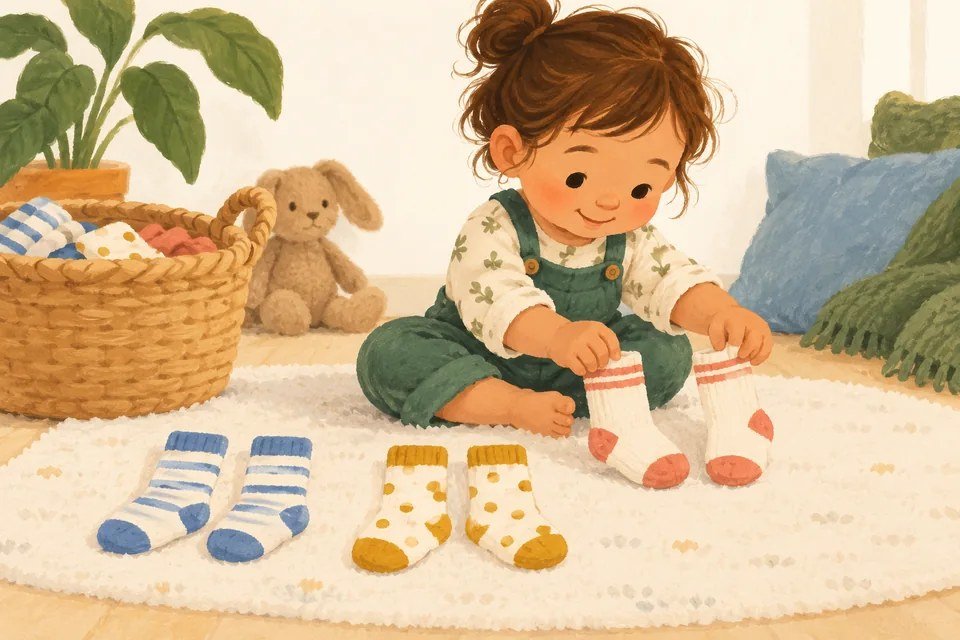
How to do it Take several pairs of clean socks and mix them into a small pile. Your toddler can look for matching colors, patterns, or sizes and put each pair together.
Don’t worry about folding them properly. Matching is enough.
How to get them interested Hold up two obviously different socks and ask:
“Are these twins?”
If they know they don’t match, they’ll want to correct you. Being deliberately wrong can be surprisingly effective with a two-year-old.
Then let them take over Once they correct the first pair, ask them to find the other “twins” and let them work through the pile without directing every choice.
Not interested? Put one matching pair somewhere obvious and act like you can’t find it. If they still aren’t interested, socks may simply not be exciting today.
Important safety note:
I find this one to be pretty safe outside normal supervision.
Indoor Activities for 2 Year Olds
The activities above are already indoor, but I wanted to include a separate section for days when bad weather keeps you inside whether you like it or not.
On those days, I usually look for something that feels more like a real change of pace, rather than just another toy on the floor. Cushion Islands is a good example. It takes almost no setup, gets a two-year-old moving, and can make the living room feel like something different for a while.
Here are a couple of indoor activities I’d reach for specifically on those stuck-inside days.
Washing Machine Helper
Good for: Keeping busy nearby, simple household play Time: 10–20 minutes Setup: None Mess: None
How to do it
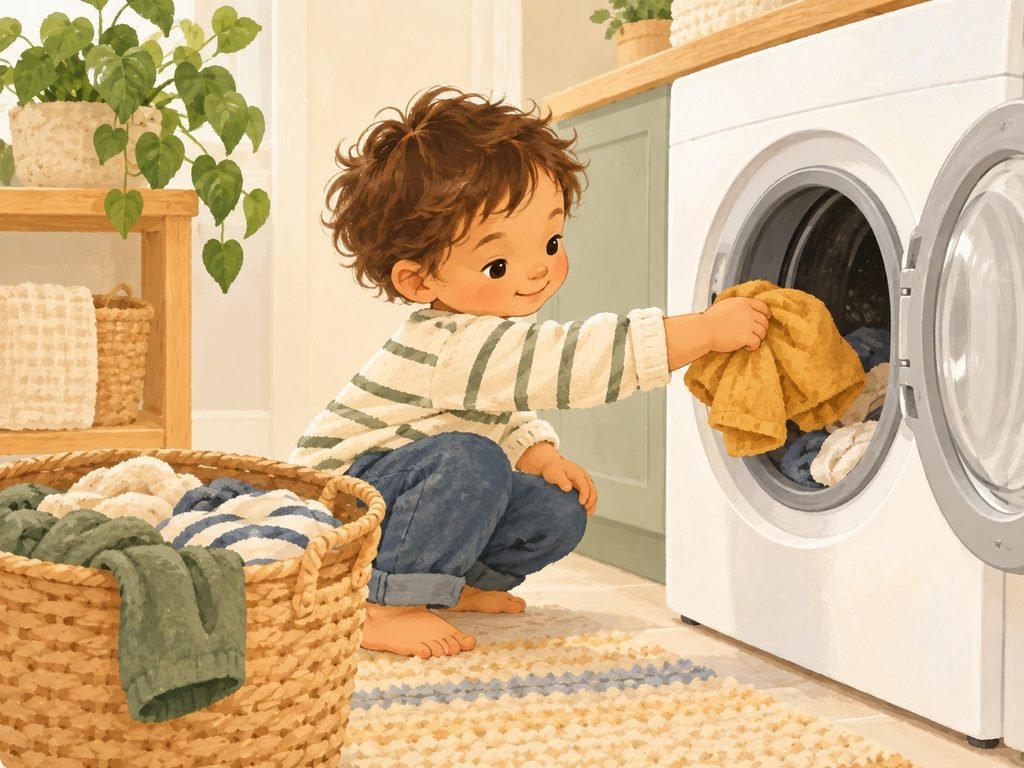
Give your toddler a small pile of clothes and let them put each item into the washing machine one at a time.
You can hand them the clothes or leave the pile beside them and let them work through it.
How to get them interested
Start with one item yourself.
Put it into the drum, make a slightly exaggerated show of it, and then hand them the next piece.
You don’t need a complicated explanation. The machine itself may be interesting enough once they understand what they’re allowed to do.
Then let them take over
Once they start loading clothes themselves, stop handing them every item and let them work through the pile.
If they enjoy watching the machine, that can become part of the activity afterward.
Antonio’s note
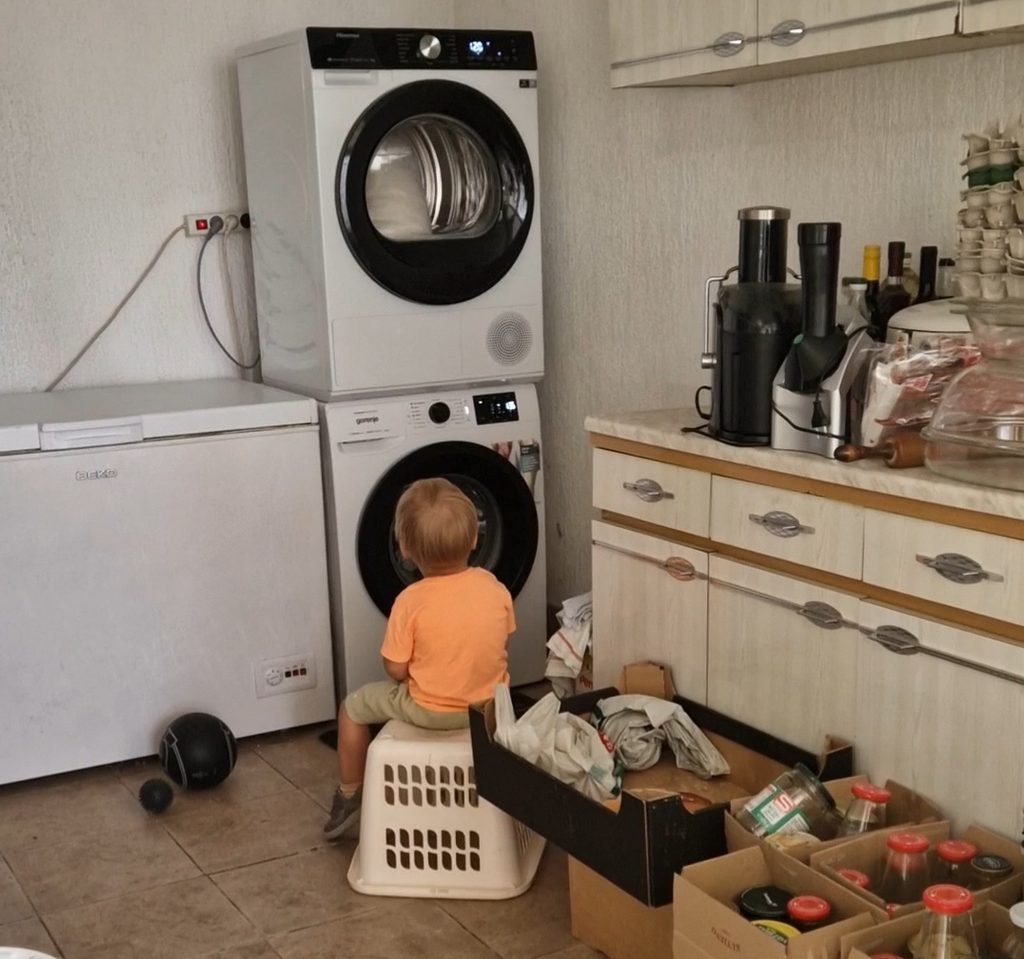
My son is fascinated by the washing machine. I know that won’t be true for every two-year-old, but for us it works surprisingly well.
I’ll give him clothes and let him load them one by one. Sometimes I’ll turn the machine on afterward because he loves watching it go round and round.
There were even moments when I preemptively made a mess in front of the washing machine before going to fetch my son from kindergarten. And sure enough, the moment he saw the mess when we got home, he knew what to do.
It’s a good example of something I’ve learned repeatedly: sometimes the best activity isn’t really an “activity” at all. It’s just the oddly specific thing your kid happens to love.
Ensuring grandma’s washing machine and dryer are working.
Important safety note
Keep detergent, capsules, cleaning products, and other laundry chemicals completely out of reach. Stay nearby while your child is around the washing machine, and don’t allow climbing into or playing inside the drum.
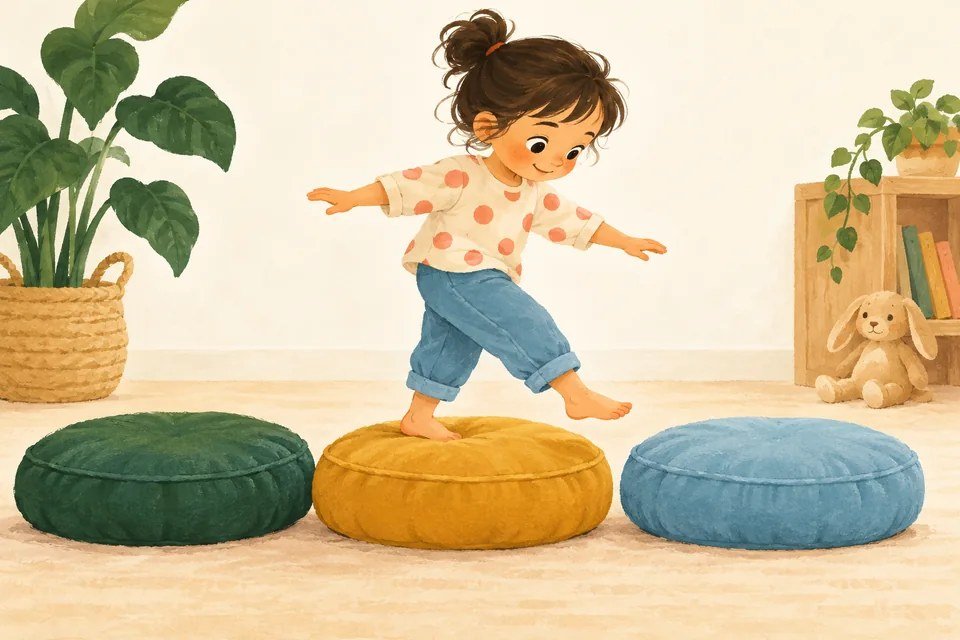
Cushion Islands
Good for: Indoor movement, burning energy Time: 10–20 minutes Setup: Almost none Mess: None
How to do it
Place a few cushions on the floor with small gaps between them.
The cushions become “islands,” and the floor becomes whatever you want: water, lava, crocodiles, space, or something more ridiculous.
The goal is simply to move from island to island without touching the floor.
How to get them interested
Don’t explain the whole game first.
Step onto one cushion yourself, look at the floor, and say something like:
“Uh-oh. I don’t think we can touch the water.”
Then move dramatically to the next cushion.
That first silly demonstration is often enough.
Then let them take over
Once they understand the idea, let them decide where the next island goes or what the floor has become.
If they start changing the rules, that’s usually a good sign. Let them.
Not interested?
Move the cushions closer together or turn one into a destination for a favorite stuffed toy.
If that still doesn’t work, save it for another day.
Important safety note
Use cushions only on a flat, clear floor away from stairs, sharp furniture, and slippery surfaces. Keep the gaps appropriate for your child’s ability.
Learning Activities for 2 Year Olds
With my 2-year-old, I’ve had more luck when the activity leaves room for them to decide what’s interesting. The learning part just happens.
If they end up using the activity differently than I expected, I usually take that as a win rather than a problem.
That was a good reminder that the learning can still happen even when the activity goes in a completely different direction than you planned.
Here are two learning activities that leave plenty of room for that.
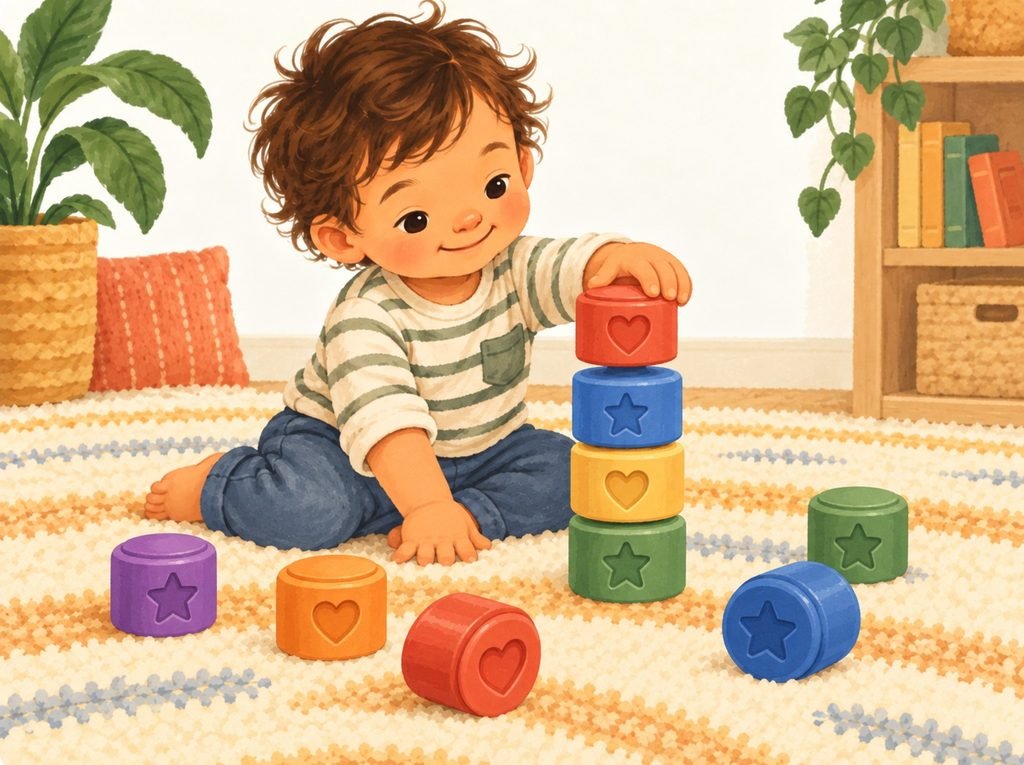
Stamper Stacking
Use chunky stampers as something to stack, line up, knock over, or rearrange. Stampers should include shapes or letters.
Good for: Quiet play, simple problem-solving Time: 10–20 minutes Setup: Almost none Mess: None, if you leave the ink pads out
How to do it
Place a few large stampers on the floor or table and let your toddler explore.
You can stack them into a small tower, line them up, group them, or let them decide what to do.
The goal doesn’t have to be learning the letters or shapes. At two, simply handling, arranging, and experimenting with them can be enough.
How to get them interested
Stack two or three stampers yourself and make the tower a little unstable.
When it falls, make a big silly reaction and start again. In between, sneak in a quick “this is letter A”.
That’s usually more interesting than explaining what each letter is supposed to mean.
Then let them take over
Once they start stacking or arranging the stampers themselves, stop directing the activity.
If they invent a completely different use for them, let them.
Not interested?
Try lining the stampers up and deliberately putting one in a strange place, or build a tiny tower and knock it over yourself.
If they still don’t care, leave it for another day.
Antonio’s note
Here’s the main reason I included this in the learning activity section.
My wife bought some letter stampers to introduce the basics. The teaching part didn’t really go anywhere. What did work was stacking the stampers, and we absolutely lost our minds when the stack fell.
Then, at some point, I just showed the letter “D” and said “dad”. Without my prompting, the next day or so, my son brought me a letter-D stamp and said, “dad.” Crazy.
Important safety note
If you’re using stampers, use only large, child-safe stampers with secure parts. Keep ink pads, small caps, and detachable pieces out of reach unless you’re supervising.
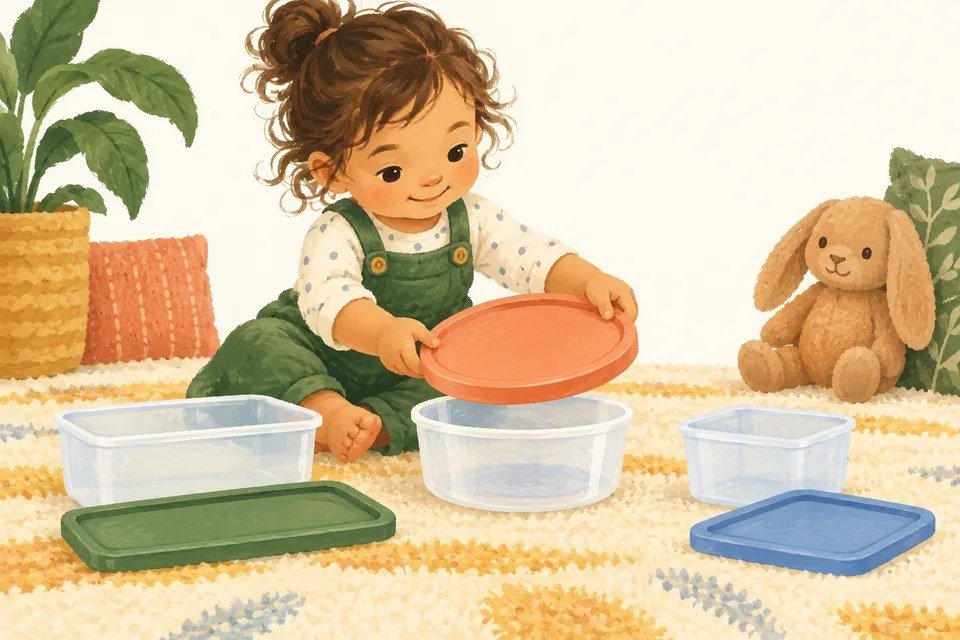
Lid Match Helper
Give your toddler a few containers and lids and let them figure out which lid belongs where.
Good for: Quiet play, matching, keeping busy nearby Time: 10–20 minutes Setup: Almost none Mess: None
How to do it
Choose a few clean containers with clearly different lids.
Take the lids off, mix them up, and place everything together.
Let your toddler try different combinations until they find the matches.
You don’t need many. Three or four containers are enough to make it interesting without turning it into a pile of plastic.
How to get them interested
Pick up the wrong lid and try to force the match in an exaggerated way.
Then say something like:
“Hmm… I don’t think this one fits.”
Being obviously wrong gives them something to correct, which can be much more interesting than simply asking them to “match the lids.”
Then let them take over
Once they understand the idea, stop giving hints.
Let them test lids, get some wrong, and work it out in their own order.
Not interested?
Put one lid loosely on the wrong container and act confused about it.
If they still don’t care, put the activity away. Matching is one of those things that can suddenly become interesting a few weeks later.
Important safety note
Use clean containers and lids without sharp edges, cracks, or small removable pieces. Avoid anything made from breakable material.
Sensory Activities for 2 Year Olds
I had no idea what a “sensory activity” was before my son was born. Then suddenly everyone seemed to be talking about them.
Once I understood the idea, though, it made sense. A lot of toddler play is already sensory without needing a special label for it. Water, different textures, pouring, squeezing, watching something move, or just handling ordinary objects can be enough.
Here are two sensory activities for a 2-year-old.
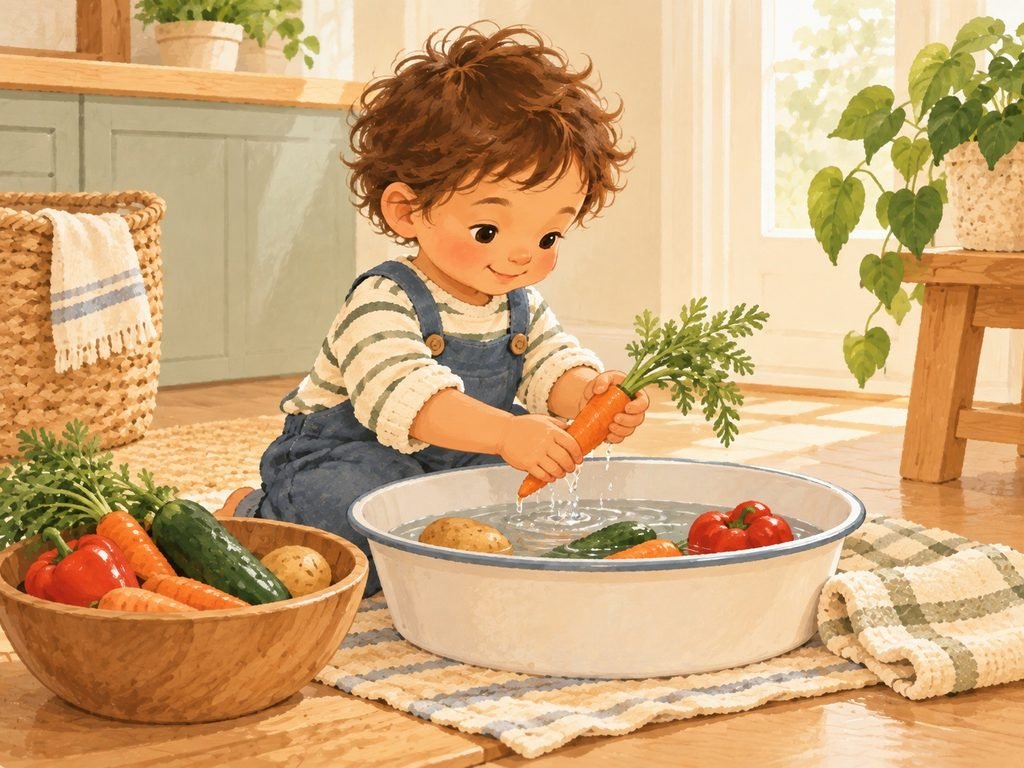
Vegetable Wash Station
Give your toddler a small bowl of water, a few vegetables, and something simple to scrub or rinse them with.
Good for: Sensory play, keeping busy nearby Time: 10–20 minutes Setup: A few minutes Mess: A little
How to do it
Put a shallow bowl or container of water somewhere safe and easy to wipe afterward.
Add a few sturdy vegetables such as potatoes, carrots, or zucchini. Give your toddler a clean cloth, soft brush, or simply let them use their hands to wash them.
You don’t need soap. The water and the job itself are enough.
How to get them interested
Wash one vegetable yourself first and make a point of inspecting it afterward.
You can say:
“Hmm. This one is still dirty. Can you find the dirty bit?”
Then hand it over.
Giving them a small job usually works better than explaining that you’ve prepared a “sensory activity.”
Then let them take over
Once they start washing, let them decide which vegetable comes next and how thoroughly it apparently needs to be cleaned.
If they spend most of the time pouring the water over the same potato, that’s fine too.
Not interested?
Add a second bowl and let them move the vegetables from “dirty” to “clean.”
If they still aren’t interested, you’ve at least washed some vegetables.
Important safety note
Use a shallow amount of water and stay nearby throughout the activity. Keep the setup away from hot cooking surfaces, knives, and other kitchen hazards. Also, be ready to clean.
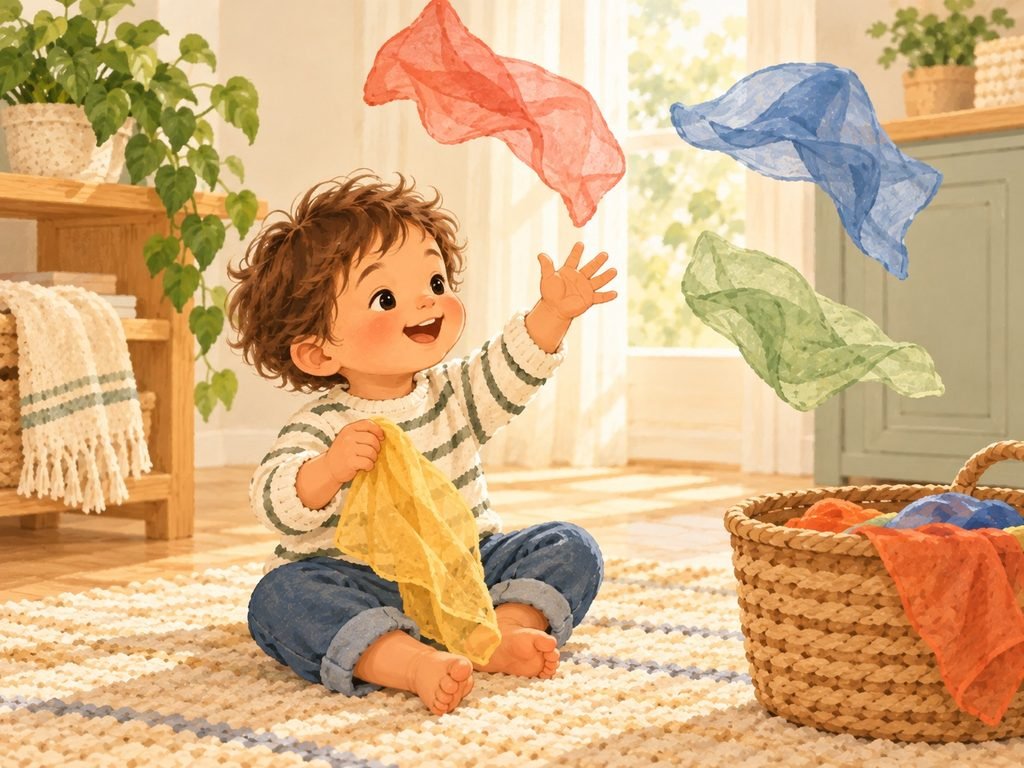
Scarf Float
Use a lightweight scarf or piece of fabric and turn dropping, catching, and watching it fall into a simple game.
Good for: Gentle sensory play, calming down Time: 5–10 minutes Setup: None Mess: None
How to do it
Take a lightweight scarf, play silk, or other soft piece of fabric.
Throw it gently into the air and watch it float down.
You can catch it, let it land on the floor, hide something underneath it, or drop it over your own head.
There really doesn’t need to be much more to it.
How to get them interested
Throw the scarf above yourself first and completely fail to catch it.
A silly reaction will probably do more work than an explanation.
Then toss it again and ask:
“Where do you think it’s going to land?”
Then let them take over
Hand them the scarf and let them decide what happens next.
They may keep throwing it, hide toys underneath it, wear it, or invent something completely different.
If the activity changes, let it.
Not interested?
Try dropping the scarf over a favorite stuffed animal and pretending you can’t find it.
If that doesn’t get a reaction, this is an easy one to abandon and try again another time.
Important safety note
Use only lightweight, breathable fabric and supervise closely. Don’t allow scarves or fabric to be wrapped tightly around the neck or face.
Quick side note: You can also tell Little Moment how much time, setup, and mess you’re comfortable with and it’ll find one activity to try. Try it below.
I probably think about coordination more than I do “fine motor skills.” And I’m pretty sure that comes from my bouldering hobby.
Also because the less clumsy my son gets, the less time I have to spend hovering over him wondering what he’s about to fall off next.
Even when we’re just walking outside, I’ll sometimes hold his hand and encourage him to walk along the edge of the pavement. He usually thinks it’s great fun, at least until he decides walking is over and starts demanding that I carry him.
So I like activities that quietly give him more practice using his hands, judging movement, and figuring things out without making it feel like we’re practicing anything.
Here’s some specific fine motor activities for a 2-year-old that I personally like.
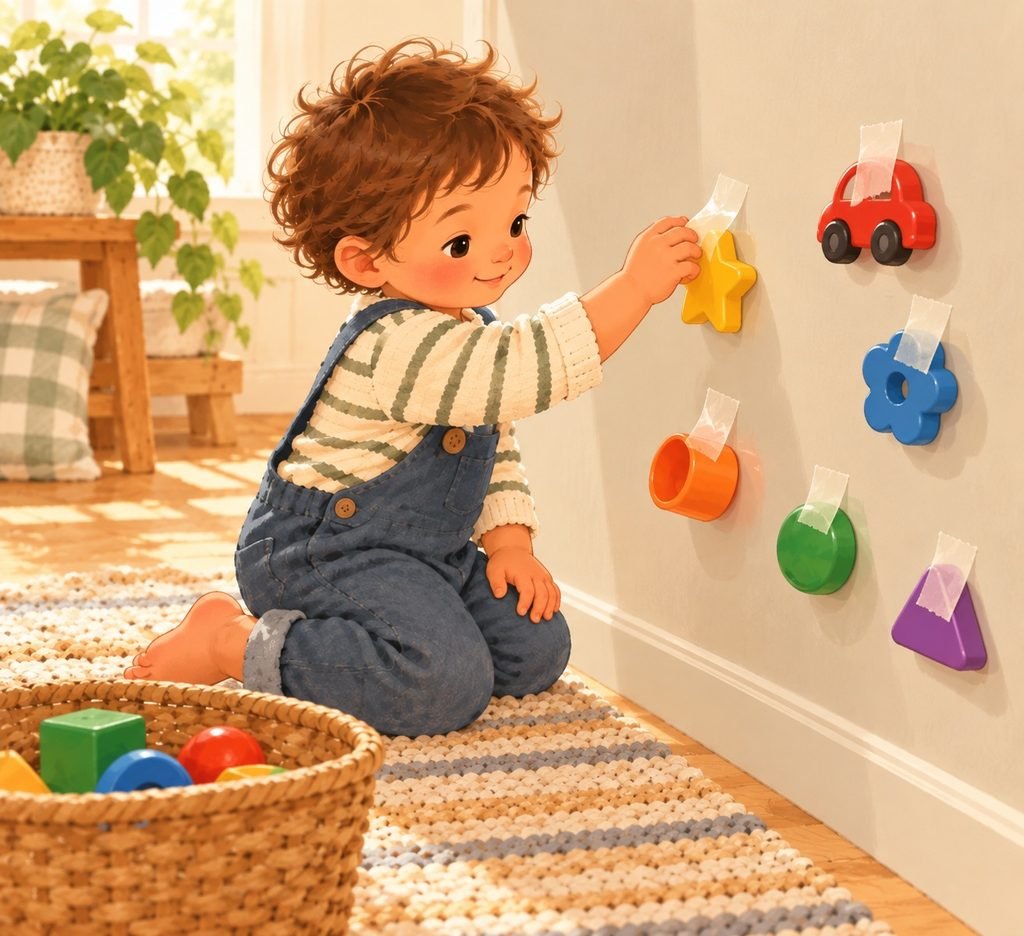
Sticker Toy Rescue
Lightly tape a few toys to a safe surface and let your toddler “rescue” them.
Good for: Independent play, quiet play Time: 10–20 minutes Setup: A few minutes Mess: None
How to do it
Use painter’s tape or another easy-to-remove tape to lightly secure several large toys to a table, tray, or other safe surface.
Don’t tape them down too firmly. The goal is for your toddler to be able to peel the tape away and free the toys without needing constant help.
How to get them interested
Start with the first toy together.
Point at it and say:
“Oh no, they’re stuck! Can you save this one?”
Help peel back the first piece of tape if needed, then point toward the other trapped toys.
Then let them take over
Once they understand that peeling the tape frees the toy, stop demonstrating and let them work through the others however they want.
They may rescue the toys one by one, peel all the tape first, or completely reorganize your setup. Any of those are fine.
Not interested?
Try again with a favorite toy instead of a random one.
Sometimes the “rescue” matters a lot more when it’s something they already care about.
Important safety note
Use removable tape and large, age-appropriate toys. Make sure loose pieces of tape don’t end up in your child’s mouth.
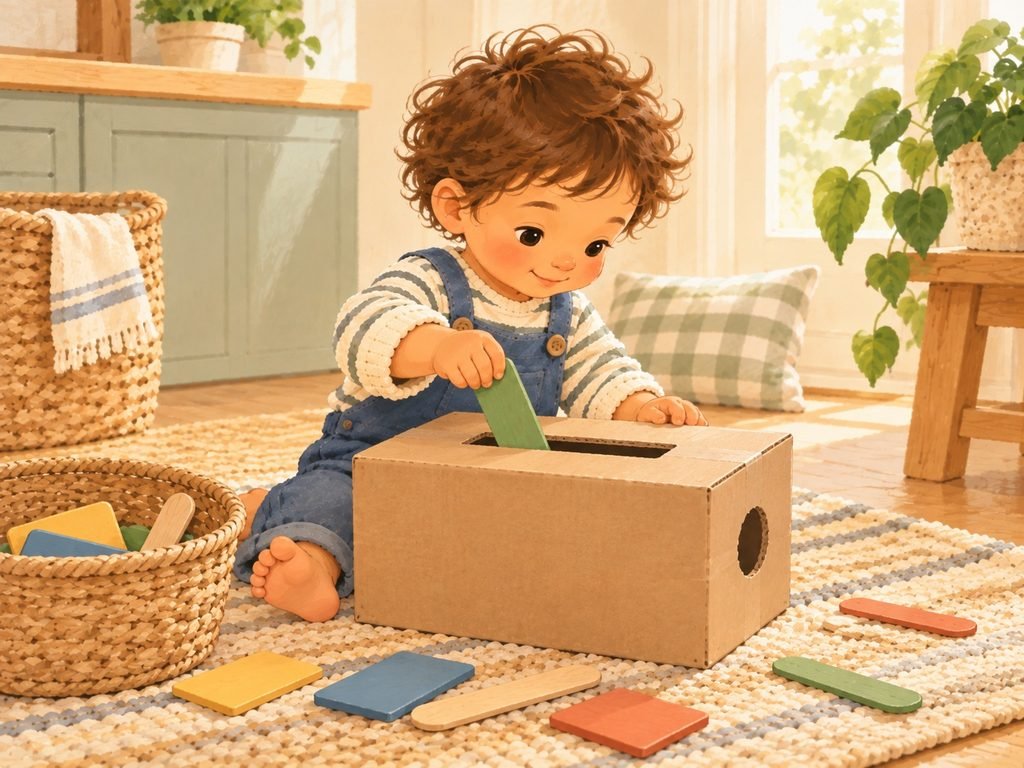
Posting Box
Cut a wide slot into a cardboard box and give your toddler safe objects to drop through it.
Good for: Independent play, quiet play Time: 10–20 minutes Setup: A few minutes Mess: None
How to do it
Use a cardboard box with a wide slot and a handful of large cards, blocks, or other safe objects.
Your toddler drops each object through the opening, then you can open the box and start again when everything is inside.
You don’t need many objects. A small handful is enough.
How to get them interested
Post one object yourself first.
React when it disappears into the box and ask:
“Where did it go?”
Then hand them the next one.
That little disappearing act is usually more interesting than explaining what the activity is supposed to be.
Then let them take over
Once they start posting objects themselves, let them choose the order and pace.
If they become more interested in opening the box and taking everything back out, that’s still part of the game.
Not interested?
Try using one object they already like and let them watch it disappear into the box.
If that still gets no reaction, put it away and try again another time.
Important safety note
Only use objects that are too large to fit inside your child’s mouth.
What Makes a Good Activity for a 2-Year-Old?
I don’t think there’s a formula for a good activity at two.
Some things that look perfect on paper go nowhere. I’m 100% sure you’ll find an activity here that sounds good, but your kid won’t even acknowledge it.
Other things I barely planned become the game my son wants to do the next day again.
Instead, I’ve started paying attention to whether I can get him interested quickly, whether there’s room for him to take over, and whether I’m willing to accept that the whole thing might turn into a completely different game.
With that in mind, here are 3 key things to keep in mind to make a good activity for a 2-year-old.
Make the First 30 Seconds Interesting
This is probably the biggest thing I’ve learned from playing with kids.
Handing a toddler a toy and telling them to play with it often doesn’t work. If they’re already interested, sure. Otherwise, I’ve had much better luck playing with it myself first.
Make a stupid noise. Pretend something went wrong. Let something fall over. Give them something to react to.
Once they’re interested, you can usually stop doing quite so much.
Let the Activity Become Something Else
I try not to get too attached to what an activity is supposed to be.
If I set something up for matching and my son decides it’s actually for stacking, that’s usually fine with me. If the thing that keeps him interested has almost nothing to do with my original plan, I’d rather follow that than spend ten minutes trying to drag him back to the “correct” version.
One thing I really like doing is just winging it. Granted, that works best when you have the time to sit there and be part of the game for a while.
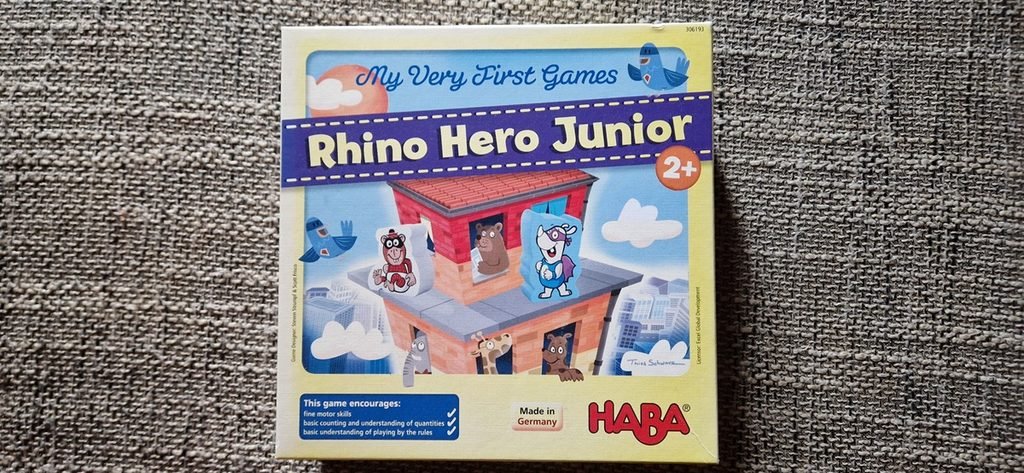
A friend bought us a kids’ Rhino Hero Junior board game, and to this day I’m not entirely sure I know the proper rules.
Every time my son wanted to play, I never seemed to have the time or patience to sit down and read them. I’m pretty sure the actual game involves stacking the building pieces in a certain order, but we never really got that far.
I’d just stack them however I felt like.
Then, when the whole thing fell down, I’d make a ridiculous noise and act like something catastrophic had just happened.
That was the part he cared about.
After watching me do it enough times, he started stacking the pieces himself and waiting for the inevitable collapse.
So if you have the time, I’m a big fan of the winging-it method. You don’t always need to understand the “right” way to play something before you make it interesting. Sometimes messing around with it first is what gets the kid to care.
A Failed Activity Isn’t a Bad One
Coloring has been a complete failure for us so far.
I’ve tried simple coloring pens a few times, and my son just hasn’t been interested. I haven’t written it off, though. Every now and then I bring it back and see if something has changed.
Toddlers change quickly. Something they ignore completely one month can suddenly become interesting later.
So if an activity fails, I wouldn’t spend too much energy forcing it. Put it away and try again another time.
Find an Activity That Fits Right Now
Finally, I’ll plug my activity finder one more time.
Tell Little Moment what you need, your child’s age, how much time you have, and how much setup or mess you’re willing to deal with. It’ll narrow everything down and give you one activity to try.
And because I’ve found that choosing the activity is only half the job, I’ll also give you an idea for how to get your toddler interested in it in the first place.